Giving birth is never just medical — it’s cultural, too. If you’re pregnant in Japan, you’ll quickly discover that labor, delivery and recovery blend long-held cultural norms with modern clinical care in ways that might surprise you. Some surprises are beautiful. Others? Well, less so — especially if you expect individualized care and patient autonomy.
Statistically, Japan is one of the safest places in the world to give birth: According to the World Health Organization, it has a neonatal mortality rate of less than 1 death per 1,000 live births — the lowest in the world — and a very low maternal mortality rate of around 3 deaths per 100,000 live births. For comparison, the US sees just shy of 17 maternal deaths per 100,000 live births, while in the UK, the rate is just over 8 deaths per 100,000 live births. Japan consistently ranks near or at the top globally for positive outcomes. These numbers reflect a health care system that’s precise, highly competent and deeply efficient.
And while the safety of the mother-baby dyad is undeniably the top priority, the experience of the mother matters deeply, too. Many women leave their childbirth experience feeling confused, quietly traumatized or like their needs were gently steamrolled in favor of protocol. And that matters — not only emotionally but physiologically, too. It can also affect how a woman is able to show up in motherhood and whether she feels ready — or safe — to go through pregnancy and childbirth again. This is why understanding what to expect ahead of time can make all the difference.
From epidurals on banker’s hours to postpartum care that feels like a five-day hotel stay, here are six things you should know before giving birth in Japan:

1. Natural Birth Is the Norm
The epidural debate often boils down to one thing: pain. On one side, you’ve got “pain relief is a human right”; on the other, “pain is sacred, sister — embrace the portal.” In Japan, the debate is almost moot — a report from the Japan Association of Obstetricians and Gynecologists (JAOG) indicates that only 13.8% of births in 2024 involved epidurals, and in some prefectures, there haven’t been any epidural-assisted births in years. Epidurals simply aren’t widely available.
To get one, you may need to make a reservation as early as 20 weeks — when you’re probably just starting to notice your baby bump, not plotting birth plans. And even if you are at a hospital that offers epidurals, there’s no guarantee you’ll be able to access one. It’s not uncommon for epidurals to be offered exclusively during daytime hours and only if the anesthesiologist is available — a big “if” considering Japan’s ongoing anesthesiologist shortage. Basically, in addition to luck, you’ve got to hope your baby is a punctual little timekeeper. (But, as research has found that the majority of births happen outside of working hours, there’s a good chance he or she won’t be …)
Furthermore, according to a survey by JAOG, in 2023, more than half of all epidurals were administered by OB-GYNs without an anesthesiology license, significantly increasing the risk of anesthesia complications. And, despite rising demand, epidurals aren’t covered by national health insurance, leading to an additional cost of ¥100,000 to ¥200,000. (In an encouraging move, Tokyo is in the process of launching a subsidy program to help ease the burden and encourage more births.)
So while the general discourse revolving around epidural-assisted birth is often a black-and-white clash of ideologies, in Japan, the reality is more complex — a mix of attitudes, access, staffing and cost.
And as for the pain itself? Pain and suffering are not the same. Pain can be a tough but beautiful hike — muscles burning, sweat dripping, but you’re enjoying the exertion. Suffering is breaking your ankle at the summit and needing to hobble down before the bears come out. Far too many women in Japan tip into suffering, and not by choice.
2. Episiotomies Are Standard
Snip, snip, surprise! (If you’re squeamish about women’s health and would rather not read about incisions in nether regions, feel free to skip to the next section.) An episiotomy is when doctors make a small cut to a woman’s perineum to help facilitate the birth of a baby. In some cases — like vacuum- or forceps-assisted births — this can be medically necessary. But today, major health organizations, including the WHO and the American College of Obstetrics and Gynecology, agree: Routine episiotomies do more harm than good.
Why? Because episiotomies don’t actually do what they were thought to do, which was, among other things, heal better than a natural tear. Also, since not all women tear, subjecting every laboring woman to an incision does nothing in some cases but increase discomfort, lengthen healing time and amplify the risk of complications like more severe tearing and scarring. Long story short, cutting women as a default isn’t just outdated — it’s unnecessary trauma. As such, the WHO, in its 2018 recommendations for a positive childbirth experience, cautions against the “routine or liberal use of episiotomy … for women undergoing spontaneous vaginal birth.”
And yet, episiotomies are still common in Japan. A childbirth report for 2022 from Tokyo’s Seibo Hospital indicates a rate of between 48.5% and 63.5% for first-time mothers, while a 2017 study of midwifery care covering six facilities in Okinawa revealed a rate of 65.2%. These numbers suggest a fairly routine use of the procedure, which begs the question: Why are episiotomies still so common in Japan?
Well, there are several reasons.
For decades, medical training emphasized episiotomy as the fastest, cleanest and safest option for both moms and babies. While new research is calling for more restrictive use of episiotomies, many doctors were trained under that model, and some training programs haven’t caught up with the evidence-based updates. In addition, 99.3% of births in Japan are in hospitals or clinics, institutions that are more likely to practice routine episiotomies. These environments often restrict movement and birth positions, both of which can increase a woman’s risk of episiotomy
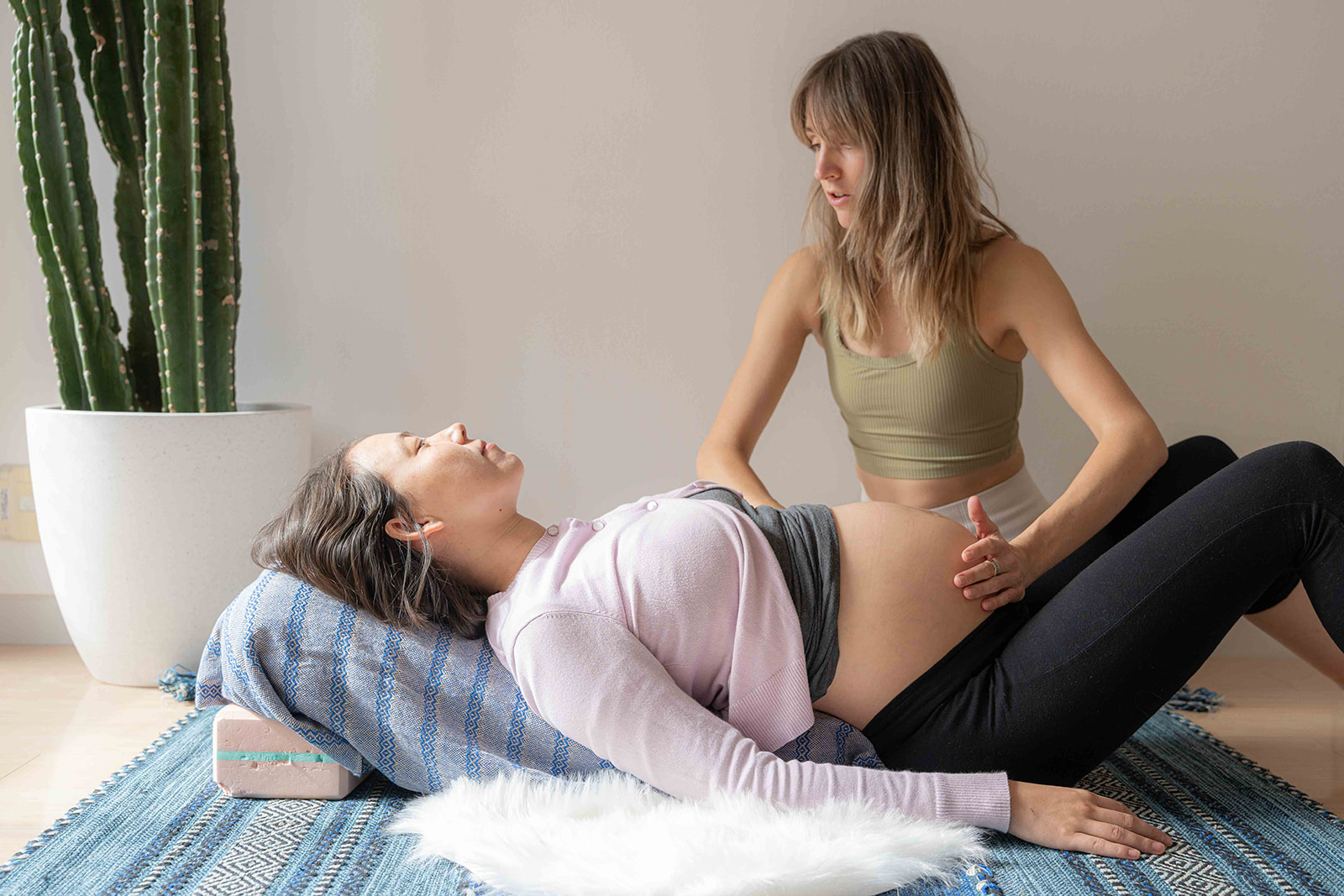
If you’re pregnant and concerned about episiotomy (or the standard back-lying position that makes birth harder and more painful), know that midwifery-run birth centers tend to take a less-interventionist approach, and birth doulas can help to advocate for your birth plan in any setting.
3. Your Preferences Might Be Heard — Then Ignored
One of my American friends described her life in Japan as a “square peg trying to fit into a round hole.” If you’re pregnant here, get ready for the round hole — and expect to be told what “most women do” at your clinic or hospital.
This can be everything from choosing an episiotomy to managing — or more specifically, limiting — weight gain. Japanese providers often expect women to keep pregnancy weight gain under tight control, regardless of genetics or body type. If you’re naturally tall, muscular or just not the size of a Tokyo 7-Eleven snack, you may find yourself getting scolded, sometimes forcefully, for growing a human too enthusiastically.
There’s also a strong cultural tendency toward conformity, and a reluctance to offer outlier care. You might be told “no one does it that way” when requesting no episiotomy or immediate skin-to-skin contact. That doesn’t mean you can’t ask — but it does mean you’ll need to advocate for yourself early and clearly.
4. Policies on Partners Being Present Differ Widely
Some hospitals in Japan don’t allow the partner to be present during labor, birth or both, so dads, you may find yourselves waiting outside. Now, the quality of partner support does vary — some are walking epidurals of calm and encouragement, while others are more oops-I-forgot-the-hospital-bag energy. But most women agree: They want their person there. For moral support. For shared responsibility. And yes, because it’s literally half their baby.
In 2025, with women around the world raising rallying cries about the invisible labor of mothering, being present at birth isn’t just a nice gesture — it’s a baseline. So why the restrictions? It depends: Concerns about privacy in shared rooms, outdated hospital policies that favor efficiency over intimacy and pandemic-era rules that quietly became permanent are just a few reasons behind no-dads-allowed hospital policies.
It’s worth noting that there are many hospitals that actively encourage the partner, and even other family members or support people, to attend the birth, so while it’s definitely a possibility, it’s not a given that partners will be left out of the birthing room. It is something you’ll want to ask about, however, to make sure your partner is around to support you the entire time.
5. Congratulations, You’re Pregnant! Here’s a Stack of Paperwork
Once you’ve peed on that stick and had a teary-eyed “we’re having a baby” moment with your partner, it’s time to cut the celebration short and head to your local ward or city office — because the paperwork starts early and doesn’t let up. In Japan, the first step in pregnancy isn’t planning a baby shower — it’s registering your pregnancy.
First, you’ll need to confirm your pregnancy at a clinic, then take that proof to your ward office to receive your Maternal and Child Health Handbook (Boshi Kenko Techo) and your cute little VIP pregnancy pass for priority seating on the train — which you may need while clutching your stomach during rush hour nausea. This registration also unlocks your pregnancy checkup subsidies and access to public support services, like low-cost in-home help once the baby arrives. (On a positive note, Japan is planning to eliminate out-of-pocket expenses for standard childbirth costs in fiscal 2026, so those subsidies may no longer be necessary.)
You’ll also want to lock in your hospital early — they vary widely in policies, prices, philosophies and whether or not they’ll let your partner in the room (seriously, research matters). And don’t wait until they’re born to figure out the paperwork maze. You have just 14 days to register the birth at your ward office and, if your child won’t have Japanese citizenship, 30 days to notify immigration — and trust me, you do not want to be figuring this all out and filling out forms with a newborn on your chest. (Ask me how I know.)
It may feel like a lot (because it is), but staying on top of the paperwork early makes space for what really matters later: bonding, resting and adjusting to your new role with less red tape hanging over your head.
6. Postpartum Care Is Paradise
Finally — something to get excited about. Postpartum care in Japan is, frankly, amazing. After you give birth, you’ll likely stay in the hospital for about five days (vaginal birth) or seven to 10 days (cesarean birth). But don’t picture a fluorescent-lit American hospital room with sad toast and Jell-O; many postpartum units are exponentially homier than that. Think nicer rooms, beautifully balanced meals tailored for postpartum healing and nurses who actually want to help you take care of the baby. If you’re lucky, you might find yourself in a minimalist tatami room with massage options and a 24/7 nursery on standby if you want to sleep.
Some hospitals, in partnership with municipalities, even offer women in need of extra support low-cost, short-term postpartum overnight stays until the baby is a certain age. For example, Ikuryo Clinic, with Meguro ward, offers such care until babies are three months old. Think of it like postpartum hoteling — for when you need a breather, a breast massage and a nap in a quiet room someone else cleans.
Many women say the postpartum experience alone is reason enough to give birth in Japan.
Final Thoughts
Japan is an incredibly safe place to give birth, and it offers some uniquely beautiful aspects of maternal care. But it’s not without its quirks — and if you’re coming from a country where bodily autonomy and individualized care are the norm, you may feel blindsided by the rigidity of the system.
The best way to navigate birth in Japan? Do your homework, ask the hard questions early and surround yourself with support — from midwives, doulas and other parents who’ve been through it. Even if you’re giving birth in the land of quiet politeness, your voice still matters.
Giving birth is an experience like no other; it’s frightening, exciting, painful, overwhelming, joyful, intense and a million other things. When giving birth in a foreign country, the process can become even more complex, with cultural norms and expectations occasionally clashing. But no one wants their pregnancy and birth story marred by misunderstandings and frustration, which is why learning what to expect is essential to a smooth birth experience. This is where an experienced birth coach like a doula can help.
Kathleen Rowan is a certified doula and childbirth educator (Bebo Mia), Pilates instructor (The Pilates Center) and Arvigo practitioner. She has supported births in the United States and Japan, in hospitals and birth centers — and even the occasional parking lot — gaining experience in how different cultures shape the way we prepare for, and experience, birth. She’s also taught birth and mothering classes to women from around the world and now leads prenatal, childbirth education and mommy-and-me classes in Tokyo. In the following article, Rowan shares her experience by detailing six realities you’ll want to prepare for if you’re planning to give birth in Japan.