

Tsuruga Castle Overview
Tsuruga Castle stands at the heart of Aizuwakamatsu city in Fukushima prefecture, distinguished by its striking red roof tiles — a feature found on no other castle in Japan. Originally built in 1384 by Ashina Naomori under the name Kurokawa Castle, the fortress was later redesigned and renamed by Gamo Ujisato in 1592. It served as the seat of the Aizu domain for centuries and became a symbol of unwavering samurai loyalty during the Boshin War of 1868, when its defenders held out against imperial forces for a month-long siege before surrendering.
The castle was demolished in 1874, then rebuilt as a concrete reconstruction in 1965. A major renovation completed in 2011 restored the distinctive red roof tiles to match the castle’s appearance during the late Edo period. Inside the five-story keep, a museum displays samurai armor, swords and artifacts chronicling the region’s dramatic history, with English signage throughout. The top floor offers panoramic views of Aizuwakamatsu city and the surrounding mountains. The castle grounds also include the Rinkaku Teahouse, a historic tea room with ties to the legacy of Sen no Rikyu, where visitors can enjoy matcha in a tranquil garden setting. Around 1,000 cherry trees line the surrounding park, and the original stone walls and moats remain intact. Tsuruga Castle is listed as one of Japan’s 100 Famous Castles.
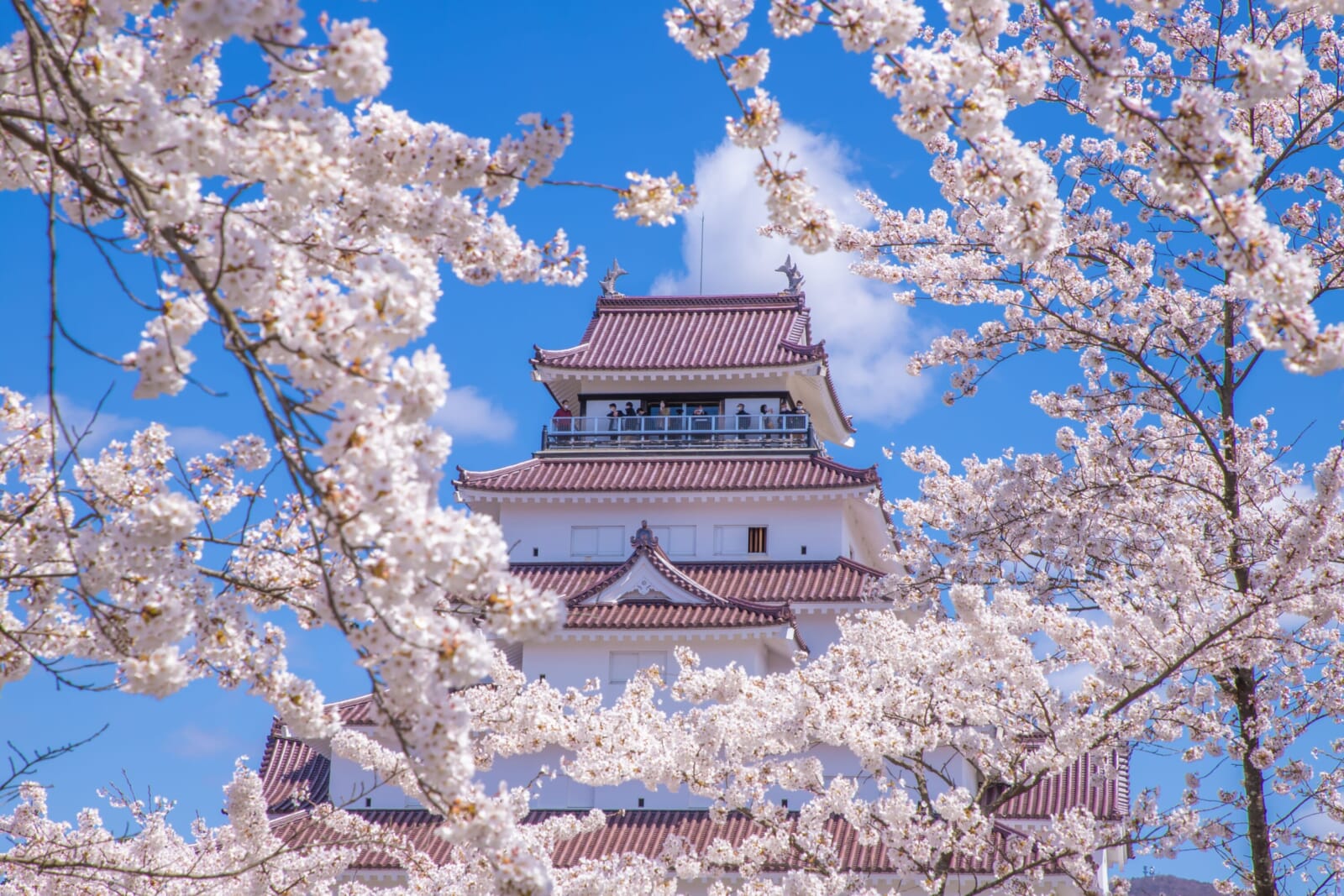
TSURUGAJO CASTLE
Best Times To Visit Tsuruga Castle
Spring is the most popular season, when cherry blossoms reach full bloom from mid-April to early May and nighttime illuminations light up the castle grounds. Autumn brings vivid foliage in early November, while winter snow creates a stunning contrast against the red-tiled roof. The Aizu Festival in late September features a grand procession of participants in samurai armor, and the Aizu Painted Candle Festival in early February fills the park with thousands of hand-painted candles.