
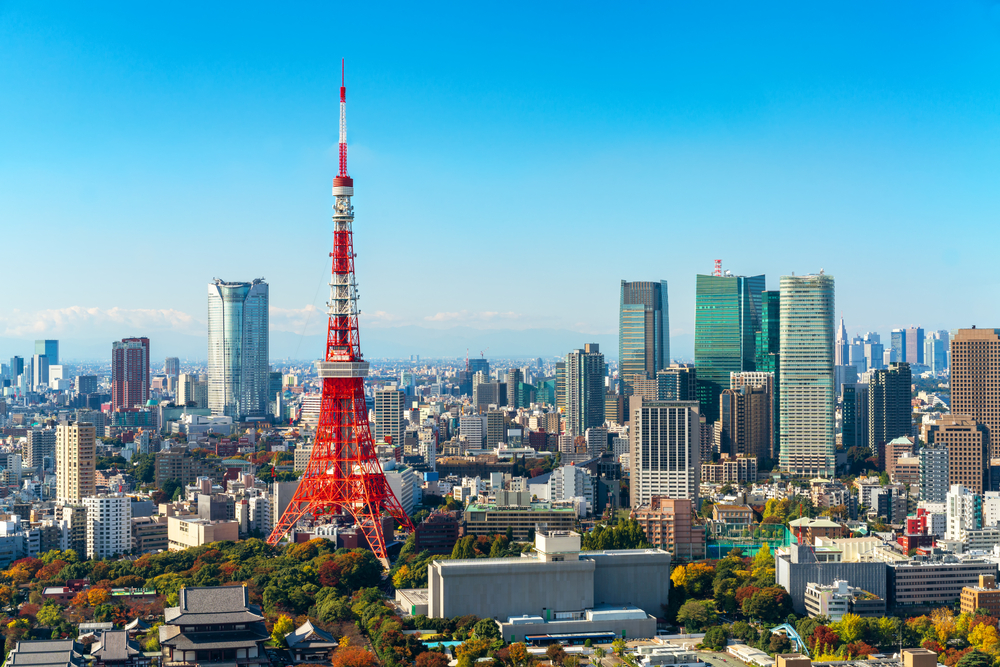
An Iconic Observation Tower
For nearly seven decades, Tokyo Tower (東京タワー) has been the emotional center of the city’s skyline. Newer, taller structures have risen around it — the Skytree across the river, Azabudai Hills next door — but the bright red-and-white lattice rising 333 meters above Minato remains the building Tokyo’s residents actually love. It’s the tower that anchors postcard shots, anime backgrounds and the establishing shot of nearly every film set in modern Tokyo.
Completed in December 1958, Tokyo Tower was was designed by architect Tachu Naito and built in just 18 months by some 220,000 craftspeople, much of the work done by hand. At the time of completion, Tokyo Tower edged out the Eiffel Tower (its acknowledged inspiration) by 13 meters to claim the title of the world’s tallest freestanding tower. It still holds a more durable title today: the world’s tallest self-supporting steel tower.
The tower still functions as a working broadcasting antenna for FM radio, though its television duties were transferred to the taller Tokyo Skytree in 2012. For most of its life, though, the tower’s identity has been defined by its two observation decks and the four-story FootTown complex at its base, which serves as a four-story complex housing restaurants, souvenir shops, museums and cafes.
Visitors can choose between taking high-speed elevators or climbing the 600-step outdoor staircase to the main deck which is typically available on weekends and holidays (check the official website before visiting as conditions may change based on weather) — those who make the climb receive an “Ascending Stairs Certificate” as a memento.
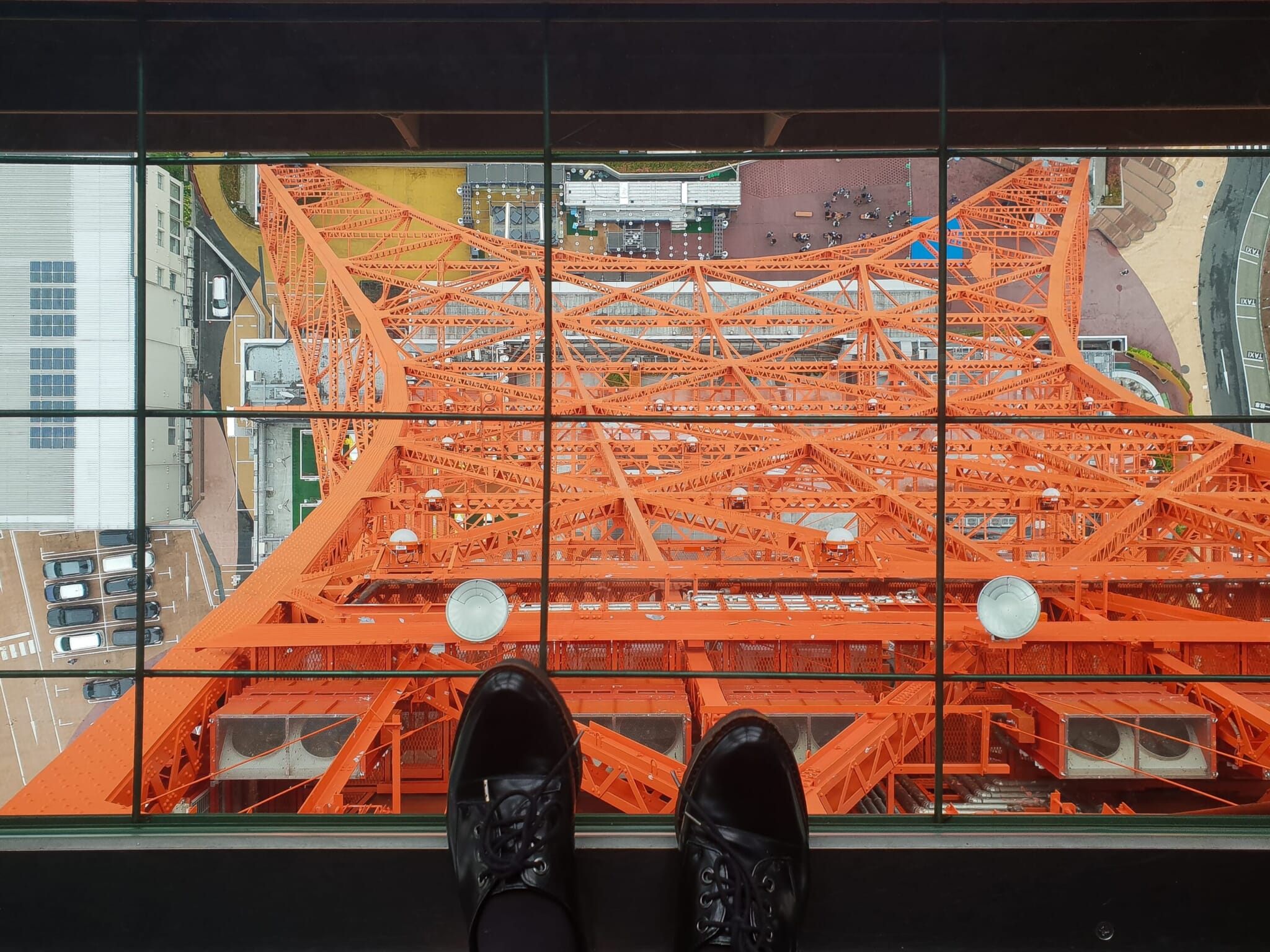
the skywalk glass windows of tokyo tower’s main deck
Main Deck vs. Top Deck Tour: Which Is Worth It?
The main deck at 150 meters is the classic experience. It’s a two-story observatory with floor-to-ceiling windows, a cafe, a small Shinto shrine and the famous “Skywalk Windows” — glass floor panels on the lower level where you can look straight down some 145 meters to the streets below. The view is genuinely good despite the moderate height, because Tokyo Tower’s central location means you’re looking down at the dense heart of the city rather than out from its edges.
The Top Deck Tour at 250 meters is a different proposition. It’s sold as a guided experience with timed entry and includes access to the Tower Archives room which allows visitors to look back over the tower’s history, while the top deck itself is dressed in geometric mirrors and LED lighting that creates a near-cinematic atmosphere — particularly impressive at night. The view is is also more expansive, with a clearer line of sight to Mount Fuji on clear days and a sweeping perspective over Tokyo Bay.
The honest verdict: if you’ve already been to the Skytree’s observation decks, the Main Deck alone is plenty. If Tokyo Tower is your one panoramic view of Tokyo, paying the upgrade for the Top Deck Tour is worth it — particularly for a sunset visit, when the timed entry means you avoid the worst of the elevator queues.
The Best Photo Spots Around Tokyo Tower
Some of the best views of Tokyo Tower aren’t from inside it. A few favorites for photographers:
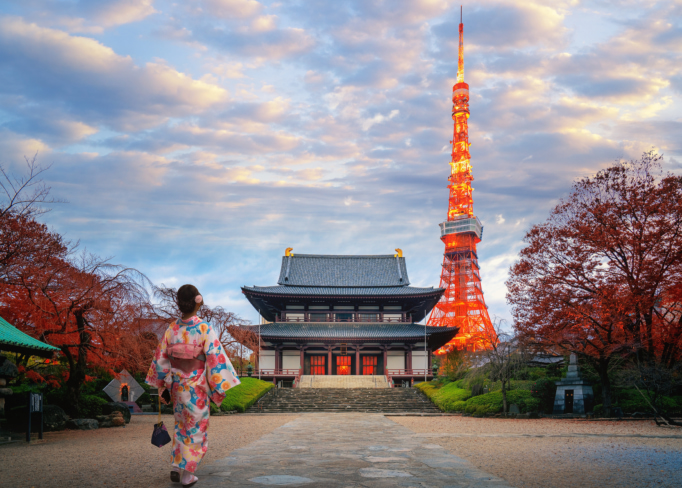
Zojoji Temple — The classic shot of Tokyo Tower rising behind the temple’s main hall is the single most photographed angle of the tower. The juxtaposition of historic temple architecture against the modern lattice is uniquely Tokyo. Best in late afternoon when light hits both subjects evenly.
The Prince Park Tower Tokyo lobby and grounds — Direct sightline to the tower with landscaped foreground, especially nice during cherry blossom season.
Roppongi Hills Sky Deck (Mori Tower) — Open-air rooftop observation deck with a panoramic view that includes Tokyo Tower as a glowing centerpiece, especially after dark. Worth the entry fee.
Azabudai Hills Sky Lobby (33rd floor) — Tokyo’s newest skyscraper complex opened in late 2023 and quickly became one of the best viewpoints for shooting Tokyo Tower from a high angle. Free entry to the public deck.
Shiba Park (Minato Ward Shiba Park) — A wide grassy lawn directly south of the tower, perfect for picnic-style photos with the full tower in frame. Particularly good at golden hour.
The Sakurada-dori intersection (corner of Higashi Azabu) — A street-level perspective that’s become a popular Instagram and TikTok spot for nighttime shots framed by the urban canyon.
Best Times To Visit Tokyo Tower
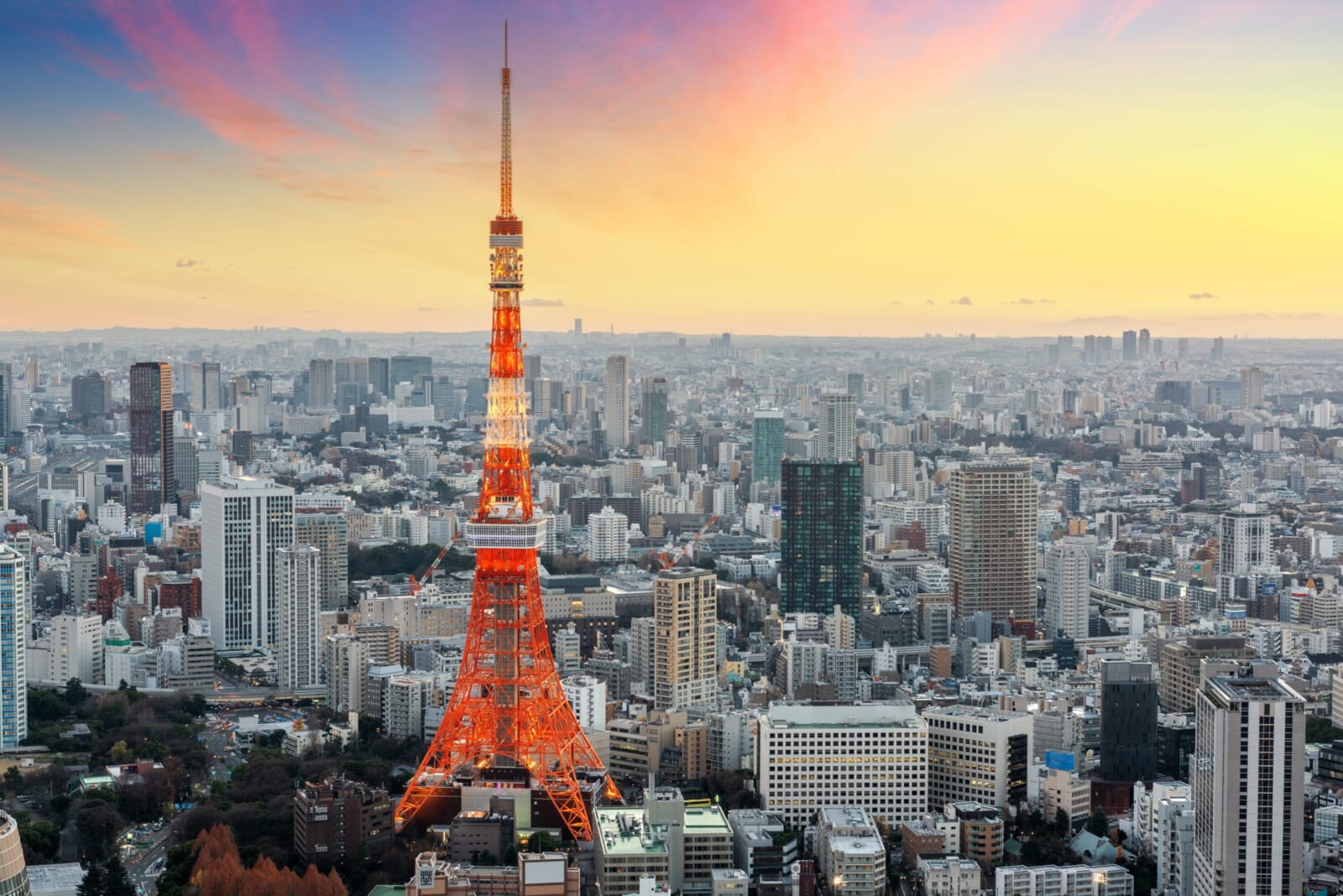
The most rewarding visit is late afternoon into evening — arriving 60 to 90 minutes before sunset to watch the city shift from daylight to neon. This is also the busiest window, especially on weekends; if you’re set on a sunset visit, book the Top Deck Tour in advance to skip the longest queues.
For quieter alternatives, opening time at 9:00 offers the clearest views and the smallest crowds, and is best for photography of distant landmarks like Mount Fuji. Later visits after 21:00 are surprisingly atmospheric — the deck is quieter, the city below is at full glitter and the experience feels less like a tourist queue and more like a private viewing.
As for when in the year to visit Tokyo Tower, weather matters more than season. Tokyo’s clearest air typically comes after rain, in winter months, and on windy days that clear the haze — these are when Mount Fuji is most likely to appear on the western horizon. Hot summer afternoons are usually the worst for visibility.


Tokyo Tower vs. Tokyo Skytree: Which Should You Visit?
If you only have time for one observation deck on a Tokyo trip, the choice depends on what you actually want from the experience.
Choose Tokyo Tower if: you want the more atmospheric, character-filled experience; you’re staying in central Tokyo (Roppongi, Ginza, Shibuya); you want to combine your visit with Zojoji Temple or Shiba Park; or you’re a fan of mid-century architecture and the Showa-era Tokyo aesthetic. Tokyo Tower also tends to be cheaper and less crowded than the Skytree’s higher decks.
Choose Tokyo Skytree if: you want the highest possible view (the Skytree’s Tembo Galleria reaches 450 meters versus Tokyo Tower’s 250); you’re already heading to Asakusa or eastern Tokyo; or you prefer a more modern, design-forward visitor experience. The Skytree’s lines also tend to be longer and the admission notably higher.
The Skytree is more impressive as a feat of engineering, but Tokyo Tower remains the sentimental favorite of Tokyoites.