
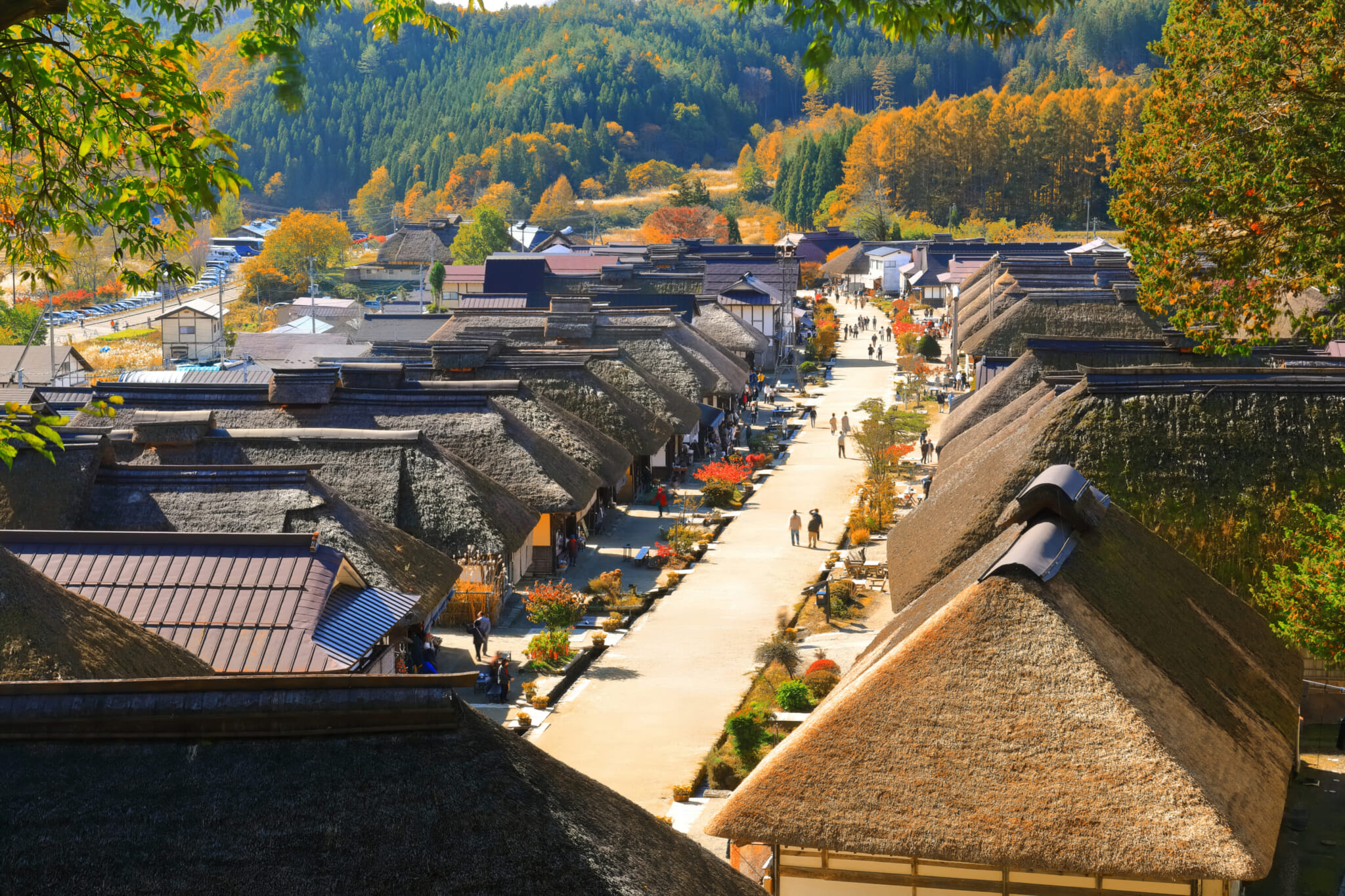
Ouchi-juku Overview
Ouchi-juku is one of Japan’s best-preserved post towns, tucked away in the mountains of Shimogo town in the Minami-Aizu district of Fukushima prefecture. Established around 1643 along the Aizu Nishi Kaido highway, this former rest stop once served feudal lords, merchants and travelers making the journey between the Aizu domain and Nikko. More than 30 thatched-roof buildings line a wide, unpaved main street that stretches roughly 400 meters, creating a striking scene that looks much as it did during the Edo period (1603–1867).
After the Meiji era brought new transportation routes that bypassed the village, Ouchi-juku gradually fell into obscurity — but that very isolation helped preserve its traditional architecture. In 1981, the Japanese government designated the area as an Important Preservation District for Groups of Traditional Buildings, and residents continue to uphold the local charter of “do not sell, rent or destroy” to maintain the village’s historic character. Today, those same thatched-roof buildings house restaurants, souvenir shops and traditional inns where visitors can experience the atmosphere of old Japan.
No visit is complete without trying negi soba, the local specialty of handmade buckwheat noodles eaten using a whole leek as chopsticks. You’ll also find grilled char fish and shingoro, miso-coated rice balls grilled over charcoal. For a deeper look into the area’s history, the Ouchi-juku Machinami Exhibition Hall displays Edo-period tools and artifacts inside a reconstructed honjin (official inn). Climb the stone steps at the end of the main street to reach the Takakura Shrine observation point for a panoramic view of the village — easily the most photographed spot in Ouchi-juku.
Best Times To Visit Ouchi-juku
Ouchi-juku is beautiful in every season, but winter and summer bring especially memorable events. The Ouchi-juku Snow Festival, held on the second weekend of February, transforms the village into a candlelit scene with handcrafted snow lanterns and fireworks lighting up the night sky. The Hange Midsummer Festival on July 2 features a procession of locals in traditional Edo-period costumes and is rooted in centuries of tradition.
Spring and autumn offer milder weather and beautiful natural scenery — cherry blossoms and fresh greenery in spring, colorful foliage in autumn. Weekdays are recommended for a quieter experience, as weekends and holidays tend to draw large crowds.