
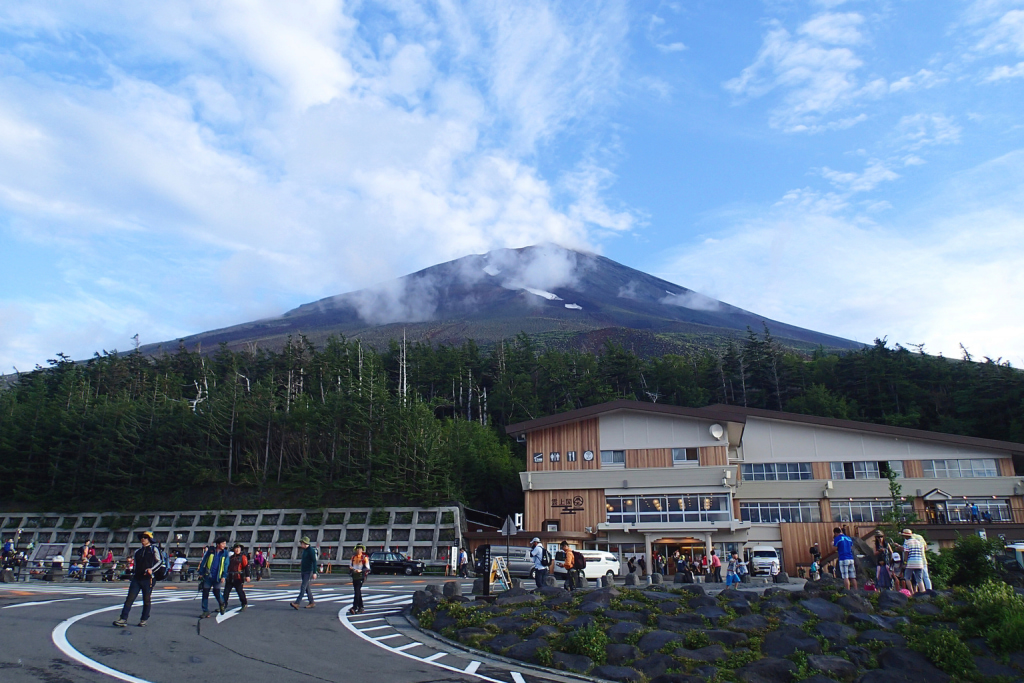
The Gateway to Japan’s Sacred Mountain
Located at 2,300 meters above sea level, Mount Fuji 5th Station serves as the primary gateway to Japan’s highest peak. The Fuji Subaru Line 5th Station, also known as the Yoshida Trail 5th Station, marks the beginning of the most popular climbing route to Mount Fuji’s summit while also offering breathtaking views for visitors who prefer not to tackle the full ascent. This halfway point between the mountain’s base and the 3,776-meter summit provides a rare opportunity to experience Mount Fuji’s grandeur without the demanding multi-hour climb.
The 5th Station serves dual purposes as both a practical staging area for climbers and a destination in itself. The area features shops, restaurants, observation points and facilities where visitors can purchase hiking supplies, wooden walking sticks and souvenirs. Behind the main complex, Komitake Shrine offers unobstructed panoramic views of Fujiyoshida City, Lake Yamanaka and the surrounding Fuji Five Lakes region below.
For climbers, the 5th Station marks the point where the tree line ends and Mount Fuji’s volcanic landscape begins. The Yoshida Trail from this station to the summit covers 6.8 kilometers with approximately 1,500 meters of elevation gain, typically requiring five to seven hours for the ascent and three to five hours for the descent. The trail features numerous mountain huts along the way, particularly around the seventh and eighth stations, making it the best-equipped and most accessible route.
Even for non-climbers, the 5th Station provides a compelling Mount Fuji experience. At this elevation, the air is noticeably thinner and cooler, and on clear days, visitors can see the distinctive volcanic terrain and sweeping vistas that have made Mount Fuji a UNESCO World Heritage site. The observation areas offer excellent photo opportunities with views stretching across the Fuji Five Lakes region.
Best Times To Visit Mount Fuji 5th Station
The official climbing season runs from early July through early September when mountain huts are open and trails are maintained. During this period, the 5th Station can become extremely crowded, particularly on weekends and during the Obon holiday in mid-August. For the best climbing experience with fewer crowds, visit on weekdays in early July or late August.
Outside climbing season, the 5th Station remains accessible year-round (snow conditions permitting) and is actually less crowded, making it ideal for sightseeing without climbing. Autumn (September through November) offers pleasant temperatures and clearer skies for Mount Fuji views, though weather can be unpredictable. Winter access is typically restricted during heavy snow.
For optimal viewing conditions, arrive early morning when skies tend to be clearest. Cloud cover typically increases as the day progresses, potentially obscuring views by afternoon.