Megane Bridge Overview
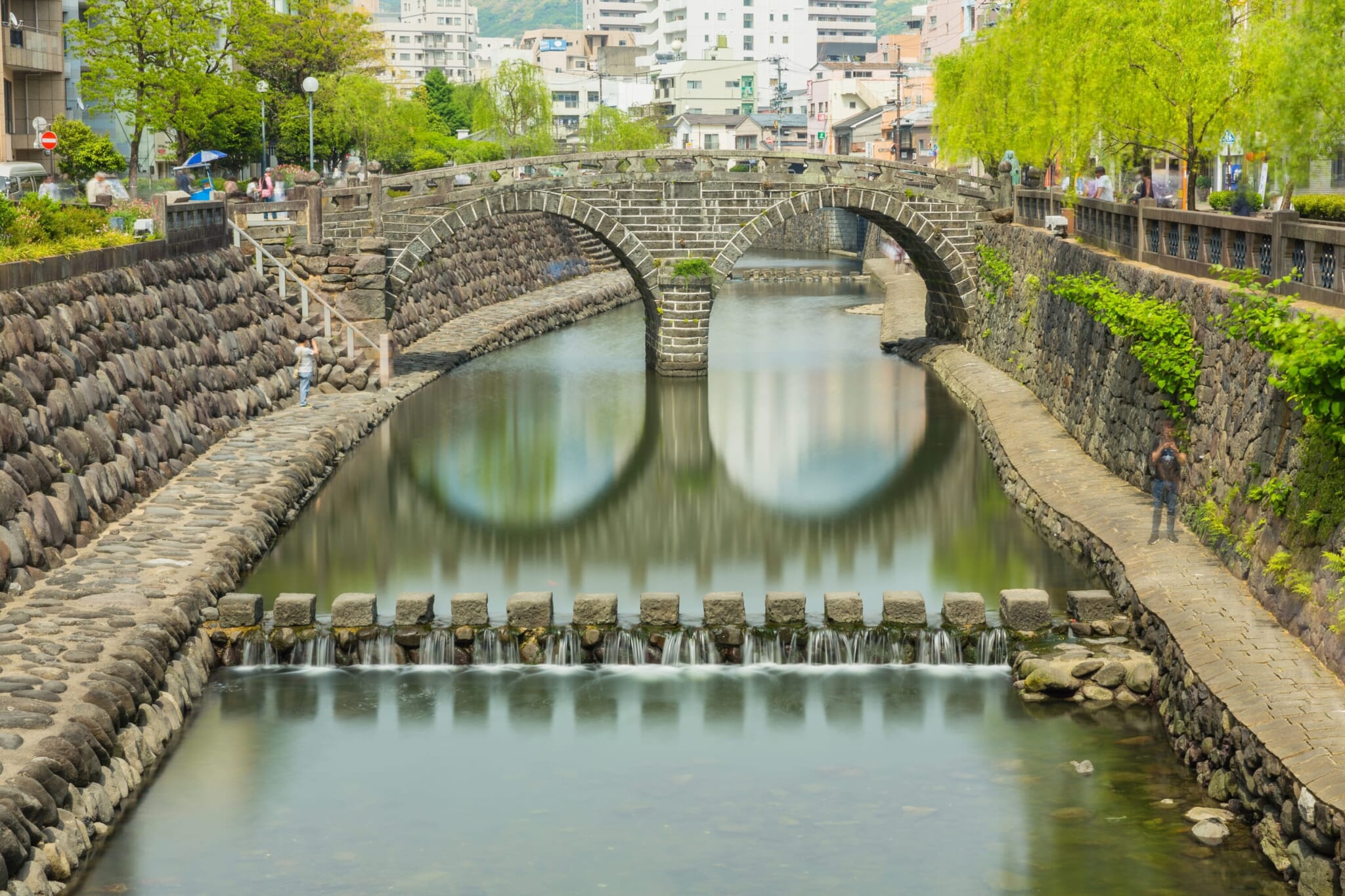
Spanning the Nakashima River in the heart of Nagasaki city, Megane Bridge — or Meganebashi, literally meaning “Spectacles Bridge” — is one of Japan’s oldest and most photographed stone arch bridges. Built in 1634, it takes its name from the image created when its two arches reflect in the calm water below, forming the unmistakable shape of a pair of eyeglasses.
The bridge was constructed by Mokusu Nyoujo, a Chinese monk who served as the second-generation head of the nearby Kofukuji Temple, which had been established in the 1620s by Chinese merchants settling in Nagasaki. The bridge was built to provide easier access to the temple across the river, and its design — a double-arched structure assembled from locally quarried stone without the use of cement — reflects the Chinese architectural influence that shaped much of Nagasaki’s early urban fabric. Megane Bridge is 22 meters long and 3.65 meters wide, and has been designated a National Important Cultural Property.
The bridge has survived considerable adversity over the centuries. A flood in 1647 destroyed it, and it was rebuilt the following year. Severe flooding in July 1982 damaged it again along with several other stone bridges along the Nakashima River, but nearly all of the original stones were recovered and the bridge was faithfully restored. Today it stands as the centerpiece of a group of stone bridges along a tree-lined riverside walkway — a pleasant stretch for a stroll, with koi visible beneath the surface, riverside cafes and shops specializing in castella, Nagasaki’s signature Portuguese-inspired sponge cake.
Scattered along the stone embankments near the bridge are around 20 hidden heart-shaped stones, said to bring good luck in love to those who find them.
Best Times To Visit Megane Bridge
Megane Bridge is accessible at any time of day and in any season, making it one of Nagasaki’s most flexible sightseeing stops. Early morning visits offer the calmest water conditions and the best chance of capturing the famous spectacles reflection without crowds. Late afternoon light also works well for photography, and the bridge is illuminated at night, giving the riverside a warm, atmospheric glow.
Spring is particularly scenic, when hydrangeas bloom along the riverbanks during the Nagasaki Otakusa Festival in May and June. The Chinese New Year period (typically January or February) is another festive time to visit, with the surrounding area — including Chinatown and the bridge itself — decorated with lights and floating river displays.