

Overview of Kuju Flower Park
Kuju Flower Park (Kuju Hana Koen) sits on the Kuju Plateau in Taketa city, Oita Prefecture, at an altitude of 850 meters within Aso-Kuju National Park. Covering approximately 220,000 square meters — one of the largest flower parks in western Japan — it commands sweeping views of the Kuju Mountain Range and, on clear days, the distant peaks of Mount Aso across the prefectural border.
The park grows more than 500 varieties of flowers, with an estimated 5 million blooms across the grounds from spring through autumn. Rather than a single peak season, it is designed as a relay of color: each section of the park is replanted or timed so that something is always in bloom throughout the open season. Tulips, violas and poppies fill the fields in spring; lavender, sunflowers and blueberries (including a pick-your-own section) take over in early summer; and a million cosmos plants alongside vivid salvias, celosias and marigolds dominate in autumn. On rainy or overcast days, the park’s greenhouse — filled with tropical plants and begonias — offers a sheltered alternative.
The grounds are divided into themed areas including a Rose Garden, Lavender Hill, Clematis Garden and the main Plateau Colors section, where flower fields are planted in patchwork patterns designed to be appreciated from higher ground as well as at eye level. Walking the full circuit at a relaxed pace takes around 2 hours. A buffet restaurant serves meals made with locally sourced ingredients, and a cafe overlooking the rose garden and Aso Mountains serves the park’s popular lavender soft serve. Over a dozen shops sell flower-themed crafts, local produce and souvenirs. Pets are welcome throughout the park, and a dog run is available on-site.
One of the park’s more unusual features is its variable admission pricing: the entry fee adjusts based on how many flowers are currently in bloom, so a visit during a transitional period between seasons may cost less than the peak rate.
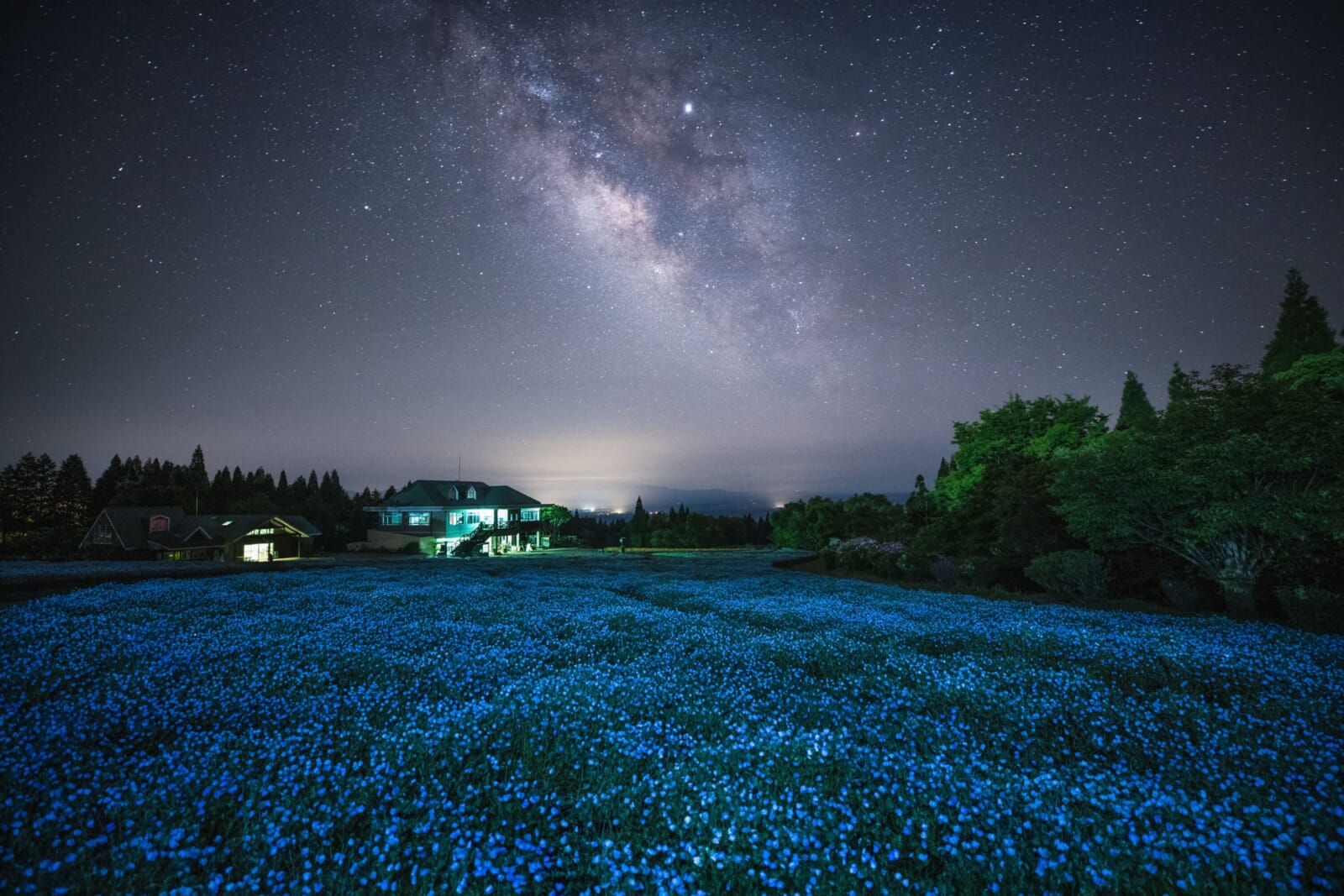
Best Times To Visit Kuju Flower Park
Late April through May is generally the most spectacular period, when the greatest variety of flowers bloom simultaneously and special events are held. The lavender fields peak in June and July, making early summer another popular window. Autumn — September through November — brings an entirely different palette of cosmos, marigolds and the park’s expanding celosia collection, which introduced a Kyushu-record-setting planting of 70,000 plants in 2025. Each season has its own character, and the park’s live bloom-status feed on its official website (Japanese only) helps visitors plan the timing of their trip.
The plateau location means temperatures run noticeably cooler than the surrounding lowlands, making the park a welcome retreat in the heat of August.