

Iya Kazurabashi Overview
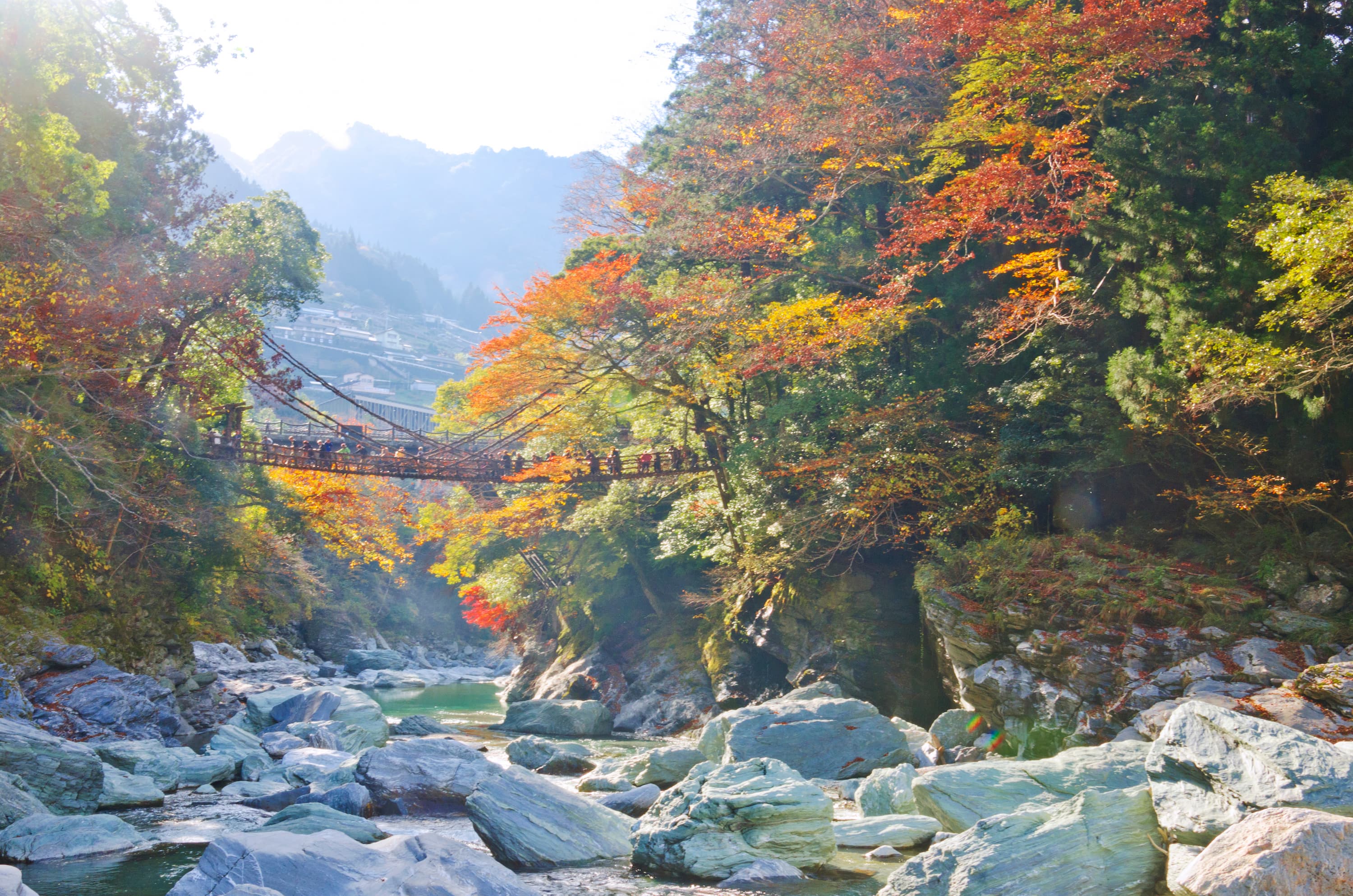
Tucked deep within the mountains of Tokushima Prefecture on Shikoku Island, Iya Kazurabashi is one of Japan’s most remarkable and atmospheric landmarks. Stretching 45 meters across the Iya River, the bridge hangs 14 meters above the water, its open wooden slats and swaying motion making it as thrilling to cross as it is beautiful to photograph.
Constructed from hardy kiwi vine — around 5 to 5.5 tons of it — the bridge is rebuilt entirely every three years, a tradition that has kept this ancient structure alive for centuries. Hidden steel cables are woven within the vines for safety, though that does little to calm the nerves mid-crossing. It is one of only three vine bridges still standing in the valley, out of 13 that once spanned it, and has been designated a National Important Tangible Folk Cultural Property.
The origins of the bridge are steeped in legend. One tradition holds that the Buddhist monk Kobo Daishi constructed it to aid local villagers; another, more widely told, says it was built by defeated Heike warriors who fled to the remote Iya Valley following their losses in the Genpei War (1180–1185). The bridges could be cut down quickly to prevent enemies from following — a feature as practical as it was dramatic.
After dark, the bridge is illuminated nightly from 19:00 to 21:30, though crossing is not permitted during this time. Nearby, visitors will find the Biwa Waterfall, a path down to the Iya River — a popular swimming spot in summer — as well as small food stalls and shops.
Best Times To Visit Iya Kazurabashi
Autumn (October to mid-November) is the most stunning time to visit. The mountain slopes surrounding the Iya Valley ignite in shades of red, orange and gold, framing the bridge in spectacular seasonal color. The weather is also at its most pleasant — crisp and clear, perfect for walking and photography.
Spring brings fresh greenery and comfortable temperatures, while summer is lush and humid with the added appeal of river swimming below the bridge. Winter is quieter and more atmospheric, though some roads may be affected by snow and access to deeper parts of the valley can be restricted.
To avoid crowds, arrive as early in the morning as possible, especially during autumn peak season and on weekends.