

Fukuroda Falls Overview
Tucked into the forested mountains of Daigo town in northern Ibaraki Prefecture, Fukuroda Falls is one of Japan’s most celebrated natural landmarks. Standing 120 meters tall and 73 meters wide, the waterfall cascades down four distinct tiers of volcanic rock — a geological formation created by submarine volcanic eruptions some 15 million years ago. It is ranked alongside Nachi Falls in Wakayama Prefecture and Kegon Falls in Tochigi Prefecture as one of the Three Great Waterfalls of Japan, and has been designated a National Place of Scenic Beauty as well as one of Japan’s Top 100 Waterfalls.
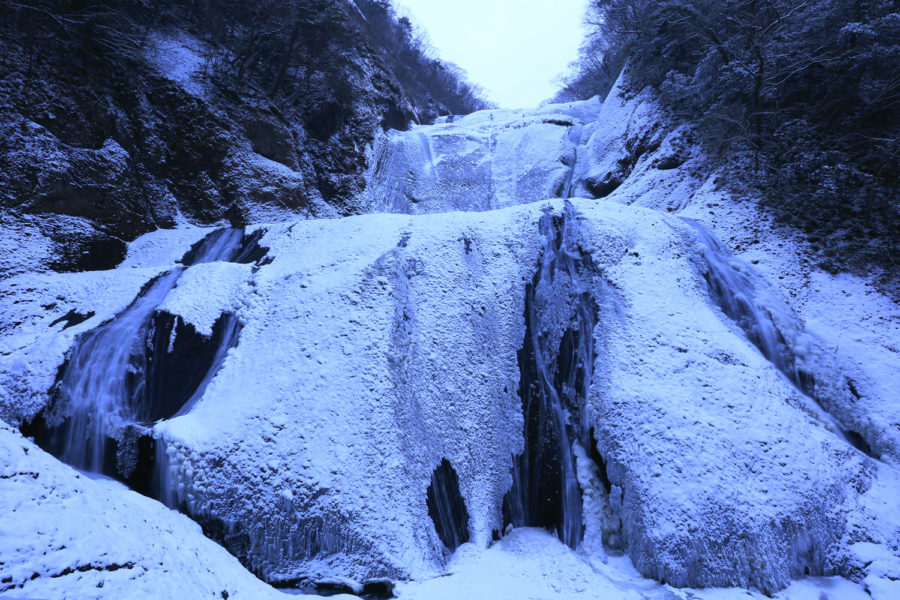
The falls are also known by a second name: “Yodo-no-Taki,” meaning “the waterfall to see four times.” The name is attributed to the 12th-century monk and poet Saigyo, who visited and declared that one could not truly appreciate its beauty without returning in each of the four seasons. That sentiment still rings true today. Spring brings fresh green foliage; summer, a roaring rush of water against lush forest; autumn, arguably the most popular time to visit, when the surrounding slopes ignite in red and gold. Winter offers something rarer still — in cold enough conditions, the entire falls can freeze solid, forming a dramatic natural ice sculpture known as hyobaku.
Access to the falls is straightforward. From the entrance, visitors pass through a 276-meter pedestrian tunnel carved through the rock face, emerging at a multi-level observation deck with close-up views of each tier. An elevator provides access to the upper viewing platforms. A suspension bridge near the falls leads to additional hiking trails, including a path to the Namase Waterfall — a slightly more remote waterfall of the same system — and a 45-minute trail to a small Kannon temple deeper in the mountains.
Best Times To Visit Fukuroda Falls
Early November is the most popular time to visit, when autumn foliage frames the falls in vivid color. Winter — roughly late December through mid-February — offers the chance to witness the falls frozen over, though this depends on temperatures being cold enough. From early November through January, a winter illumination event lights up the falls and surrounding tunnel with colored lights each evening, set to music. Spring and summer are quieter periods but offer their own appeal, with the roar of snowmelt-fed water at its most powerful. Arriving early in the morning is recommended during peak autumn season to beat the crowds.