

Ishiteji Temple Overview
Ishiteji Temple, located in the eastern part of Matsuyama city in Ehime Prefecture, is one of Shikoku’s most beloved and unusual Buddhist temples. As the 51st of 88 stops on the Shikoku Pilgrimage, a roughly 1,200-kilometer circuit linking temples associated with the revered monk Kukai (Kobo Daishi), it draws a steady stream of white-clad pilgrims alongside curious sightseers.
The temple’s name translates to “stone hand temple,” referring to the legend of Emon Saburo, a wealthy but miserly farmer who, after wronging Kukai and losing his eight children, spent years walking the pilgrimage route in search of forgiveness. According to the tale, he was reborn into the powerful Kono clan clutching a stone in his hand — that stone is now enshrined at Ishiteji.
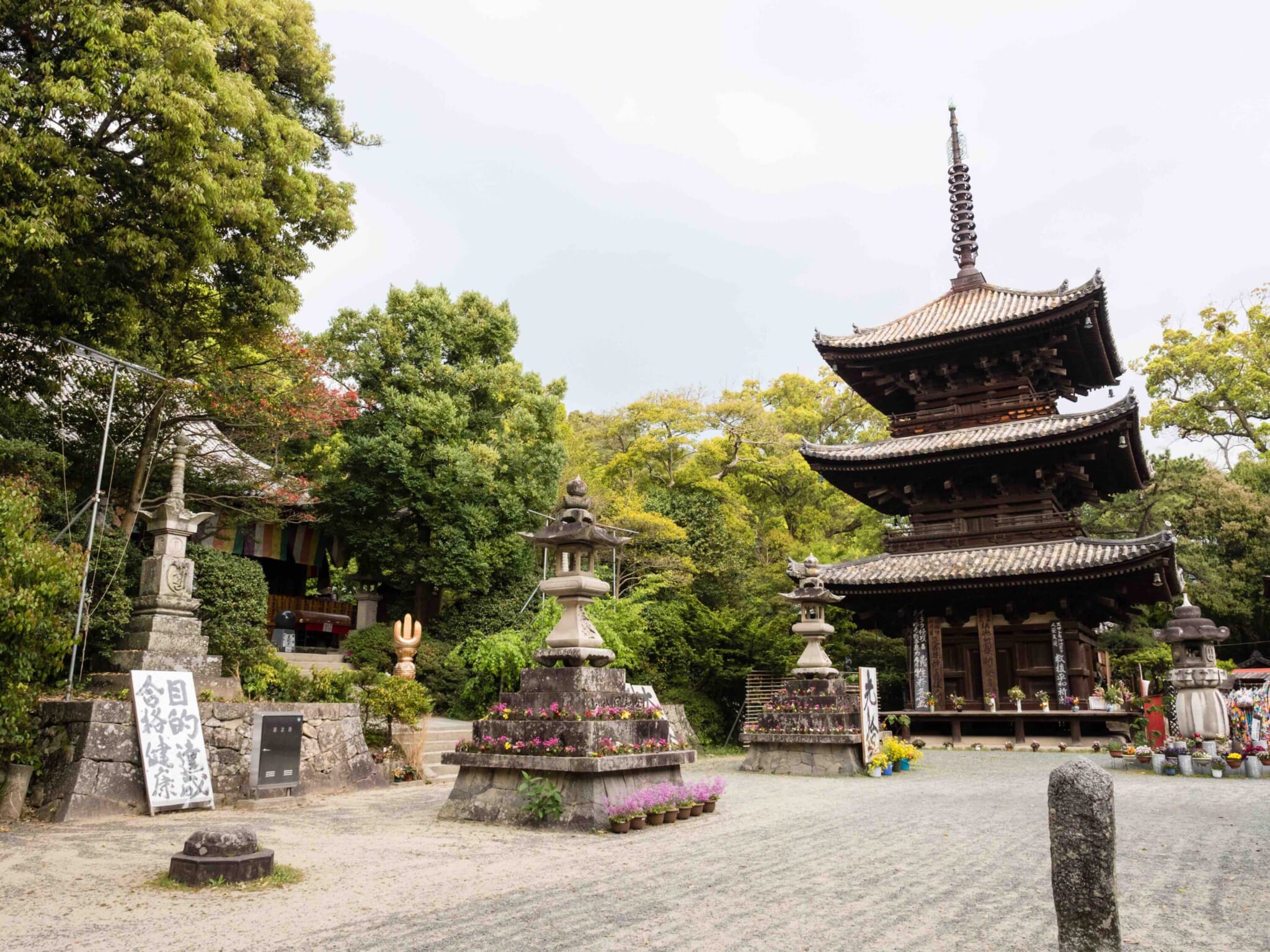
Founded in the early 8th century and rebuilt in the Kamakura period, Ishiteji is an architectural treasure trove. The Niomon Gate, constructed in 1318, is designated a National Treasure, while the main hall, three-story pagoda and bell tower are Important Cultural Properties. Beyond the conventional temple buildings, Ishiteji’s attractions are a bit more strange. A dimly lit cave runs roughly 200 meters through the mountain behind the main hall, lined with Buddhist statues and carvings that sit tucked into dark crevices of the cave, and emerges near a quirky inner temple topped with a golden dome.
Best Times To Visit Ishiteji Temple
Visiting on a weekday morning is ideal for those who prefer a quieter, more contemplative experience. At any time of year, white-clad pilgrims still walk the holy trail, adding a sense of living tradition that sets Ishiteji apart from many of Japan’s more tourist-oriented temple sites.