
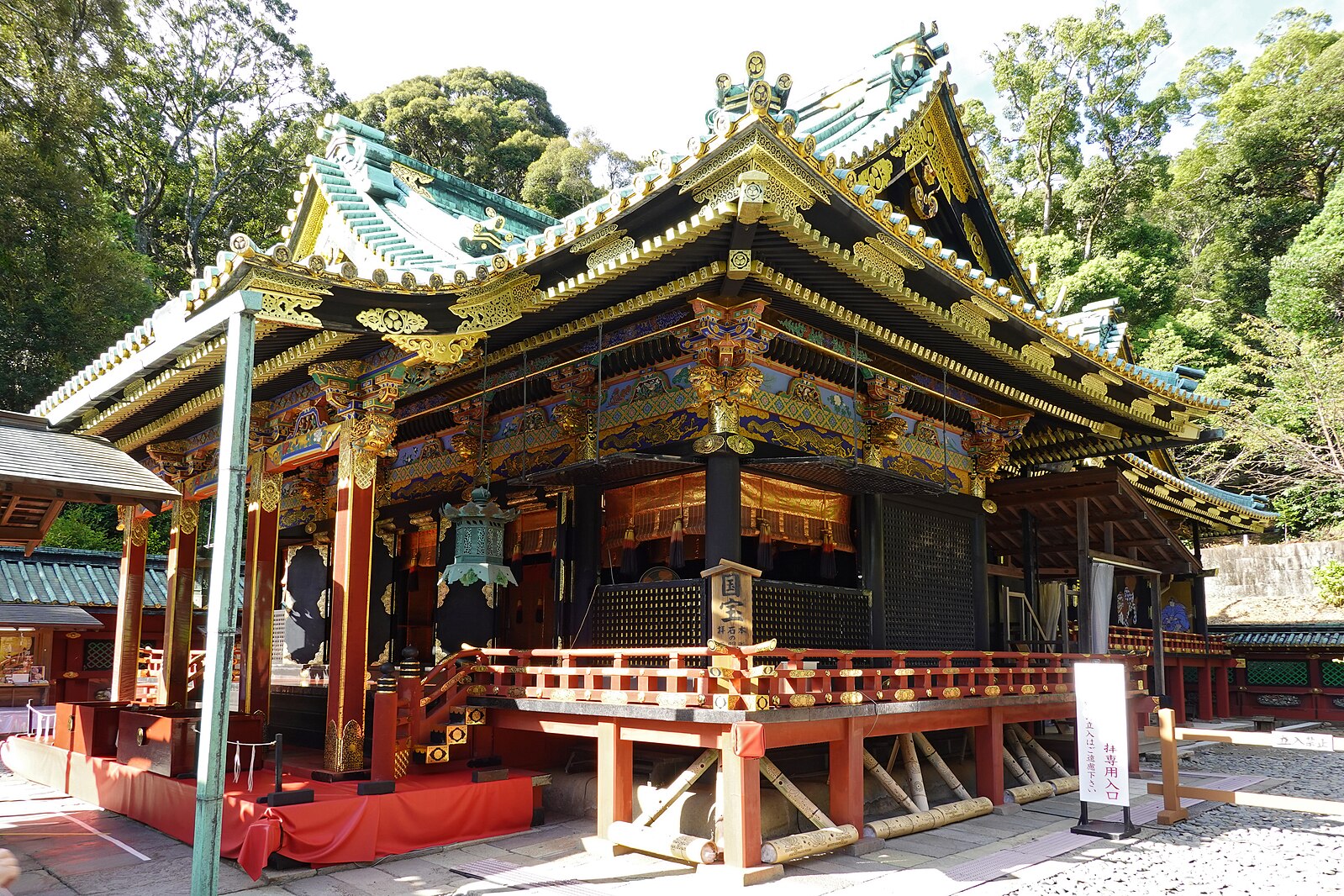
Overview of Kunozan Toshogu Shrine
Kunozan Toshogu Shrine is one of Japan’s most historically significant Shinto shrines, located atop Mount Kuno in Suruga Ward, Shizuoka city, Shizuoka Prefecture. Enshrined here is Tokugawa Ieyasu, the founder of the Edo shogunate, who unified Japan under his rule in the early 17th century. Following his death in 1616, Ieyasu was initially buried at Kunozan before his remains were later moved to Nikko Toshogu in Tochigi Prefecture — making Kunozan the original and arguably most intimate of all the Toshogu shrines dedicated to his memory.
The shrine complex sits at an elevation of approximately 216 meters and is reached via a steep stone staircase of 1,159 steps from the base of the mountain — a climb that rewards visitors with sweeping views of Suruga Bay and, on clear days, Mount Fuji. For those preferring a less strenuous approach, a ropeway connects the nearby Nihondaira Plateau to the shrine in just a few minutes, offering panoramic coastal views along the way.
The shrine buildings, designated National Treasures of Japan, are prime examples of the ornate Gongen-zukuri architectural style, featuring intricate lacquerwork, vivid gold leaf detailing and elaborately carved wooden panels. The colors and craftsmanship are comparable to those found at Nikko, though Kunozan’s relatively lower visitor numbers lend it a quieter, more contemplative atmosphere. The onsite museum houses a remarkable collection of artifacts associated with Ieyasu, including personal belongings, armor and one of the oldest Western clocks in Japan, gifted to the shogun by the Spanish governor of Mexico.
Best Times To Visit Kunozan Toshogu Shrine
Kunozan Toshogu can be visited year-round, though certain seasons offer especially rewarding experiences.
Spring (March to May) is a popular time to visit, with cherry blossoms blooming along the mountain approach and mild temperatures making the 1,159-step climb more manageable. The combination of spring flowers and the shrine’s vivid lacquerwork is particularly striking.
Autumn (October to November) brings rich foliage to the slopes of Mount Kuno, framing the shrine buildings in warm seasonal color. Clear autumn days also offer some of the best visibility for views of Mount Fuji from the ropeway and shrine grounds.
Winter (December to February) sees fewer crowds and crisp, clear skies that frequently yield sharp views of Fuji across Suruga Bay. The shrine’s gold and vermilion details stand out especially vividly against a clear winter sky.
Summer (June to August) can be hot and humid, making the staircase climb demanding. Early morning visits are strongly recommended during this season to avoid both the heat and the midday crowds.