

Japan’s Castle in the Sky
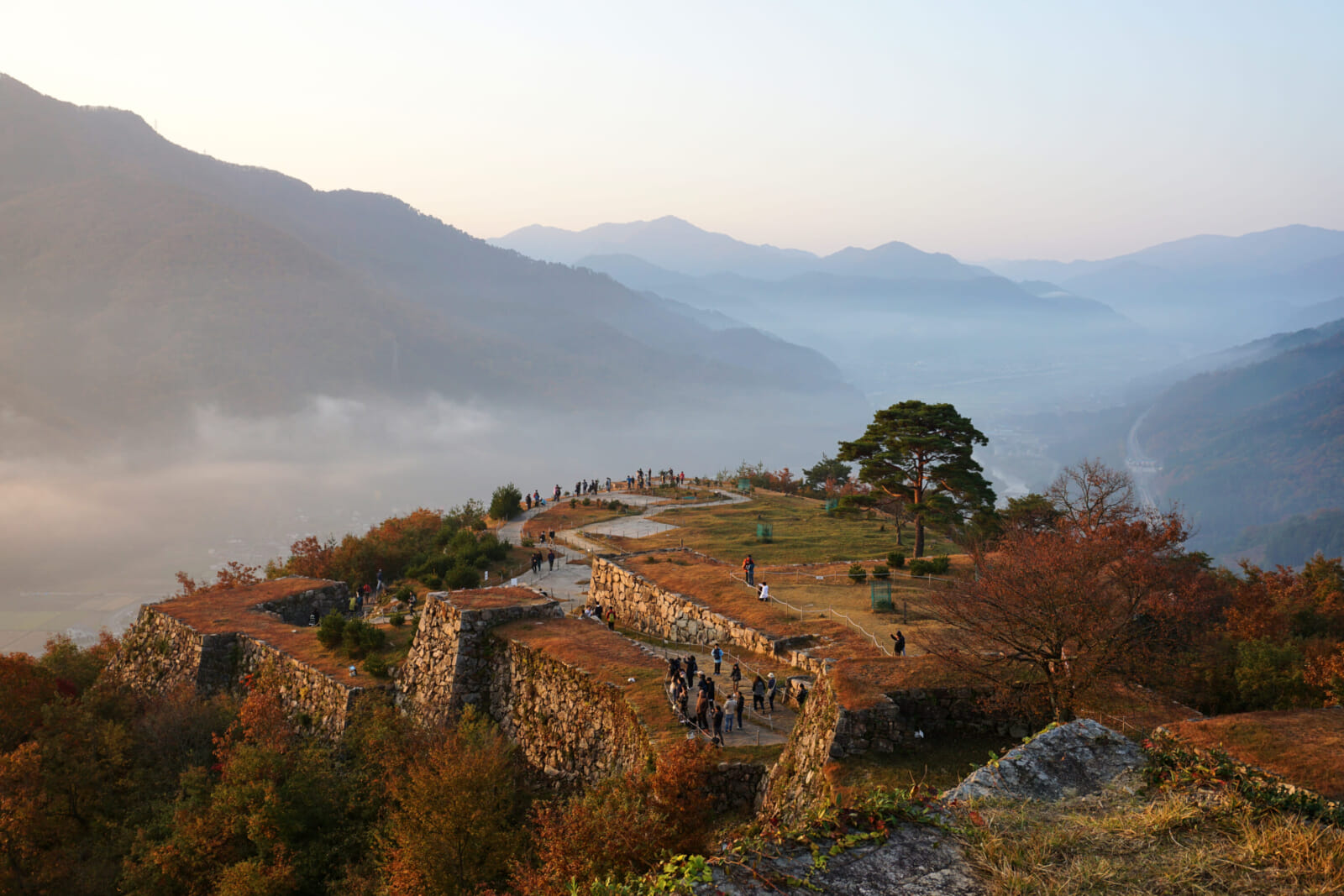
Perched 353 meters above sea level in Asago, Hyogo Prefecture, Takeda Castle Ruins are among Japan’s most photographed historical sites. Often called the “Castle in the Sky” or “Machu Picchu of Japan,” these 15th-century ruins become a truly magical sight when autumn morning mist creates a sea of clouds below the mountaintop fortress.
Built around 1443 under the order of regional lord Yamana Sozen by his retainer Otagaki Mitsukage, Takeda Castle served as a strategic mountain fortress for over 150 years before being abandoned in 1600. While the original structures no longer stand, the impressive stone walls remain remarkably intact, winding along the mountain ridge in a layout that resembles a crouching tiger when viewed from above. The ruins span approximately 100 meters from east to west and 400 meters from north to south, making them one of Japan’s largest mountain castle remains.
The site offers panoramic views of Asago city and the surrounding valleys. On clear days, visitors can see for miles across the rural landscape of northern Hyogo. The remaining stone fortifications — some reaching heights of 10 meters — showcase the architectural prowess of Japan’s castle-building era and provide insight into medieval defensive strategies.
Beyond its historical significance, Takeda Castle Ruins have gained international recognition as a premier photography destination. The cloud sea phenomenon, combined with sunrise, creates an otherworldly atmosphere that draws photographers and nature enthusiasts from around the world.
Best Times To Visit Takeda Castle Ruins
The optimal time to witness the famous cloud sea is from late September through early December, with October and November offering the highest probability of cloud formation. The phenomenon happens most reliably on calm, clear mornings following cold nights, typically between dawn and 8 a.m.
Spring brings cherry blossoms to the mountain trails, while summer offers lush greenery and clear mountain air. Winter visits are possible but require careful preparation for icy conditions. The site is illuminated during special events, including cherry blossom season and the autumn cloud sea period.
Early morning visits require advance planning, as access times are strictly controlled during peak season to protect the site and manage visitor numbers.