

The White Heron Castle
Himeji Castle stands as Japan’s finest example of feudal-era architecture and one of only 12 original castles remaining in the country. Often called the “White Heron Castle” due to its brilliant white exterior and elegant design, this UNESCO World Heritage site towers over Himeji city in Hyogo Prefecture. First built in 1333 and expanded to its current magnificent form in 1609, the castle survived World War II bombings and has been meticulously preserved, offering visitors an authentic glimpse into samurai-era Japan.
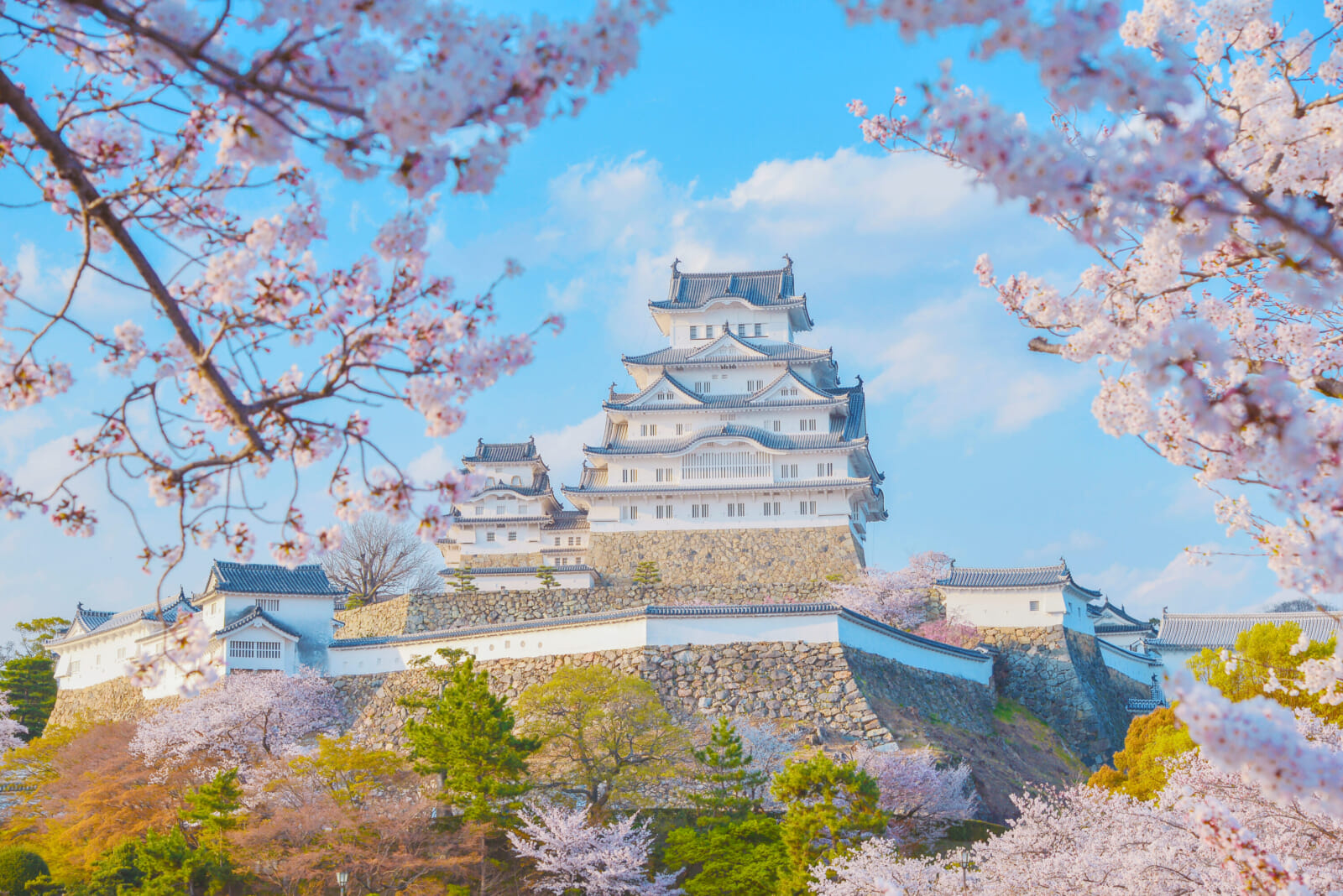
The castle’s stunning white plaster walls, graceful multi-tiered roofs and sophisticated defensive systems showcase the pinnacle of Japanese castle architecture. Unlike many reconstructed castles in Japan, Himeji’s wooden interior remains original, with steep staircases, hidden rooms and strategic defensive features intact. The sprawling complex includes 83 buildings connected by a maze-like series of paths designed to confuse invaders. Cherry trees planted throughout the grounds transform the castle into a pink-and-white wonderland each spring, making it one of Japan’s most photographed landmarks.
Best Times To Visit Himeji Castle
The castle is spectacular year-round, but spring (late March to early April) offers the most magical experience when approximately 1,000 cherry trees bloom across the grounds. However, this peak season brings significant crowds. For a more peaceful visit with pleasant weather, consider autumn (October to November) when the temperatures are mild and the surrounding foliage turns golden. Winter visits offer the advantage of smaller crowds and the striking contrast of white snow against white walls. Summer can be hot and humid, though the castle is open longer hours during this season.
To avoid crowds on any day, arrive right when the castle opens at 9 a.m. Weekdays are generally less busy than weekends, and visiting during the off-season months of June, July or January through February ensures a more intimate experience.