
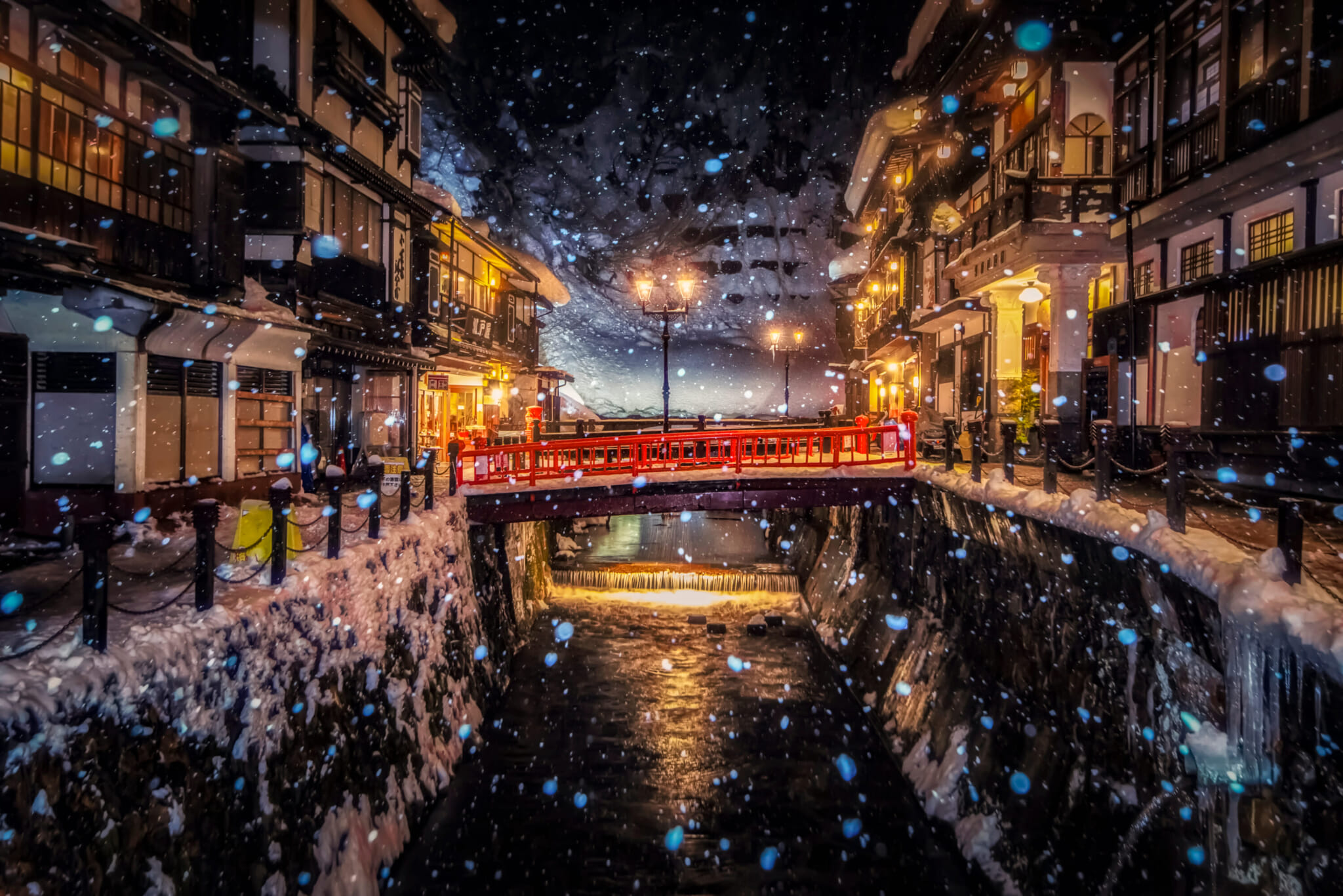
Ginzan Onsen Overview
Ginzan Onsen is one of Japan’s most atmospheric hot spring resorts, nestled in a narrow mountain valley along the Ginzan River in Obanazawa city, Yamagata Prefecture. With its rows of elegant, multi-story wooden ryokan lining both sides of a rushing stream, gas lanterns glowing at dusk, and wooden footbridges arching over the water, the village looks as though it has stepped directly out of another era — because in many ways, it has.
The town takes its name from the Ginzan silver mine (gin meaning silver, yama meaning mountain) that once operated in the area during the early Edo era. When the mine was flooded and abandoned in the 17th century, locals discovered the hot spring waters that would eventually give rise to the onsen village. The ryokan buildings that define the streetscape today were largely constructed during the Taisho period (1912–1926), blending traditional Japanese architecture with the Western influences fashionable at the time — a style known as Taisho Roman.
Ginzan Onsen rose to international prominence after inspiring the bathhouse setting in Hayao Miyazaki’s beloved animated film Spirited Away (2001), though Studio Ghibli has never officially confirmed this connection. Regardless, the resemblance is striking enough to draw visitors from around the world.
The village is small — only a handful of ryokan and shops line the main street — which only adds to its charm. Day-trippers and overnight guests alike come to stroll the cobblestone path, soak in the waters, and savor the quiet. A short walk upstream leads to the Shiraitonotaki waterfall, a lovely natural complement to the man-made beauty of the street below.
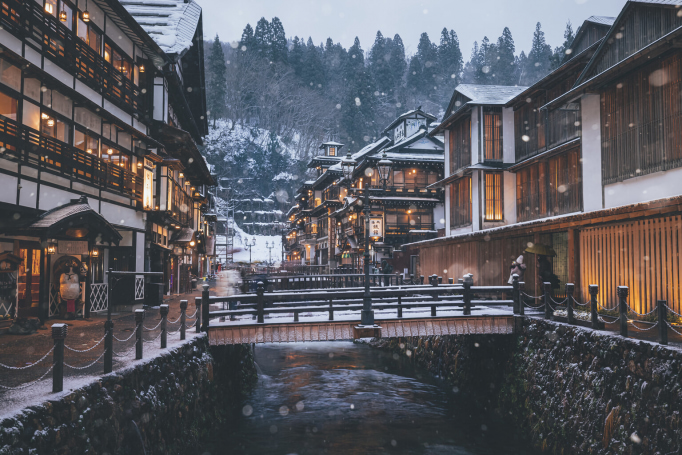
Best Times To Visit Ginzan Onsen
Ginzan Onsen is beautiful in every season, but winter (December–March) is widely considered its most magical. Heavy snowfall blankets the village, and the warm glow of the gas lanterns reflecting off the snow creates an almost cinematic atmosphere. This is peak season, so booking accommodations well in advance — sometimes months ahead — is strongly advised.
Spring (April–May) brings cherry blossoms and melting snow, offering a quieter alternative to the winter crowds. Autumn (October–November) is equally stunning, with the surrounding hillsides turning deep red and gold. Summer (June–August) is the least visited season, offering a more relaxed experience and easier accommodation availability.
Day visitors are welcome but note that the village is best experienced in the evening, when the lanterns are lit and the day-trip crowds have thinned. Overnight stays at one of the ryokan — which typically include dinner and breakfast alongside onsen access — are highly recommended for the full experience.
There is no entry fee to visit the village itself. Individual ryokan set their own rates, which vary considerably by season and room type.