
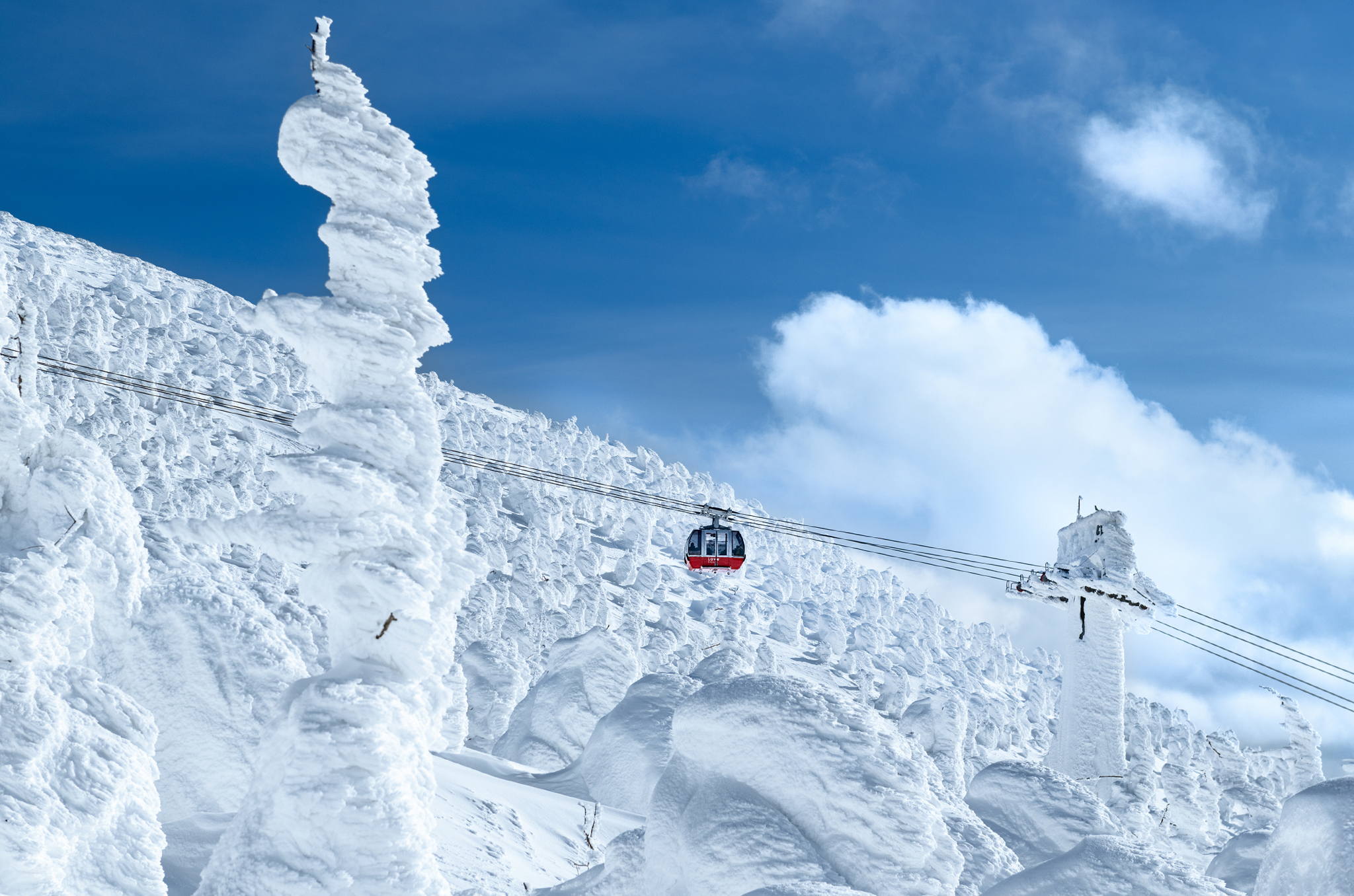
Mount Zao Overview
Mount Zao is a volcanic mountain range straddling the border of Yamagata and Miyagi prefectures in the Tohoku region. Standing at 1,841 meters at its highest peak, Kumano-dake, Zao is one of the most visited natural destinations in northern Japan — and one of the most dramatic in any season.
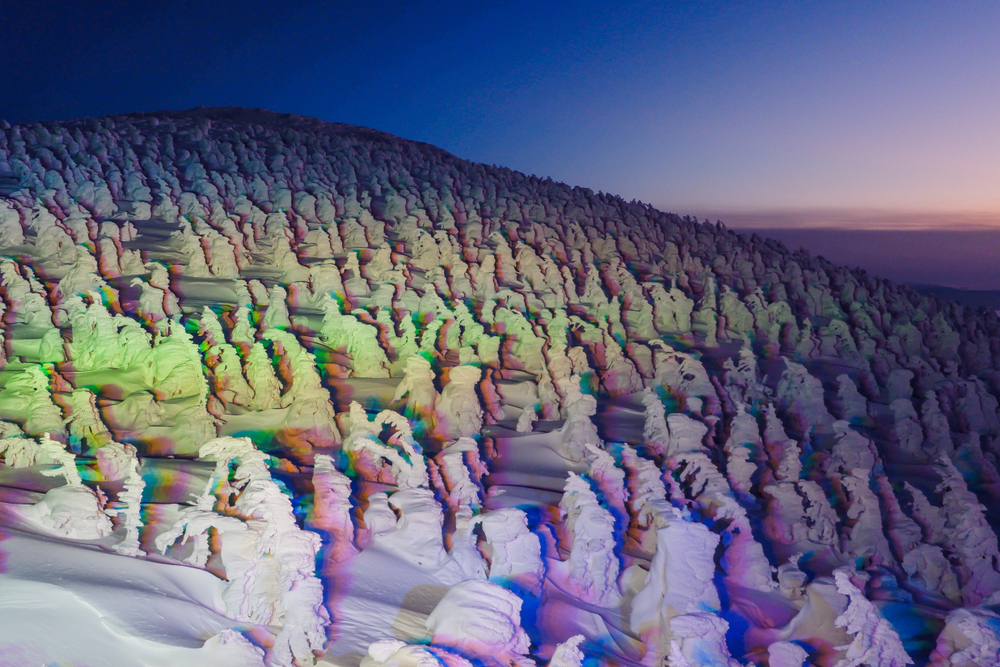
The mountain is perhaps best known for its juhyo, commonly called “snow monsters” — a phenomenon unique to the area in which frigid winds off Siberia coat the Aomori fir trees in successive layers of ice and snow, transforming them into enormous, hulking white sculptures. The effect is unlike anything else in Japan, and photographers and nature lovers travel from across the country and beyond to witness it between late December and early March.
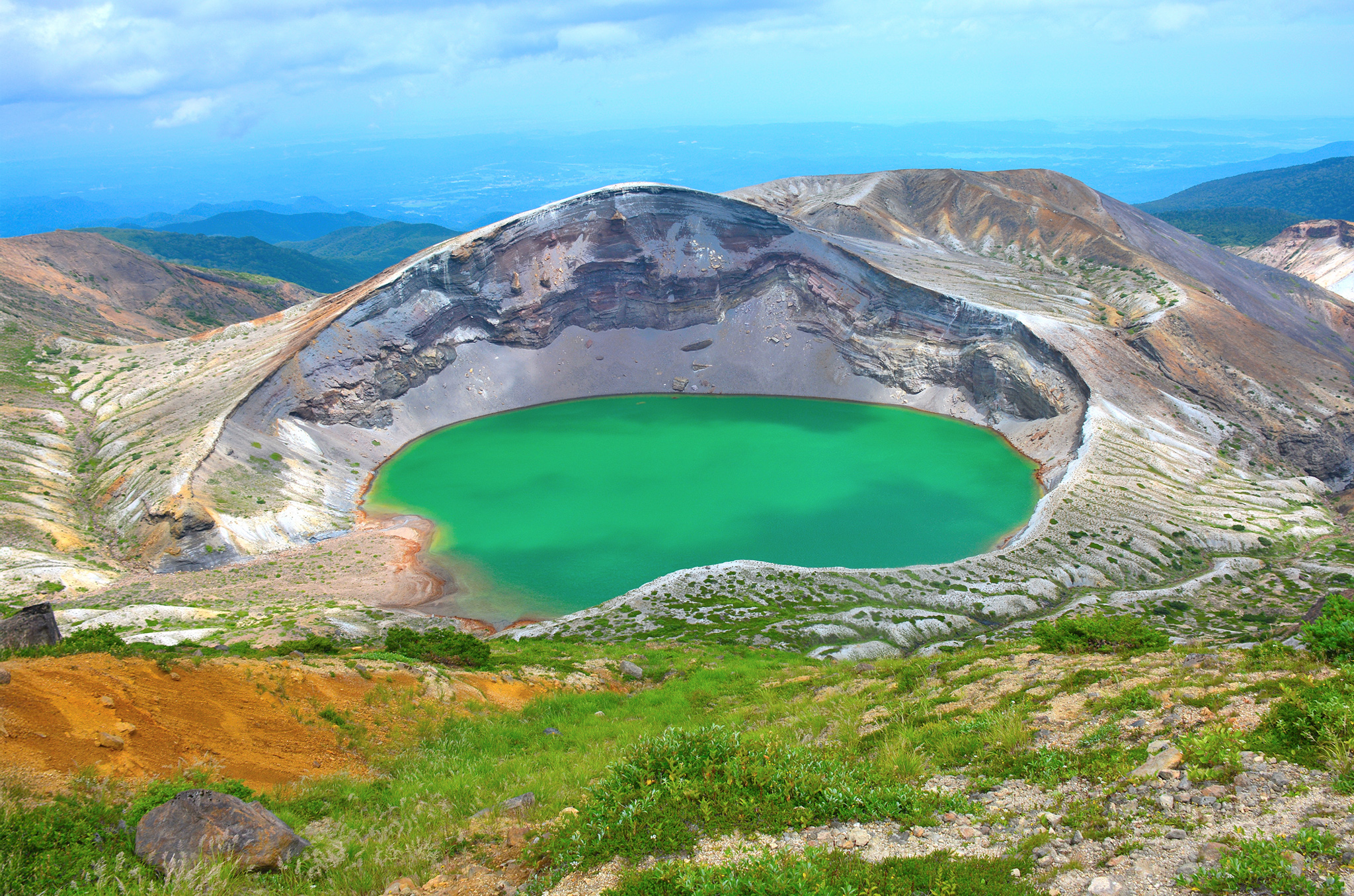
Beyond winter, Zao offers an equally compelling draw: Okama, a vivid emerald-green crater lake sitting at approximately 1,500 meters above sea level. Formed by volcanic activity, the lake’s striking color comes from its high sulfur content and shifts subtly depending on the light and season, cycling between shades of emerald, turquoise and deep olive. It is accessible via the Zao Echo Line toll road, one of Japan’s highest mountain roads, which opens from late April through early November.
Zao also has a long history as an onsen destination. Zao Onsen, located at the base of the ski slopes on the Yamagata side, is one of Tohoku’s largest and most celebrated hot spring resorts, with waters so acidic they are said to be among the most potent in Japan. The onsen town dates back over 1,900 years, with records of its discovery attributed to a disciple of the Buddhist monk Gyoki.
Best Times To Visit Mount Zao
Mount Zao rewards visitors year-round, with each season offering a distinctly different experience. Winter is prime juhyo season, drawing visitors for both the snow monsters and world-class skiing across one of Tohoku’s largest ski resorts. The combination of Zao’s slopes and the onsen town below makes it one of Japan’s finest winter destinations.
Spring sees the Zao Echo Line reopen, offering sweeping views of the surrounding peaks and early glimpses of the crater lake. Summer is ideal for hiking, with well-maintained trails connecting the major peaks and wildflowers dotting the alpine terrain. Autumn (September–October) transforms the mountainside into a canvas of red, orange, and gold — one of Tohoku’s most celebrated fall foliage spots.