
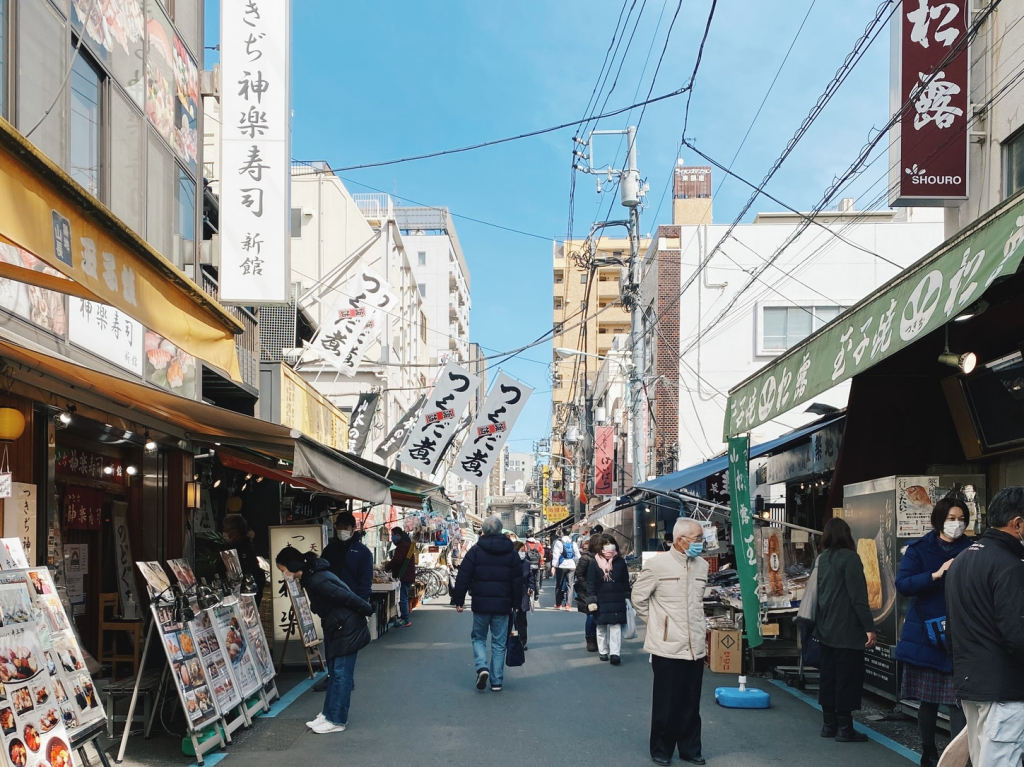
A Living Food Market
While Tokyo’s famous wholesale fish market moved to Toyosu in October 2018, Tsukiji Outer Market remains a vibrant culinary destination in the heart of the city. This maze of narrow streets and alleys is home to approximately 400 shops and restaurants that continue to serve some of Tokyo’s freshest seafood, traditional street food and specialty ingredients. Often called “Tokyo’s kitchen,” the market attracts both locals shopping for ingredients and visitors seeking an authentic taste of Japanese food culture.
The outer market has thrived independently since its establishment alongside the original Tsukiji Market, which opened in 1935 after the Great Kanto Earthquake destroyed the Nihonbashi Fish Market. Today, the area maintains strong connections with Toyosu Market, with many vendors making daily trips to source the freshest seafood for their shops and restaurants.
Walking through the market’s atmospheric alleyways, you’ll find everything from pristine sashimi and grilled scallops to tamagoyaki (Japanese omelets) on sticks, fresh produce, Japanese kitchen knives and cookware. The market is particularly famous for its sushi restaurants, where chefs prepare nigiri using fish delivered fresh each morning. Popular spots include standing sushi bars where you can eat shoulder-to-shoulder with locals, as well as sit-down restaurants serving kaisendon (seafood rice bowls).
The market operates with a community spirit — vendors are happy to share their expertise about ingredients and preparation methods. Early mornings (before 9am) are reserved for professional buyers, but general visitors can enjoy the full market experience from mid-morning through early afternoon.
Best Times To Visit Tsukiji Outer Market
For the best experience, arrive between 9:00 and 13:00 when most shops are open and the atmosphere is lively. Weekday mornings offer a more relaxed experience compared to crowded weekends, particularly Saturdays when long lines form at popular restaurants.
If you’re seeking fresh sushi for breakfast, aim to arrive by 10:00 before the lunchtime rush. Most shops begin closing around 14:00, so plan your visit accordingly. The market is generally closed on Sundays and some Wednesdays — check the official calendar before visiting. Avoid major Japanese holidays like New Year’s when the market can be extremely crowded with locals shopping for special ingredients.