
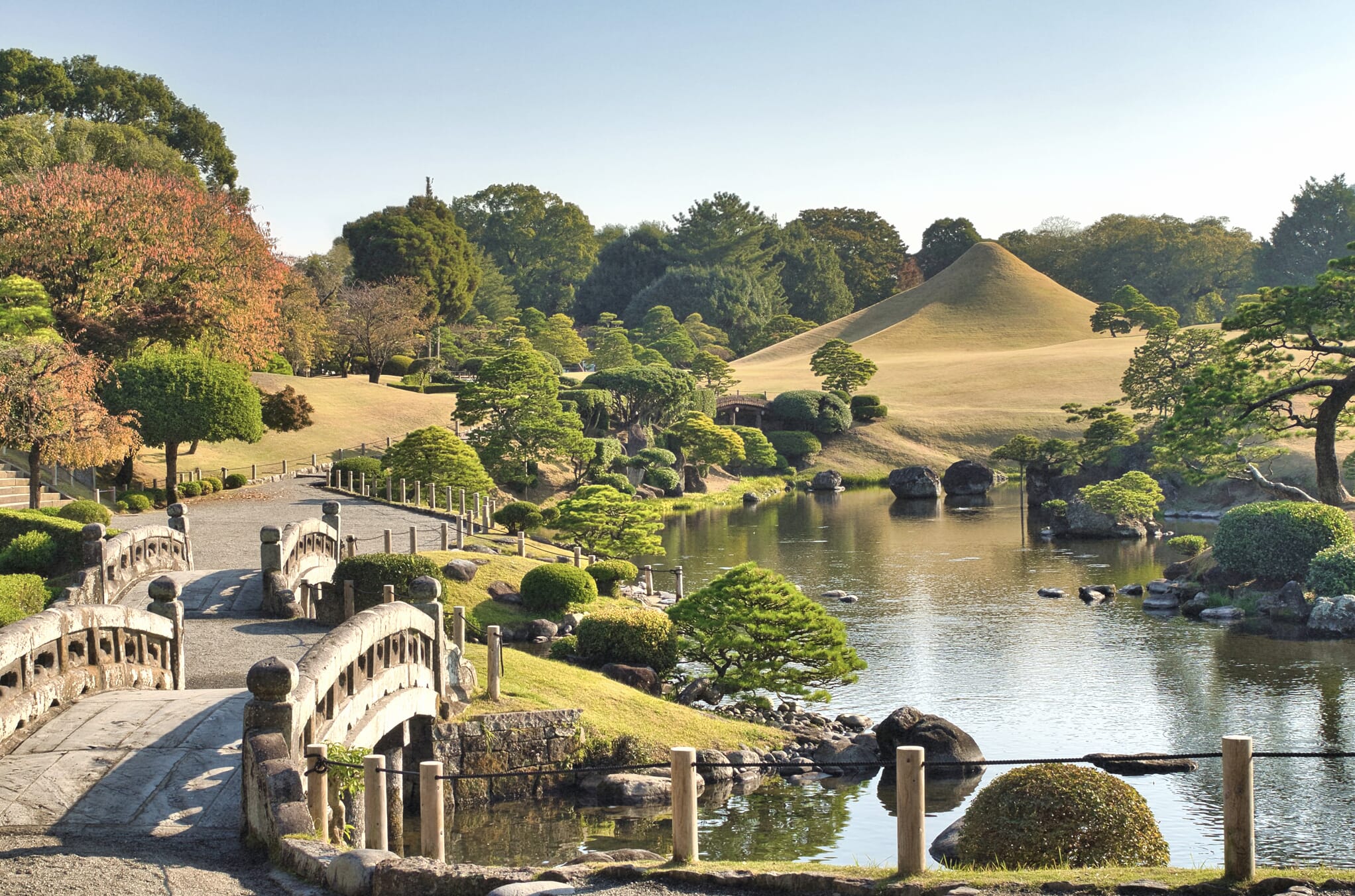
Suizenji Jojuen Garden Overview
Set in the heart of Kumamoto city, Suizenji Jojuen Garden is one of Kyushu’s most celebrated Japanese gardens and a designated National Place of Scenic Beauty and Historic Site. Laid out around a large spring-fed pond supplied by underground water from Mount Aso, the garden follows the kaiyushiki style — a pond-centered strolling design intended to be appreciated from multiple vantage points as visitors walk a circular path.
The garden’s origins date to 1632, when Hosokawa Tadatoshi, the first lord of the Kumamoto domain, established a teahouse and a Buddhist temple called Suizenji on the site. The temple was later relocated, but the teahouse remained. It was Tsunatoshi, the third-generation Hosokawa lord, who completed the garden in its current form, following design principles rooted in the Momoyama period. The garden has been open to the public since the late 19th century and has changed little in the centuries since.
The landscape is modeled on the 53 post stations of the Tokaido, the historic road that connected Edo (present-day Tokyo) and Kyoto during the Edo period. Landmarks along the circular path include a representation of Nihonbashi bridge, a pond standing in for Lake Biwa and the garden’s most iconic feature: a gracefully symmetrical grass mound evoking the shape of Mount Fuji. The teahouse Kokindenju-no-Ma — a thatched-roof structure relocated from the Kyoto Imperial Palace — offers matcha and seasonal Japanese sweets with views over the garden.
Within the grounds, the Izumi Shrine, built in 1878 and dedicated to the lords of the Hosokawa clan, hosts annual festivals including horseback archery and Noh performances. The garden’s spring water was designated one of the Heisei era’s 100 best water sources in Japan.
Best Times To Visit Suizenji Jojuen Garden
Spring (late March to early April) is the most popular season, with approximately 150 cherry trees in bloom along the garden paths. The six traditional Higo flowers — camellia, peony, iris, morning glory, sasanqua and chrysanthemum — bloom in succession from February through December, ensuring there is always something in flower. Autumn brings rich foliage and a quieter, more reflective atmosphere well-suited to the garden’s contemplative design. The Izumi Shrine’s Spring Festival (April 22–24) and Autumn Festival (October 18–20) are among the garden’s most atmospheric events.