

Rurikoji Temple and the Five-Story Pagoda Overview
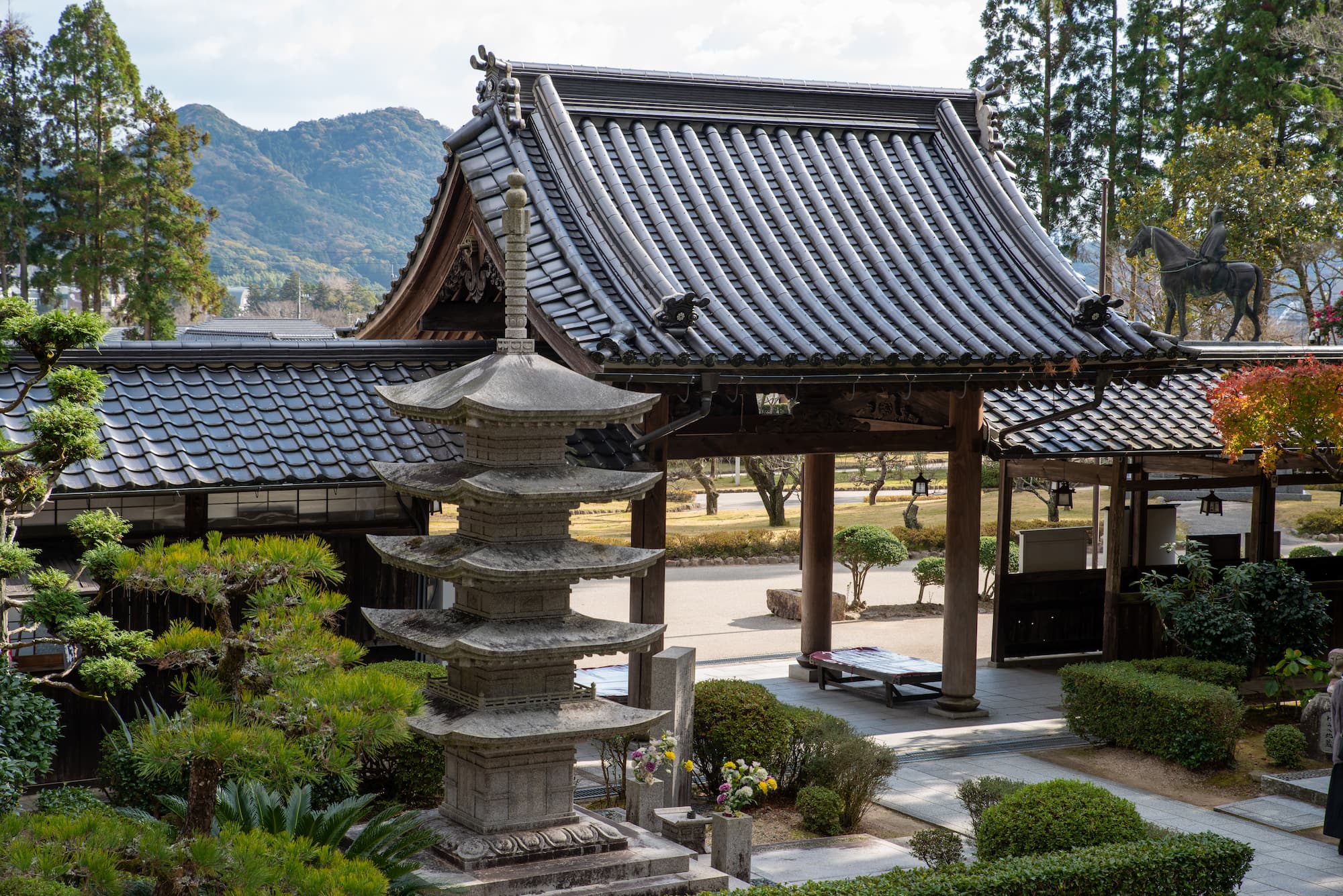
Nestled within Kozan Park in Yamaguchi city, Rurikoji Temple is home to one of the most celebrated structures in all of Japan. Its five-story pagoda was commissioned by Ouchi Morimi as a memorial to his older brother Ouchi Yoshihiro, who died leading a revolt against the central government in 1399, and was completed in 1442. Designated a national treasure, it is lauded as the most outstanding structure surviving from the middle of the Muromachi period (approximately 1336–1573).
Standing 31.2 meters tall, the pagoda’s roofs are made of multiple layers of cypress bark held in place with bamboo nails, and each successive story is progressively narrower, lending the structure its elegant, balanced silhouette. It is ranked among Japan’s three greatest pagodas, alongside those of Horyu-ji Temple and Daigo-ji Temple.
Beyond the pagoda, Kozan Park contains other historically significant sites, including Rozando and Chinryutei, as well as a bronze statue of Ouchi Hiroyo and the Garden of the Full Moon. A small but well-done museum on the grounds features pictures and models of the 50-plus five-story pagodas found across Japan.
As of summer 2025, the pagoda is fully visible following the completion of a major roof restoration — the first full replacement of its cypress bark roof in nearly 70 years.
Best Times To Visit Rurikoji Temple (Five-Story Pagoda)
The pagoda and its surrounding pond offer spectacular scenery across all four seasons — cherry blossoms in spring, fresh greens in summer, fall foliage in autumn and snowscapes in winter. Spring is particularly popular, when 170 cherry trees blossom and create a marvelous contrast with the pagoda.
Between late September and early October, the annual Yamaguchi Yurameki Kairo light-up event takes place, illuminating the grounds in a warm, atmospheric glow. Year-round, the pagoda is lit up from sunset to 22:00, making an evening visit equally rewarding no matter when you arrive.