

Nagatoro River Rapids Overview
Tucked into the forested mountains of Chichibu District in Saitama Prefecture, the Nagatoro River Rapids stretch along a dramatic section of the Arakawa River — one of Japan’s most scenic inland waterways. Just under two hours from central Tokyo, Nagatoro has drawn visitors since the 19th century, offering a rare combination of untouched natural beauty and accessible outdoor adventure.
The area is defined by its striking geology. The Iwadatami rock formations — flat, layered stones shaped over centuries by the river’s current — line the gorge and are designated a national scenic spot and natural monument. These formations, resembling tatami mats laid across the riverbank, are among the most photographed natural landmarks in the Kanto region.
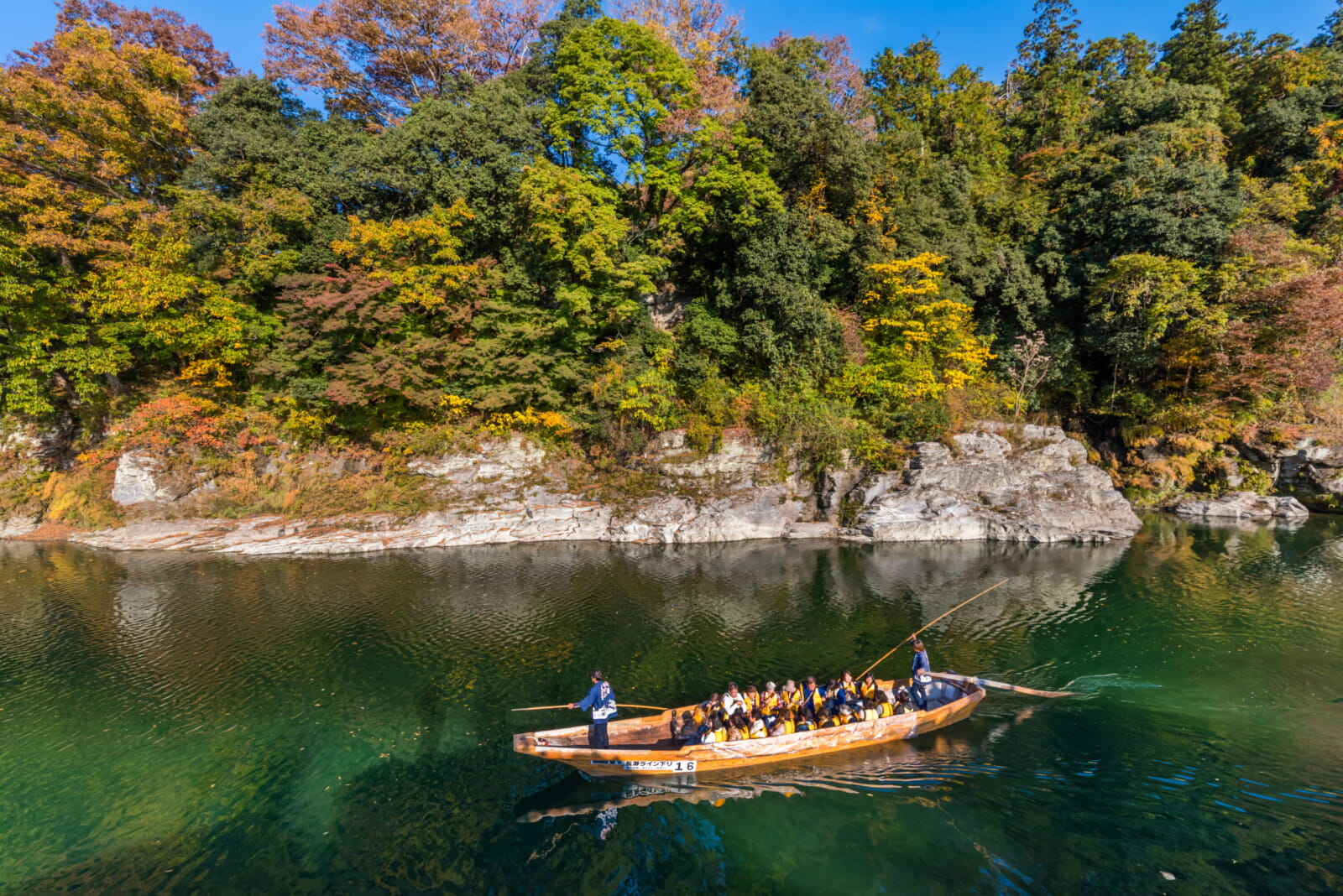
The star attraction is the Nagatoro Line Kudari, a traditional river boat cruise operated since 1915 by the Chichibu Railway. Skilled boatmen navigate wooden vessels down approximately 3 kilometers of river per course, guiding passengers through calm stretches and into the pulse-raising rapids — most notably the Kotaki no Se, a fierce rapid that appears frequently on local posters and travel guides. For visitors seeking a more active experience, white-water rafting tours are also available along the same stretch of the Arakawa from spring through autumn, welcoming beginners from age 7 and up.
Beyond the river, the surrounding area rewards exploration. Mt. Hodo looms over the gorge and can be reached via ropeway, offering a small animal park at its summit. Seasonal highlights include cherry blossoms lining the 2.5-kilometer Kita Sakura Dori each spring and vivid autumn foliage that transforms the gorge walls from October into November.
Best Times To Visit Nagatoro River Rapids
Nagatoro is rewarding throughout the year, but two seasons stand out. Autumn — roughly mid-October through late November — is the most popular time to visit, when the gorge walls erupt in red, orange and gold. The combination of the foliage reflected in the Arakawa’s dark water and the craggy Iwadatami rocks below makes for an especially memorable boat ride.
Spring, from late March through April, is the second peak season. The Kita Sakura Dori lines the riverbank with approximately 400 cherry trees, creating a near-tunnel of blossoms over a 2.5-kilometer stretch. Summer draws visitors looking to cool down, as temperatures near the river run slightly lower than in central Tokyo, and the rapids feel all the more refreshing. Winter is quieter, but not without its charms — operators run special “kotatsu boats” in January and February, where passengers warm their feet under heated low tables as the boat drifts downstream.