

Motonosumi Shrine Overview
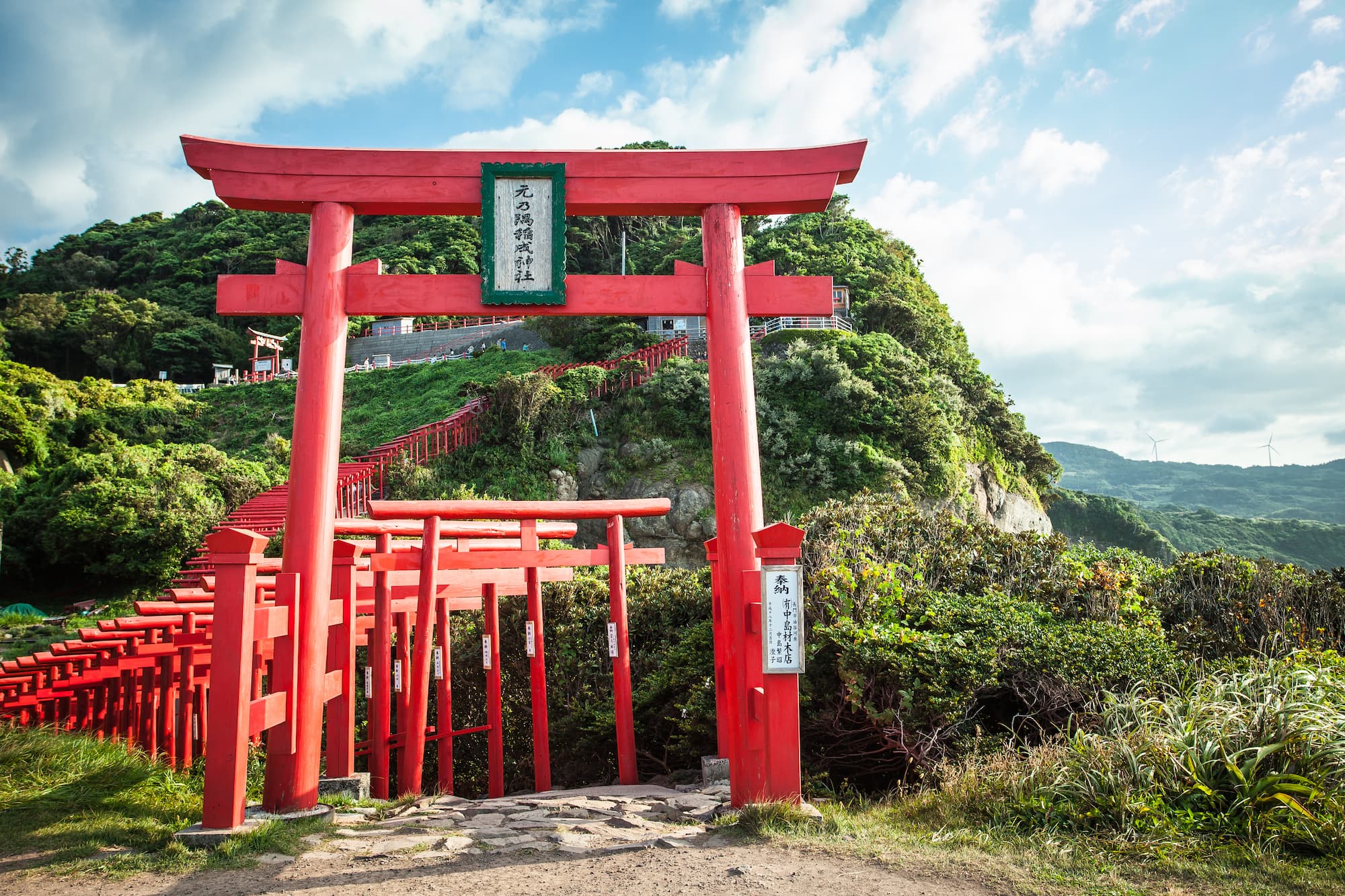
Tucked into the rugged coastline of Nagato city in Yamaguchi Prefecture, Motonosumi Shrine is one of Japan’s most visually striking sacred sites. The shrine is best known for its 123 vermilion torii gates, which snake along a cliffside footpath for over 100 meters, framing sweeping views of the Sea of Japan below.
Despite its dramatic setting, the shrine has a relatively brief history. It was founded in 1955 after a local fisherman named Hitoshi Okamura reportedly received a message from a white fox spirit, instructing him to build a shrine on the cliffs where he fished. The 123 torii gates were dedicated over a 10-year period beginning in 1987.
The shrine was chosen as number three in CNN Travel’s list of “Japan’s 31 Most Beautiful Places,” a recognition that helped transform it into one of Yamaguchi’s most-visited attractions. Alongside the torii gates, visitors can witness the Ryugu no Shiofuki — a natural sea spout designated as a National Natural Monument, where powerful waves surge through a cliff opening and can reportedly reach up to 30 meters in height under optimal conditions.
One of the shrine’s most beloved quirks is its offertory box, mounted at the very top of the 6-meter grand torii gate near the entrance. Visitors are welcome to try tossing a coin into the box — a feat considered to bring good luck if successful and widely regarded as one of the most challenging coin tosses in Japan.
Best Times To Visit Motonosumi Shrine
The shrine is open year-round and each season offers something different. The blue seas are beautiful from summer to fall, but winter brings rougher seas and stronger northeasterly winds — conditions that make dramatic sightings of the Ryugu no Shiofuki sea spout more likely. Clear days in any season deliver the most photogenic contrast of red gates against blue sky and sea.
Crowds tend to peak during Golden Week (late April to early May) and the Obon period (mid-August), when the parking lot can see significant wait times. Visiting on a weekday or in the quieter shoulder months of March, April, October or November offers a more relaxed experience.