
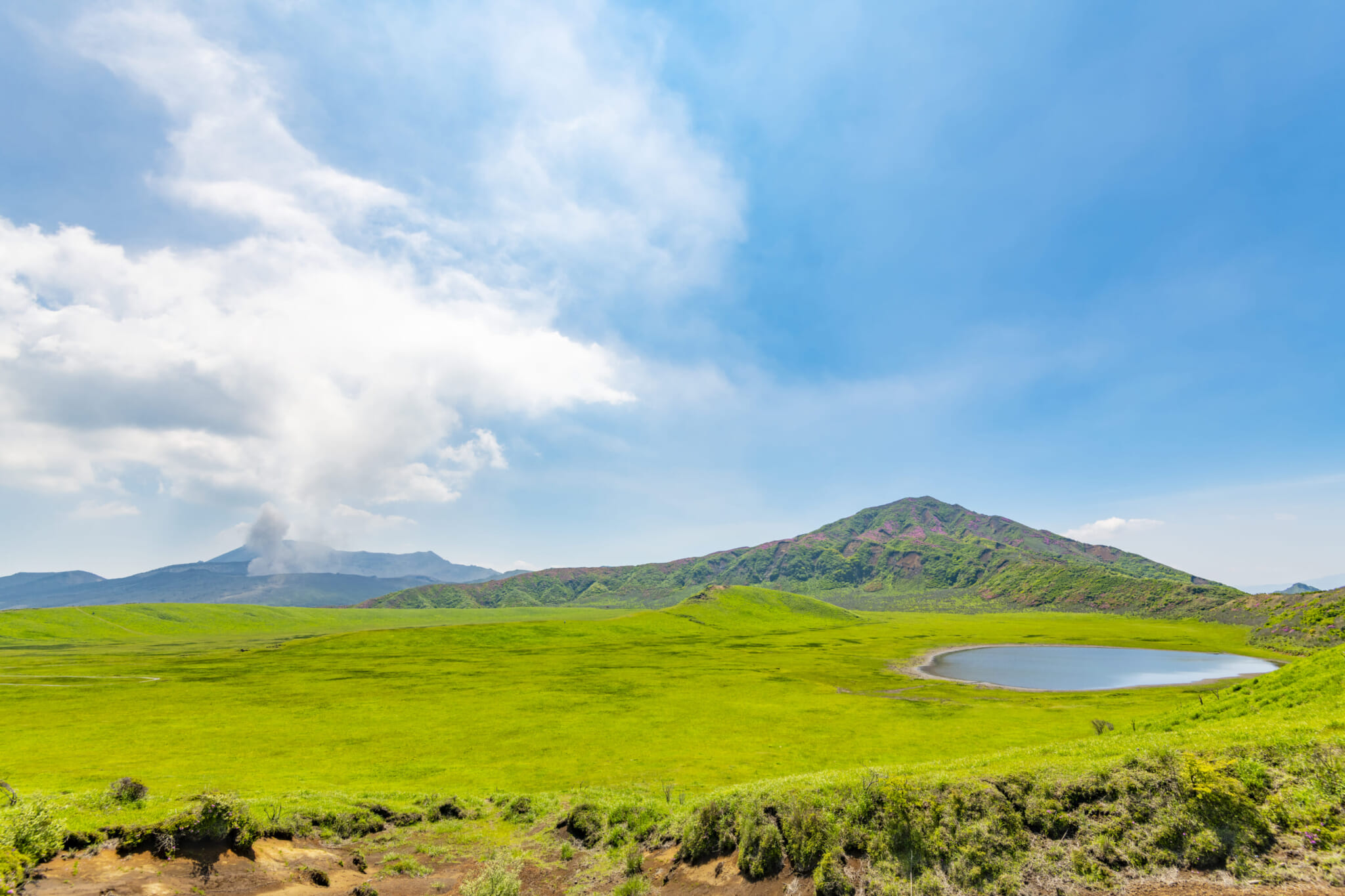
Kusasenri Grassland Overview
Kusasenri — also known as Kusasenri-ga-hama — is one of the most iconic landscapes in Kyushu: a sweeping circular grassland sitting 1,130 meters above sea level in the foothills of Mount Eboshidake, one of the five peaks of the Aso caldera. Covering approximately 785,000 square meters and centered on two rain-fed ponds that mark the remnants of an ancient volcanic crater formed around 30,000 years ago, the plain offers unobstructed views of Mount Nakadake smoking steadily in the distance.
The grassland is a designated National Place of Scenic Beauty and Natural Monument, and forms part of the Aso UNESCO Global Geopark. It has been celebrated in Japanese poetry and literature for centuries, and remains one of the most-photographed spots in Kumamoto Prefecture. Horses and cattle graze freely across the plains — a sight that has become inseparable from the image of Aso — and horseback riding is available from early March to mid-December (approximately ¥1,500 for a five-minute guided ride).
What makes Kusasenri remarkable is that its lush green appearance is not entirely natural. The surrounding Aso grasslands — approximately 22,000 hectares in total — exist only because of noyaki, an annual controlled burning practice that has been documented in the area for over 1,000 years, with references appearing as far back as the eighth-century text Kojiki. Carried out each year between mid-February and late March, noyaki clears the previous year’s dead grass, prevents the land from reverting to scrubland or woodland, and regenerates the rich ecosystem that supports around 600 plant species as well as the cattle and horses that graze here. Without it, the open plains would be reclaimed by forest within a few years.
Directly across the road from the grassland stands the Aso Volcano Museum (open 9:00–17:00, admission ¥1,100), which offers exhibits on the geology of the caldera and is the only facility displaying real-time live footage from cameras inside the Nakadake crater. A small observation station slightly above the plain provides 360-degree views of the caldera and surrounding peaks.
Best Times To Visit Kusasenri Grassland
The grassland is accessible year-round and offers distinct seasonal character throughout. Summer (July to August) brings the most vibrant green, with the emerald plains providing a cool respite from lower-altitude heat. Spring (April to June) sees the fresh new growth emerge after the noyaki burns, and Kyushu azaleas bloom on surrounding slopes in May. Autumn turns the grasses golden before they dry and silver into winter, when frost pillars form across the plain in a stark, quieter beauty. The noyaki event itself in February and March is worth witnessing — the controlled burns transform the hills into dramatic walls of flame and smoke before giving way to blackened earth that greens again within weeks.