Kurashiki Bikan Historical Quarter Overview
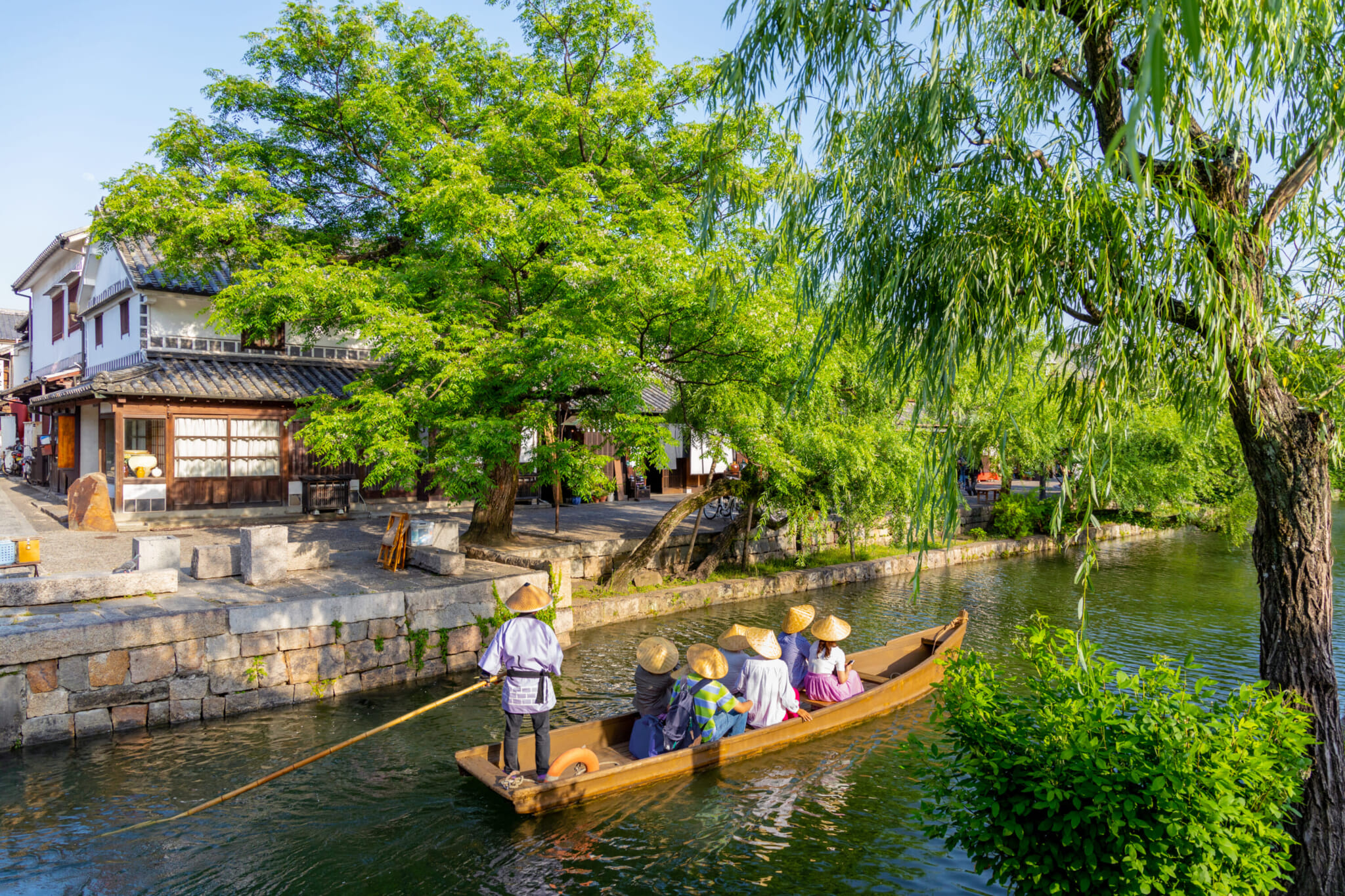
Tucked within Kurashiki city in Okayama Prefecture, the Kurashiki Bikan Historical Quarter — known in Japanese as Kurashiki Bikan Chiku — is one of Japan’s most atmospheric preserved townscapes. The district takes its name from “bikan,” meaning “beautiful scenery,” and it more than lives up to the description: whitewashed storehouses with black tile roofs line the banks of the willow-fringed Kurashiki River, creating a scene that feels lifted from another era.
The area’s history stretches back roughly 400 years to the early Edo period (1603–1868), when Kurashiki flourished as a prosperous merchant town and key transport hub for goods moving through the Seto Inland Sea. The Kurashiki River — originally a canal used to ferry rice and other cargo to Edo (present-day Tokyo) — became the commercial lifeline of the region. Many of the storehouses that once held these goods still stand today, now converted into cafes, boutiques, sake shops and museums.
Among the most notable attractions is the Ohara Museum of Art, Japan’s first privately owned museum of Western art, founded in 1930. Its Greek temple-style facade houses works by El Greco, Monet, Renoir and Picasso, among others. Nearby, Kurashiki Ivy Square occupies a red-brick former cotton mill dating to 1889. Fans of Japanese craft will also want to explore Kurashiki Denim Street, a nod to the area’s status as the birthplace of domestically produced denim, as well as shops selling Kurashiki canvas goods and locally brewed sake. Traditional river boat tours along the Kurashiki River offer a relaxed way to take in the scenery.
The quarter is free to enter, though individual museums and attractions charge their own admission fees. Notably, overhead power cables are absent from the entire district — a deliberate preservation measure that makes it a popular filming location for historical dramas.
Best Times To Visit Kurashiki Bikan Historical Quarter
Spring and autumn are considered the prime windows for visiting.
Spring (late March to early May) is particularly popular. Cherry blossoms typically peak in late March to early April, and a river boat ride beneath the falling petals is one of the area’s most memorable experiences. The annual Kurashiki Haruiyoi Akari festival (usually mid-February to late March) lights the district with lanterns and colorful Japanese umbrellas after dark, offering a romantic alternative to daytime sightseeing. Later in spring, the wisteria at Achi Shrine comes into bloom, usually in late April to early May.
Autumn (mid-November to early December) is equally rewarding. Foliage turns more slowly in the town than in the surrounding hills, making mid-November to early December the sweet spot for autumn leaves set against the quarter’s white walls. Crowds are generally thinner than in spring.