

A Beacon on the Edge of Japan
Perched on the westernmost tip of the Shimane Peninsula, Hinomisaki Lighthouse is one of Japan’s most striking coastal landmarks. Rising 43 meters from the ground — 63 meters above sea level — it is the tallest stone-built lighthouse in the country and ranks among the top 100 historic lighthouses in the world, a distinction it has held since 1998.
Completed in 1903 during the Meiji era, the lighthouse was designed by Japanese engineer Ayahiko Ishibashi and modeled after the work of Richard Henry Brunton, widely credited as the father of Japanese lighthouses. Its construction took three years and used stone quarried from the Mihonoseki area of Matsue. What makes it architecturally rare is its double-layer design: an outer wall of white stone over an inner structure of brick connected by crossbeams — a technique found nowhere else in Japan. The lighthouse was registered as a Tangible Cultural Property of Japan in 2013.
Visitors can climb 163 steps to the observation deck for panoramic 360-degree views of the Sea of Japan, the Izumo coastline and — on clear days — the Oki Islands to the north. The lighthouse’s enormous lens, measuring 2.5 meters, projects light approximately 40 kilometers out to sea and the structure remains operational to this day.
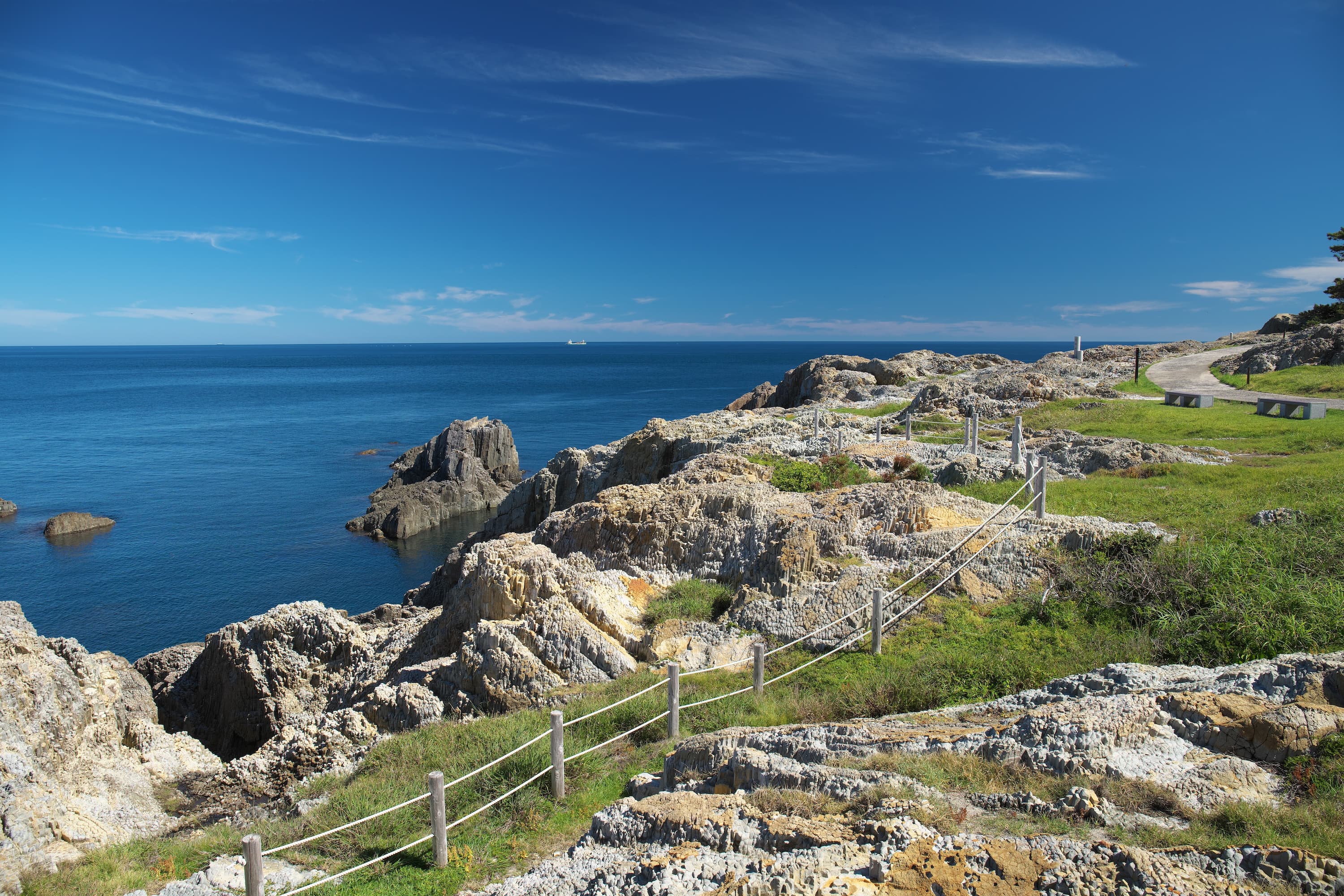
The area surrounding the lighthouse adds to its appeal. Ancient volcanic activity shaped the coastline into dramatic columnar rock formations — hexagonal and pentagonal pillars carved by cooling lava — while the nearby uninhabited island of Fumishima serves as a protected breeding ground for black-tailed gulls. A short walk away, the vermilion-painted Hinomisaki Shrine honors the sun goddess Amaterasu and is considered the guardian of Japan through the night.
Best Times To Visit Hinomisaki Lighthouse
The lighthouse is rewarding year-round but a few seasons stand out. Spring (April and May) brings the black-tailed gulls to Fumishima Island, making it an excellent time for wildlife and birdwatching alongside coastal scenery. Summer offers clear skies and the best chances of spotting the Oki Islands from the observation deck though it can be crowded on weekends.
Autumn is perhaps the most atmospheric time to visit. The sunsets over the Sea of Japan are legendary here — the cape faces directly west and the combination of dramatic cliffs, crashing waves and a glowing sky draws photographers and nature lovers alike. Winter is quieter and can be cold and windy so layering up is essential, but the solitude and raw coastal energy have their own appeal.