

Aoshima Island Overview
Tucked off the southeastern coast of Miyazaki Prefecture in Kyushu, Aoshima Island is one of Japan’s most visually striking natural landmarks. Measuring just 1.5 kilometers in circumference, the tiny island is almost entirely blanketed by a dense subtropical jungle — a lush green contrast to the dramatic landscape that surrounds it.
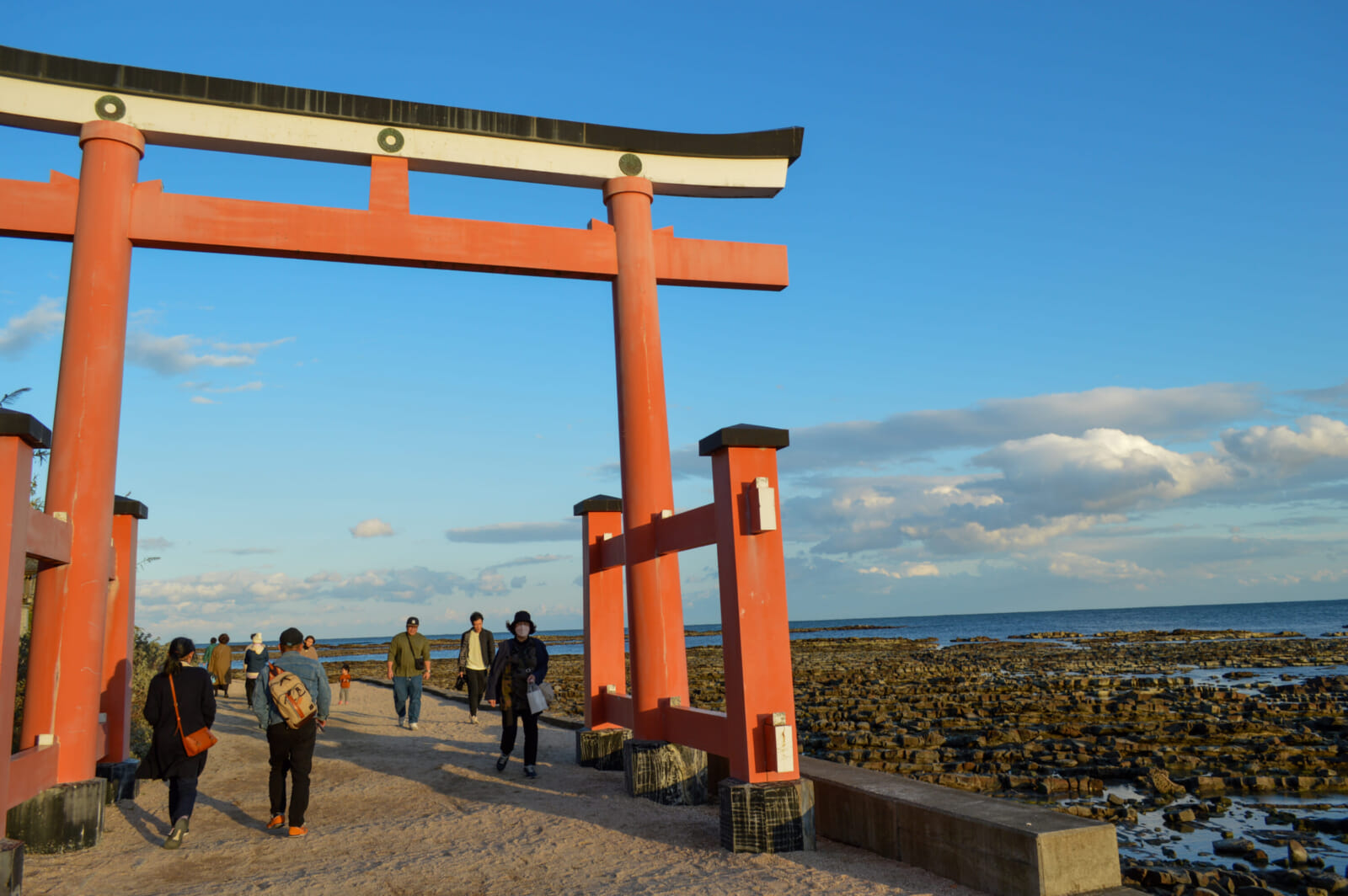
What makes Aoshima truly unforgettable is the geological phenomenon known as the Devil’s Washboard (Oni no Sentakuita), a series of wave-eroded, rippled rock shelves that ring the island at low tide. These honeycomb-like formations — carved over millions of years by the East China Sea — stretch out from the shoreline in concentric ridges that look almost too geometric to be natural. The effect is otherworldly, and draws visitors and photographers from across Japan and beyond.
At the island’s heart sits Aoshima Shrine, a vermillion Shinto shrine dedicated to Yamasachi-hiko, a deity associated with good fortune in marriage and safe childbirth. The shrine is a popular spot for hatsumode (New Year’s shrine visits) and traditional weddings, giving the island a spiritual weight that complements its natural drama. The surrounding jungle, designated a natural monument, is home to over 200 species of subtropical plants including the iconic Biyo-yanagi willow.
Best Times To Visit Aoshima Island
The ideal time to visit is during low tide, when the Devil’s Washboard rock formations are fully exposed and can be walked across — checking tide charts in advance is strongly recommended. Aoshima is beautiful year-round thanks to its subtropical climate, but spring (March–May) and autumn (September–November) offer the most comfortable temperatures for exploring.
Summer (June–August) is hot and humid, with the possibility of typhoons, though the island remains popular during this period. January sees the famous Hadaka Matsuri (Naked Festival), when men in loincloths brave the winter cold in a spirited purification ritual — a memorable spectacle if you happen to be in the area.