
Where Art and Nature Become One
The Adachi Museum of Art opened in Yasugi, Shimane Prefecture in 1970. Its founder, Adachi Zenko (1899–1990), was a self-made businessman who believed a Japanese garden was itself a living painting. He set out to prove it by building one of the most meticulously maintained landscapes in the country and filling the galleries around it with the finest modern Japanese art he could find.
The museum is listed as a three-star site in the Michelin Green Guide Japan, while its spectacular gardens have been ranked number one by Sukiya Living Magazine: The Journal of Japanese Gardening every year since 2003. The garden cannot be entered — it is viewed exclusively from within the museum building, framed by windows and alcoves that present the landscape like a living scroll.
The collection spans around 1,500 paintings, with the nihonga works of Yokoyama Taikan (1868–1958) at its core. Other painters on show include Hashimoto Kansetsu, Ito Shinsui, Kawai Gyokudo and Uemura Shoen. In April 2020, in commemoration of the museum’s 50th anniversary, the Rosanjin Hall was built to display approximately 120 pieces by Kitaoji Rosanjin (1883–1959), including ceramics, seal engravings, calligraphy and paintings.
Best Times To Visit Adachi Museum of Art
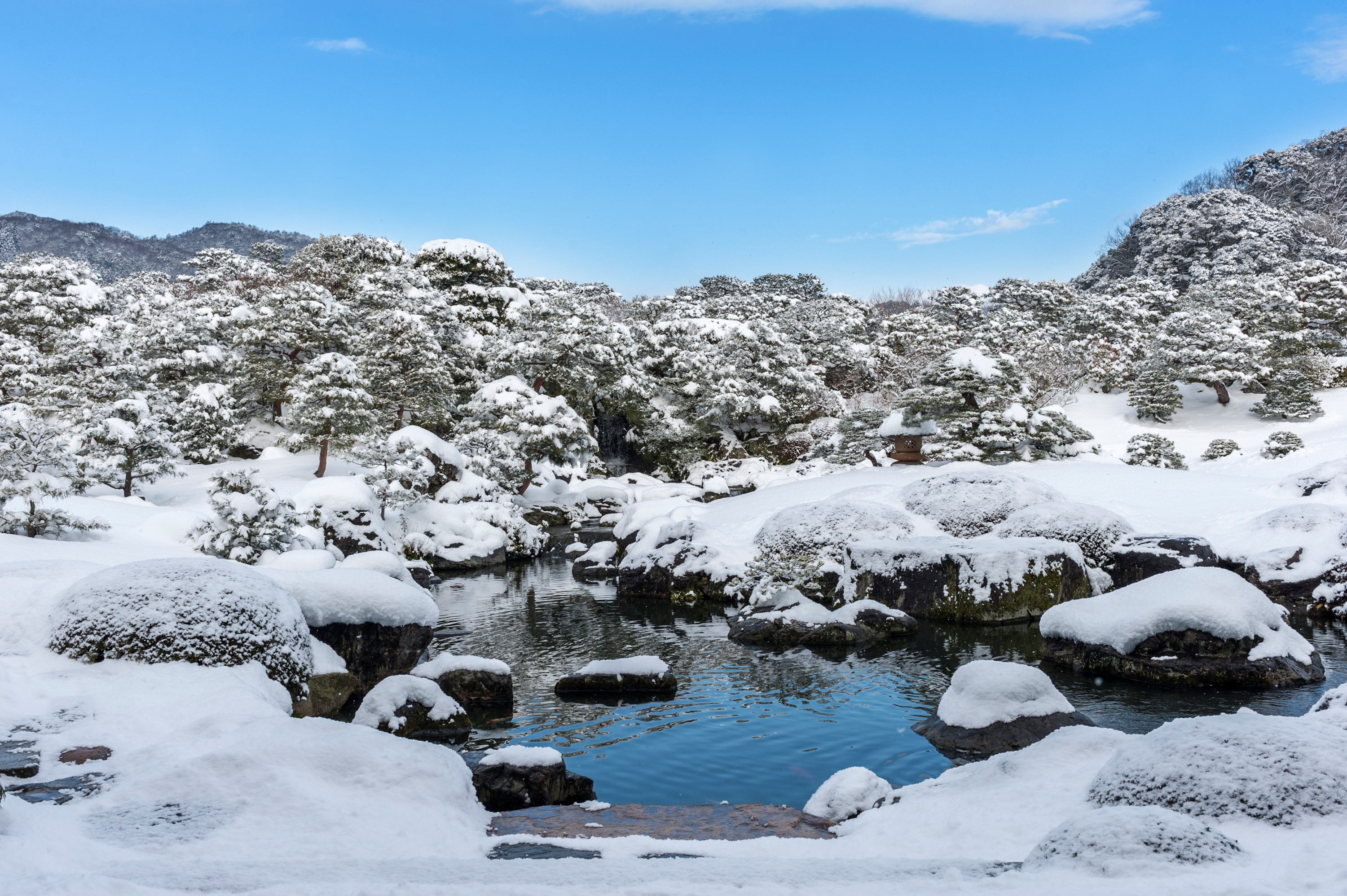
The garden transforms with every season, and no single visit is quite the same as the last. Spring brings fresh greenery and cherry blossoms; summer deepens the moss to a vivid green; autumn sets the maples ablaze in red and gold; and winter dusts the dry landscape garden in snow, creating a scene that resembles an ink painting. Autumn (October–November) is the most popular time to visit, so expect larger crowds during peak foliage weeks. For a quieter experience, consider visiting in late winter or early spring, when the gardens are serene and the crowds are thin.