

Kirishima Shrine Overview
Kirishima Shrine, known in Japanese as Kirishima Jingu, sits on the hillside of Mount Kirishima in southern Kagoshima Prefecture, facing the summit of Mount Takachiho. It is one of the most spiritually significant shrines in Japan — not just for its scale or beauty, but for the mythology that underpins it.
The shrine enshrines several deities, with Ninigi no Mikoto — the grandson of the sun goddess Amaterasu — as the central figure. According to Japanese mythology, Ninigi descended from the heavens onto nearby Mount Takachiho and established the lineage leading to Japan’s emperors. This connection to the origins of the imperial family makes Kirishima a deeply revered site throughout the country.
The original structure dates back to the 6th century, built at the foot of Mount Takachiho, but volcanic eruptions destroyed it repeatedly until the current building was relocated and rebuilt in 1715 by the feudal lord of the then-Kagoshima domain. In 2022, its main hall, shinden hall and worship hall were designated national treasures — the first architectural cultural assets in Kagoshima Prefecture to receive this distinction.
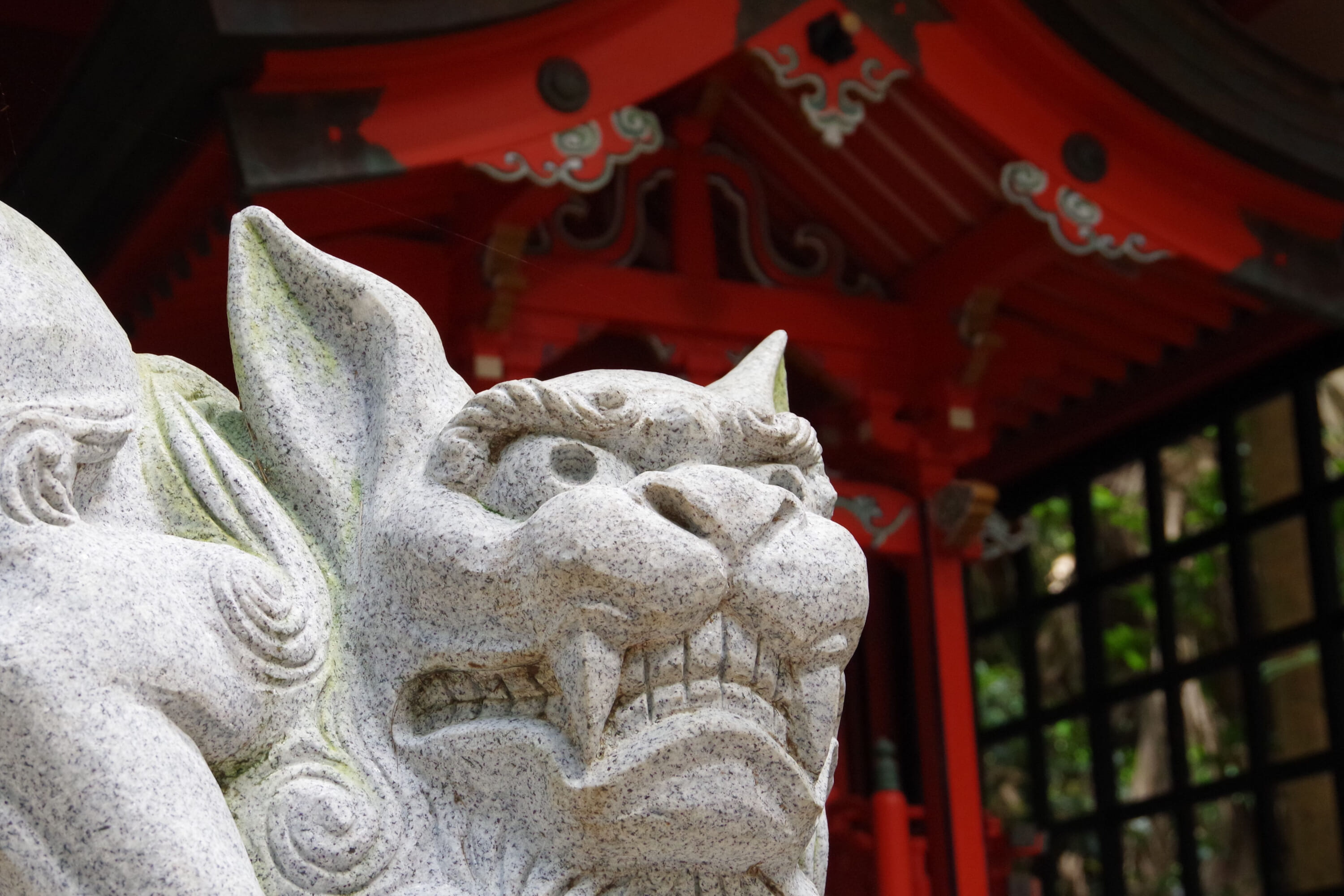
In front of the main shrine stand ryubashira — pillars carved with dragons — which are unique to shrines in southern Kyushu. The approach through towering cedar trees, the lacquered vermilion buildings and the mountain backdrop combine to create a setting unlike almost anywhere else in Japan. The shrine is also popular among visitors seeking romance, as it was the site that samurai Ryoma Sakamoto visited on his honeymoon.
Best Times To Visit Kirishima Shrine
The most ideal time to visit is during the autumn months, particularly from late October to early November, when the surrounding Kirishima mountains present a breathtaking backdrop with foliage transforming into vivid hues of red, orange and yellow. The “Tunnel of Autumn Leaves” near the shrine is especially worth seeing, with color typically beginning in late October and peaking from mid- to late November.
Spring is another beautiful time to visit. The shrine grounds are dotted with sakura trees that typically bloom between late March and mid-April, and the pink blossoms set against the vermilion architecture make for a striking combination.