

Senganen Garden Overview
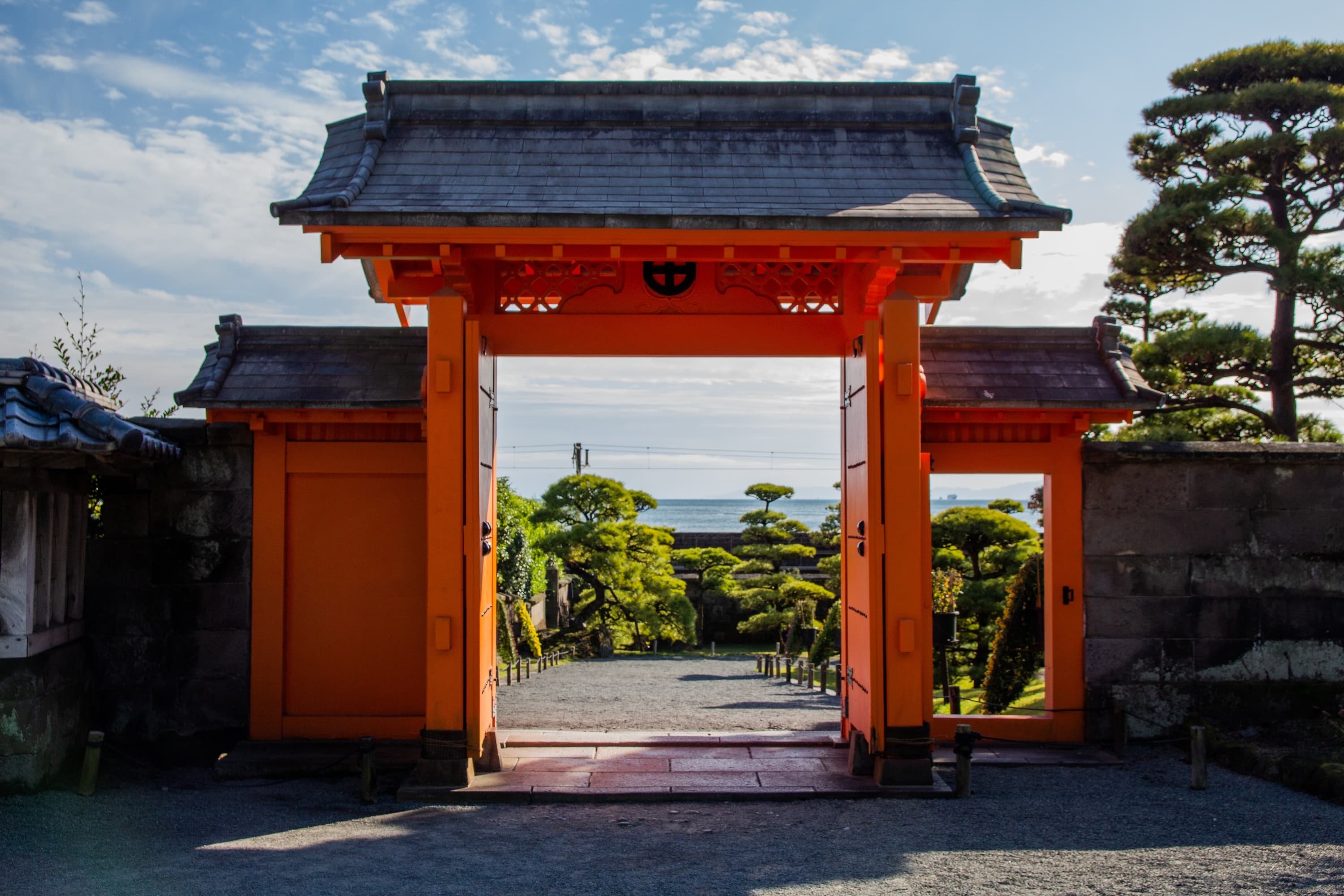
Senganen is a Japanese-style stately home and landscape garden sitting along the coast north of downtown Kagoshima. Built in 1658 as one of the residences of the powerful Shimazu clan, one of the garden’s most striking features is its use of active volcano Sakurajima and Kagoshima Bay as borrowed scenery — a technique known in Japanese as shakkei, which incorporates natural landscapes beyond the garden’s boundaries into its overall design. The effect is unlike almost any other garden in Japan: rather than a large artificial pond or sculpted hill, Kinko Bay serves as the garden’s “pond” and the majestic Sakurajima as its “artificial hill.”
Built by Mitsuhisa, the 19th head of the Shimazu family, the 50,000-square-meter grounds present a rich tapestry of flowers and plant life that changes with each season. The house at the center of the gardens and the neighboring Shoko Shuseikan Museum tell the 800-year story of the Shimazu family and their role in the modernization of Japan. Towards the end of the Edo period, the Shuseikan Industrial Complex was constructed on the grounds as part of early efforts to produce iron for shipbuilding and casting cannons. Some of its surviving structures and foundations have received World Heritage status as part of the Sites of Japan’s Meiji Industrial Revolution. Senganen and the Shoko Shuseikan Museum were inscribed as a UNESCO World Cultural Heritage Site in 2015.
Best Times To Visit Senganen Garden
Senganen is open throughout the year and offers something distinct in every season, though spring and autumn are generally considered the most rewarding times to visit.
The garden has a variety of plants that make it interesting across all four seasons. Cherry trees — especially the early-blooming Kanhizakura variety — can open as early as late January, with other varieties providing flowers through mid-April. Senganen also preserves the traditional custom of Kyokusui-no-en (Winding Stream Party) on the first Sunday of April, where people dressed in traditional clothing read poetry and drink sake along the garden’s stream.
Autumn is equally rewarding. Chrysanthemum displays run from late October to late November and the comfortable temperatures make for ideal strolling conditions. Summer is hot and humid and best avoided if heat is a concern, while winter offers quiet uncrowded visits and some of the clearest views of Sakurajima on crisp, cool days.