

Rinnoji Temple Overview
Rinnoji Temple is the spiritual cornerstone of Nikko and the first major site visitors encounter along the World Heritage walking trail. Founded in 766 by the Buddhist monk Shodo Shonin — the figure credited with introducing Buddhism to Nikko and establishing many of the region’s most sacred sites — the temple was originally known as Shihonryuji. It was later renamed Rinnoji following its affiliation with the Tendai sect of Buddhism in the 17th century. Together with Nikko Toshogu Shrine and Futarasan Shrine, it forms the “Shrines and Temples of Nikko” UNESCO World Heritage Site, designated in 1999.
The heart of the complex is the Sanbutsudo Hall, the largest wooden structure in eastern Japan and the main hall of the temple. Built originally during the Heian period (794–1185), the current building dates from 1645. Inside stand three gold-lacquered wooden statues, each 7.5 meters tall: Senju-Kannon (the thousand-armed Kannon, representing Mount Nantai), Amida Nyorai (representing Mount Nyoho) and Bato-Kannon (the horse-headed Kannon, representing Mount Taro). The three deities are understood as the Buddhist manifestations of Nikko’s three sacred mountain gods, also enshrined at the nearby Futarasan Shrine — a rare and striking example of the syncretic blending of Buddhism and Shinto that defines much of Nikko’s religious heritage.
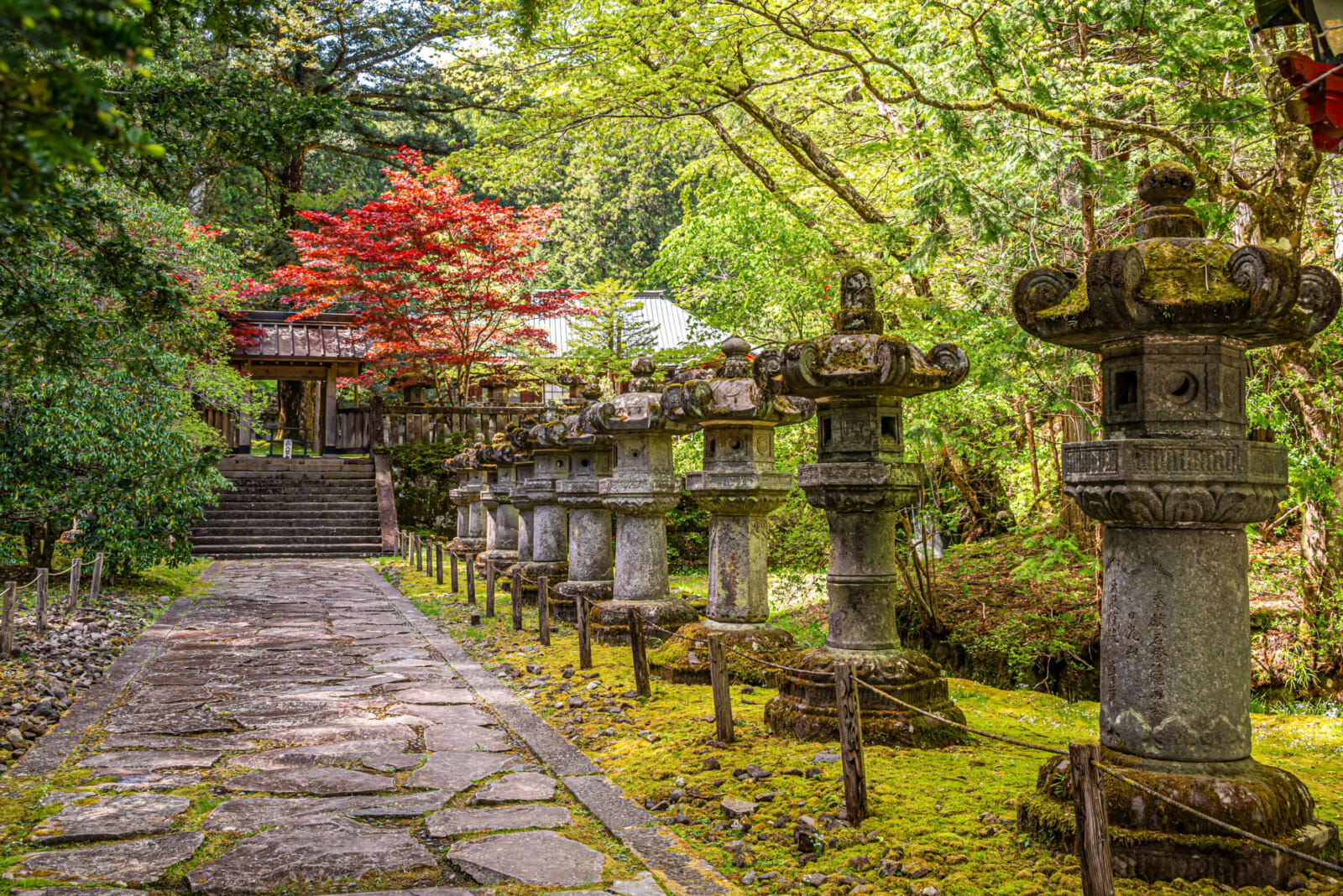
Beyond the Sanbutsudo, the complex also manages the Taiyuin Mausoleum — the ornate resting place of the third Tokugawa shogun, Tokugawa Iemitsu — as well as the Homotsuden Treasure House, which holds Buddhist art and sutras dating back over 1,250 years, and Shoyoen, a small Edo-era stroll garden renowned for its azaleas in spring and fiery maple trees in autumn. On the grounds, visitors can also find the Sorinto, a 15-meter bronze pagoda dating from 1643 that is designated an Important Cultural Property.
Best Times To Visit Rinnoji Temple
Rinnoji Temple is worth visiting in any season, but two periods stand out. Spring brings the bloom of kongo-zakura, a variety of Japanese bird cherry tree found on the grounds that is said to be around 500 years old — one of the more quietly remarkable sights in Nikko. The Shoyoen garden fills with azaleas and rhododendrons in late spring and early summer as well.
Autumn is the most popular season overall. The maple trees in Shoyoen typically peak in color during the first half of November, and the surrounding cedar forests add to the spectacle. As with the rest of the Nikko World Heritage area, weekday visits are strongly recommended to avoid peak crowds during October and November.