
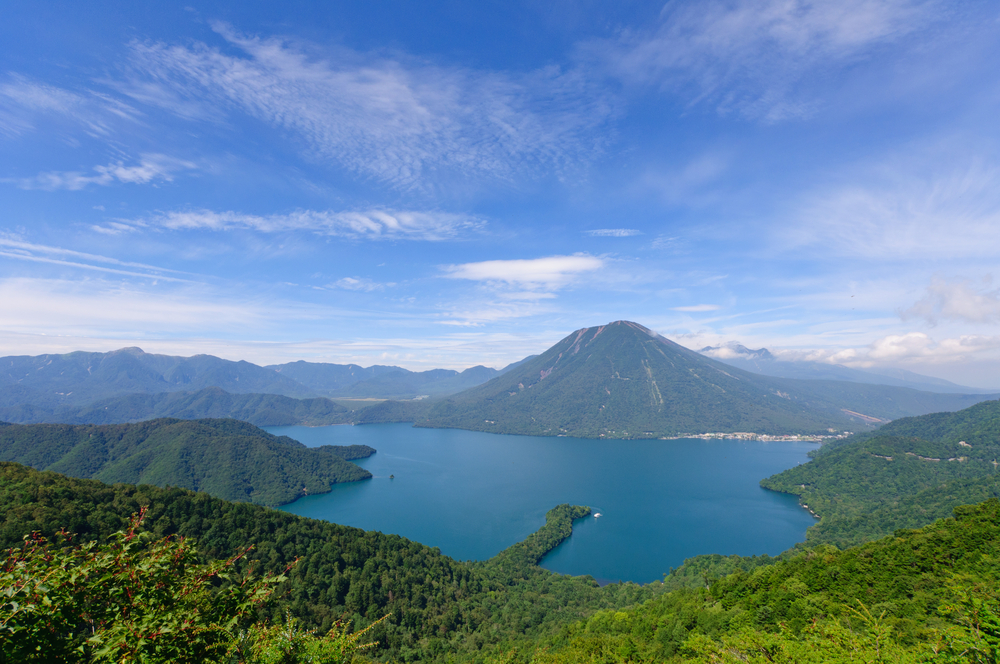
Lake Chuzenji Overview
Sitting at 1,269 meters above sea level in the heart of Nikko National Park, Lake Chuzenji is Japan’s highest natural lake and one of the most scenic destinations in the Kanto region. Formed roughly 20,000 years ago when an eruption of Mount Nantai blocked the valley and dammed the Daiya River, the lake stretches across 11 square kilometers with a circumference of 25 kilometers and a maximum depth of 163 meters. Its outlet, Kegon Falls, is among the most famous waterfalls in Japan.
The lake has a layered history that blends the sacred and the diplomatic. The monk Shodo Shonin, the 8th-century founder of Nikko, considered the area a sacred place, and access was long restricted to monks and those with special permission. It was not until the Meiji era (1868–1912) that the shores opened more broadly, quickly becoming a favored summer retreat for foreign diplomats stationed in Tokyo. Several embassy villas were built along the lakeshore, two of which — the Italian Embassy Villa Memorial Park and the British Embassy Villa Memorial Park — remain open to visitors today as museums.
The lake and its surrounding area offer a range of activities: sightseeing boat cruises, lakeside hiking trails, trout fishing, canoeing and cycling. A full circuit cruise departs hourly from the Chuzenji Boat Terminal between April and November, stopping at major points of interest including the embassy villas and Chuzenji Temple. There is no admission fee to visit the lake itself.
Best Times To Visit Lake Chuzenji
Lake Chuzenji rewards visitors in every season, but autumn is by far the most popular time to go. From mid to late October, the forests surrounding the lake erupt in shades of red, orange and gold — a spectacle that draws large crowds, particularly on weekends. Traffic along the winding Irohazaka Road that connects central Nikko to the lakeside can become heavily congested during this period, so a weekday visit is strongly recommended.
Late spring, from late April through May, offers cherry blossoms and blooming azaleas with far fewer crowds. Summer is an ideal escape from Tokyo’s heat and humidity, as the lake’s high elevation keeps temperatures notably cooler. Winter transforms the area into a snow-covered landscape, and while some facilities scale back, the quiet beauty of the lake in the cold months has its own appeal.