
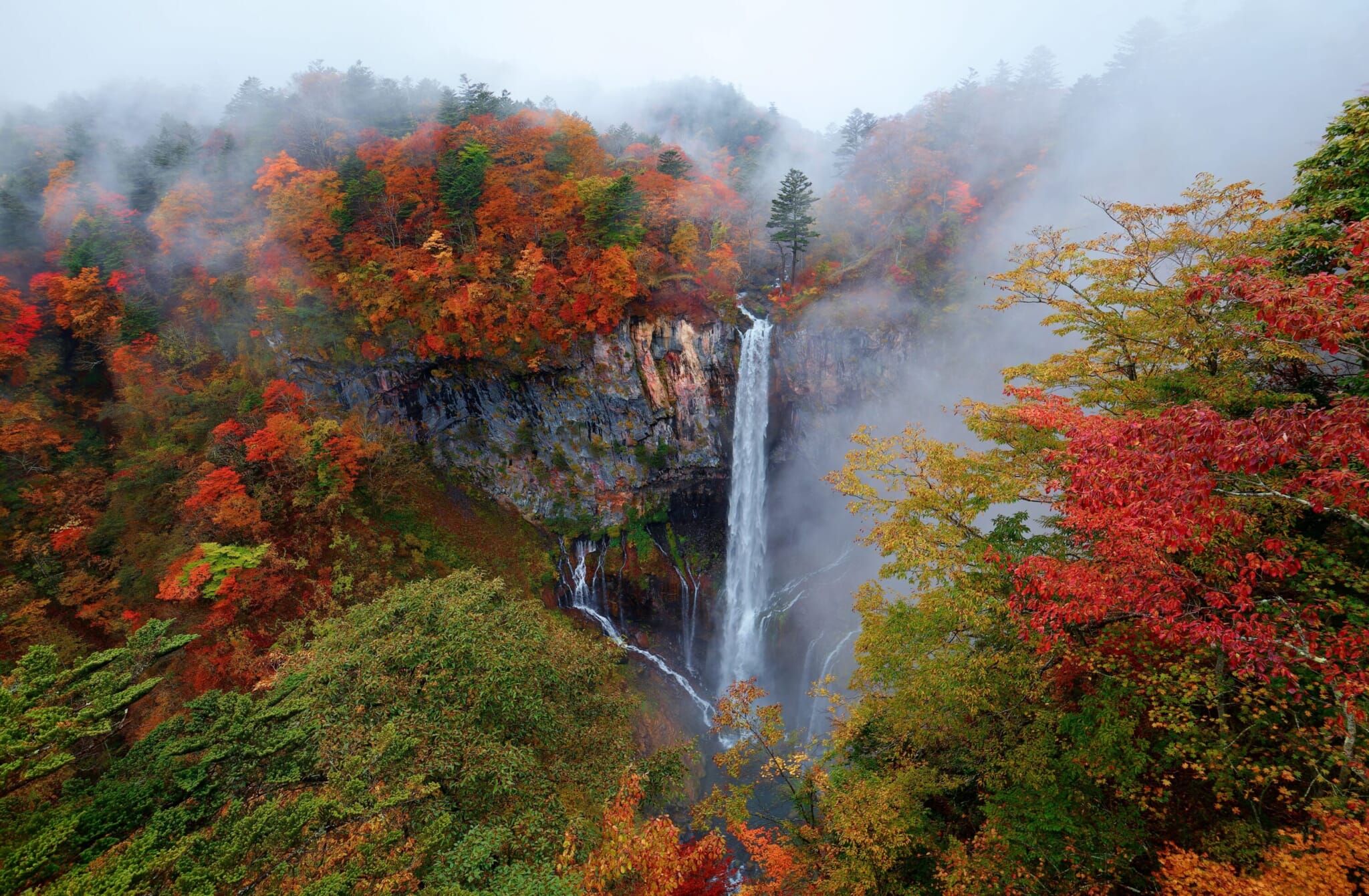
Kegon Falls Overview
Tucked into the mountains of Nikko National Park in Tochigi Prefecture, Kegon Falls is widely regarded as one of Japan’s three most beautiful waterfalls, alongside Nachi Falls in Wakayama and Fukuroda Falls in Ibaraki. Fed by the waters of Lake Chuzenji — itself formed thousands of years ago when a volcanic eruption of nearby Mount Nantai blocked the Daiya River — the falls plunge a dramatic 97 meters over a sheer cliff face, with 12 smaller cascades fanning out from cracks in the surrounding rock.
The falls take their name from the Buddhist Kegon Sutra, or Flower Garland Sutra. They are believed to have been discovered in the 8th century by the monk Shodo Shonin, the founder of Nikko, who also established Rinnoji Temple and Futarasan Shrine in the area. The site carries a layer of cultural weight beyond its natural grandeur: in 1903, the Meiji-era poet Misao Fujimura wrote his farewell poem near the falls, an event widely covered across Japan and still memorialized by a stone near the entrance today.
Visitors can take in the falls from a free upper observation deck, or descend via a one-minute elevator ride 100 meters through solid bedrock to a lower observation platform — the best spot for experiencing the roar and spray up close. The elevator has been operating since 1930, with updates over the decades, and remains one of the more memorable ways to access any waterfall in Japan.
Best Times To Visit Kegon Falls
Kegon Falls is a year-round destination, and each season offers a distinct experience. Autumn — particularly mid to late October — draws the largest crowds, as the surrounding maples turn vivid shades of red and orange, framing the falls in brilliant color. Winter brings an entirely different spectacle: in January and February, the 12 smaller cascade streams freeze over, creating an effect known as “blue ice,” where the frozen water shimmers in shades of deep blue against the grey cliff. Spring sees the water flow at its most powerful, swelled by snowmelt from the mountains above. Summer is refreshingly cool compared to central Tokyo and brings lush green foliage. To avoid the busiest periods, aim for a weekday morning visit, particularly outside of October and November.