
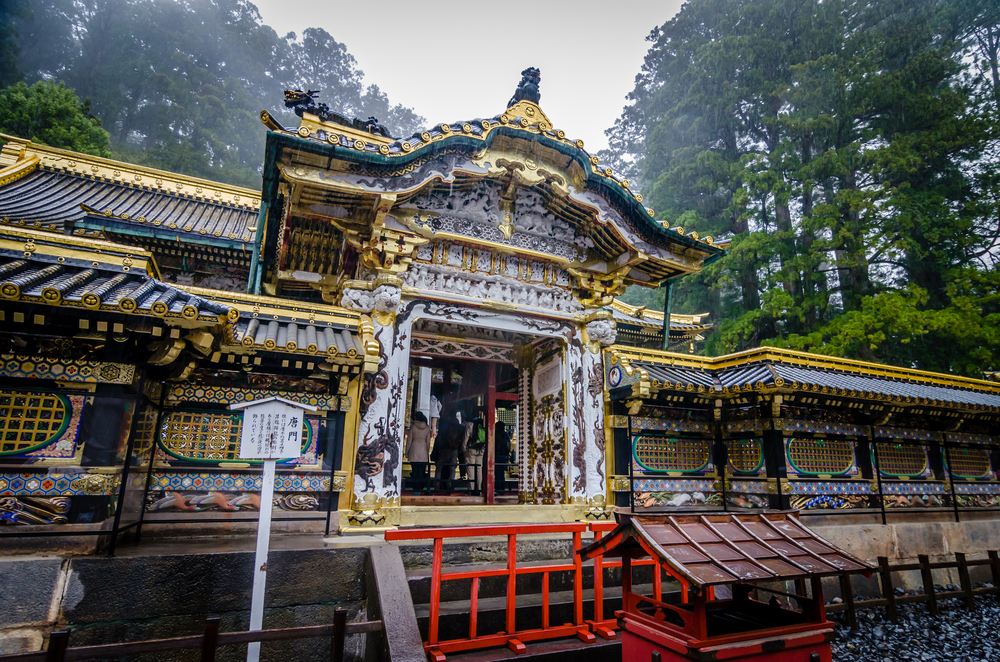
Nikko Toshogu Shrine Overview
Nestled in the cedar forests of Nikko, Tochigi Prefecture, Nikko Toshogu Shrine is one of Japan’s most ornate and historically significant religious sites. Built in 1617 as the mausoleum of Tokugawa Ieyasu — the founder of the Tokugawa shogunate that unified and ruled Japan for over 250 years — the shrine was dramatically expanded in 1636 by Ieyasu’s grandson, the third shogun Tokugawa Iemitsu, into the spectacular complex that visitors see today.
The shrine complex comprises 55 buildings adorned with elaborate wood carvings and lavish gold leaf, a striking departure from the understated simplicity typical of Shinto architecture. Among its most celebrated features are the Yomeimon Gate, covered in over 500 intricate carvings and sometimes called the “Higurashi Gate” (meaning one could gaze at it all day without tiring), the Three Wise Monkeys on the Sacred Stable — representing the proverb “see no evil, hear no evil, speak no evil” — and the Nemurineko, or Sleeping Cat, a small but iconic wooden carving above the Sakashita Gate.
In 1999, Nikko Toshogu Shrine was designated a UNESCO World Heritage Site as part of the “Shrines and Temples of Nikko,” alongside neighboring Futarasan Shrine and Rinnoji Temple, all of which are within easy walking distance of each other.
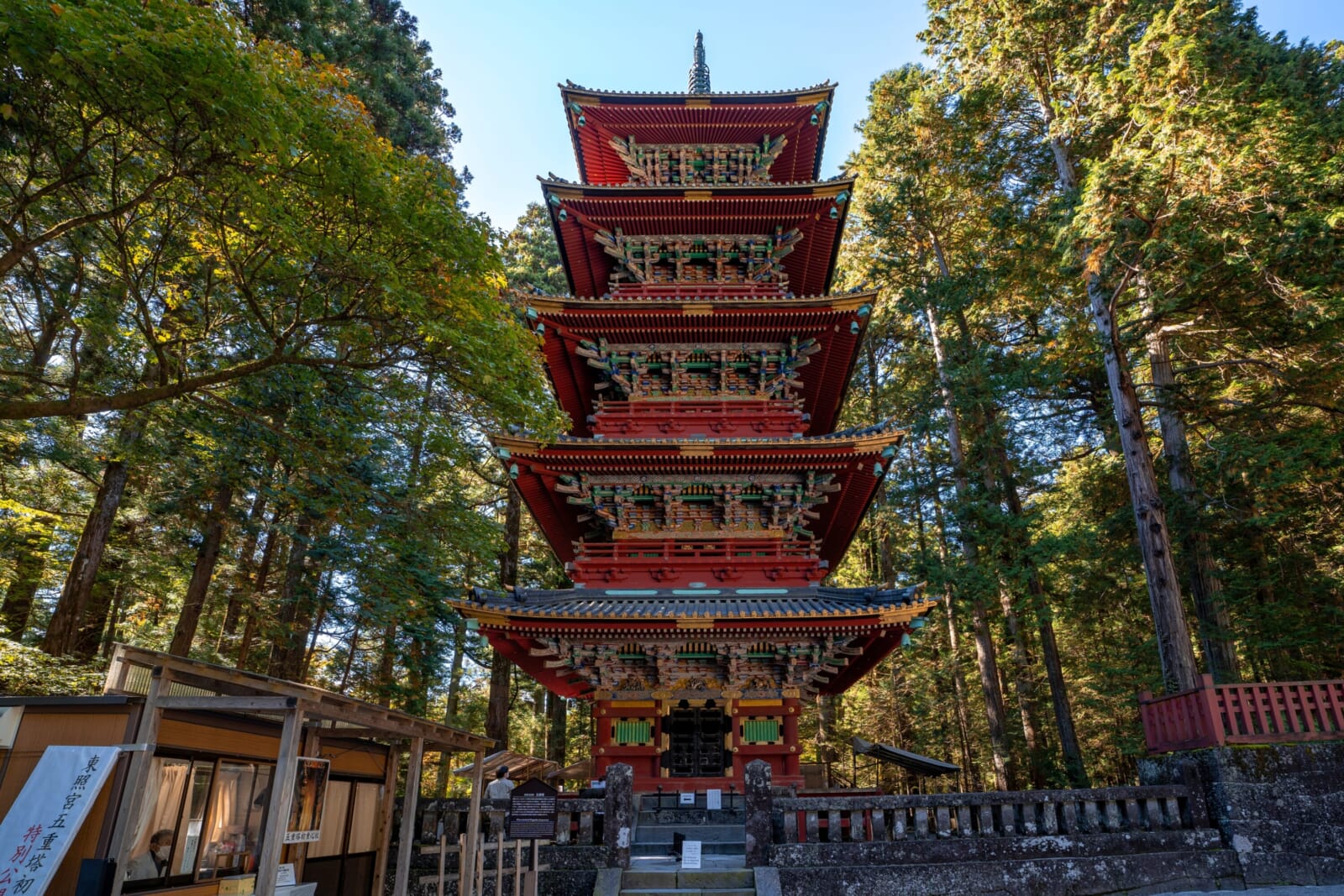
Best Times To Visit Nikko Toshogu Shrine
Nikko Toshogu Shrine is open year-round and offers something different in every season. That said, autumn — particularly early to mid-November — is widely considered the best time to visit. The shrine’s richly colored architecture pairs beautifully with the vivid fall foliage, creating some of the most photogenic scenery in all of Japan. The surrounding area, including Lake Chuzenji and Irohazaka, is equally stunning at this time of year.
Spring (late March to May) is another excellent time to visit, with mild temperatures and cherry blossoms adding a soft contrast to the shrine’s vibrant gold and red palette. Summer is warm and relatively dry but can be crowded, particularly on weekends. Winter brings snow to Nikko, which lends the forested grounds an ethereal quiet — though be prepared for cold temperatures and shorter visiting hours.
Regardless of season, arriving early on a weekday is the best way to beat the tour groups that tend to arrive mid-morning.