
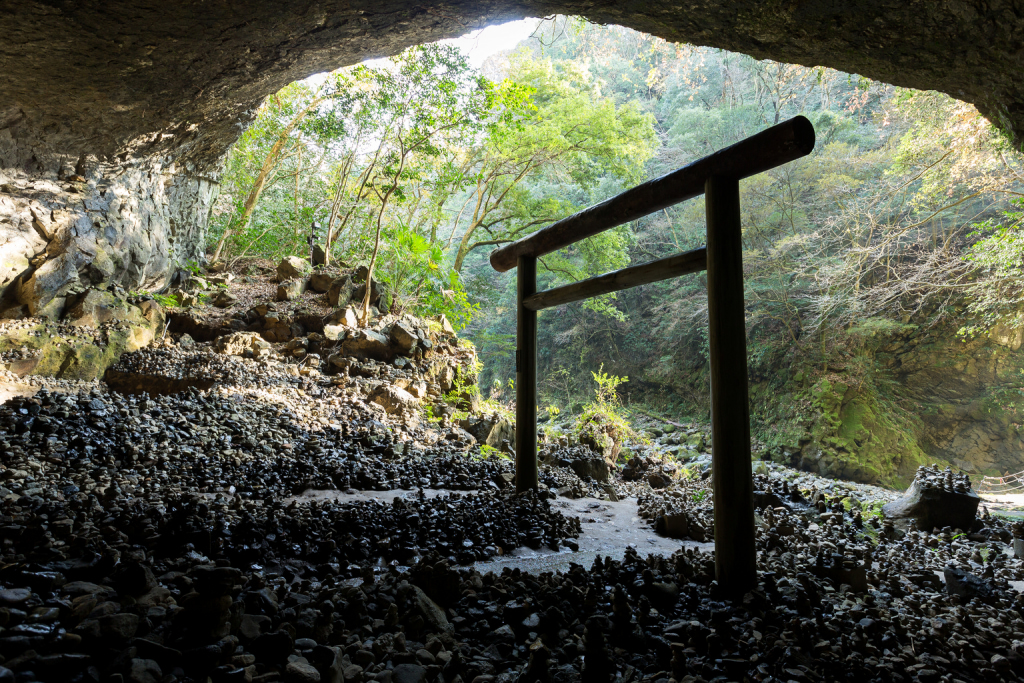
Amanoiwato Shrine Overview
Nestled in the mountain town of Takachiho in Miyazaki Prefecture, Amanoiwato Shrine is one of Japan’s most sacred and storied sites. Dedicated to the sun goddess Amaterasu, the shrine sits above the gorge containing the Ama-no-Iwato cave, where, according to Japanese legend, the goddess hid after a battle with her brother, plunging the world into darkness until she was lured out by the spirit of merriment Ame-no-Uzume.
The myth is recorded in the Kojiki and Nihon Shoki, Japan’s oldest historical chronicles. According to the legend, Amaterasu became enraged at the rambunctious behavior of her younger brother Susanoo and sealed herself inside the cave behind a great stone door — the Amanoiwato — causing the world to fall into darkness and disaster. The stone door itself is enshrined as the sacred object of worship at the West Main Shrine.
The complex is divided into two main halls on opposite banks of the Iwato River. From the shrine grounds, visitors can see the fabled cave across the river. However, the cave itself is not open to the public; a closer look is possible from an observation deck, available upon request of a guided tour conducted in Japanese by one of the shrine priests. Visitors are required to purify themselves via a Shinto ritual beforehand. Guided viewings are offered approximately every 30 minutes, and photography is prohibited in the sacred area.
A short walk from the West Main Shrine leads to Amanoyasukawara, a large cave about 10 minutes on foot along the Iwato River. According to legend, this is where the gods gathered to discuss how to bring light back to the world. Visitors traditionally stack stones and make wishes here, and the cave is filled with countless stone towers, making it one of Japan’s most atmospheric spiritual power spots.
Best Times To Visit Amanoiwato Shrine
Spring and autumn are the most rewarding seasons to visit. Spring brings lush mossy greens along the river, while autumn offers fiery foliage that adds dramatic color to the already atmospheric surroundings.
Kagura dance performances are held at the shrine in early May during the spring festival and at the autumn festival in late September, as well as on Culture Day on November 3. The 33 dances depict the legendary tales of Japan’s ancient past, with the final dance retelling the story of Amaterasu emerging from the cave.
For a more serene experience, early morning visits are recommended to avoid crowds and enjoy the quiet of the forest paths. Summer can be hot and humid, while winter tends to be cold in the mountains, so layering is essential for shoulder-season visits.