
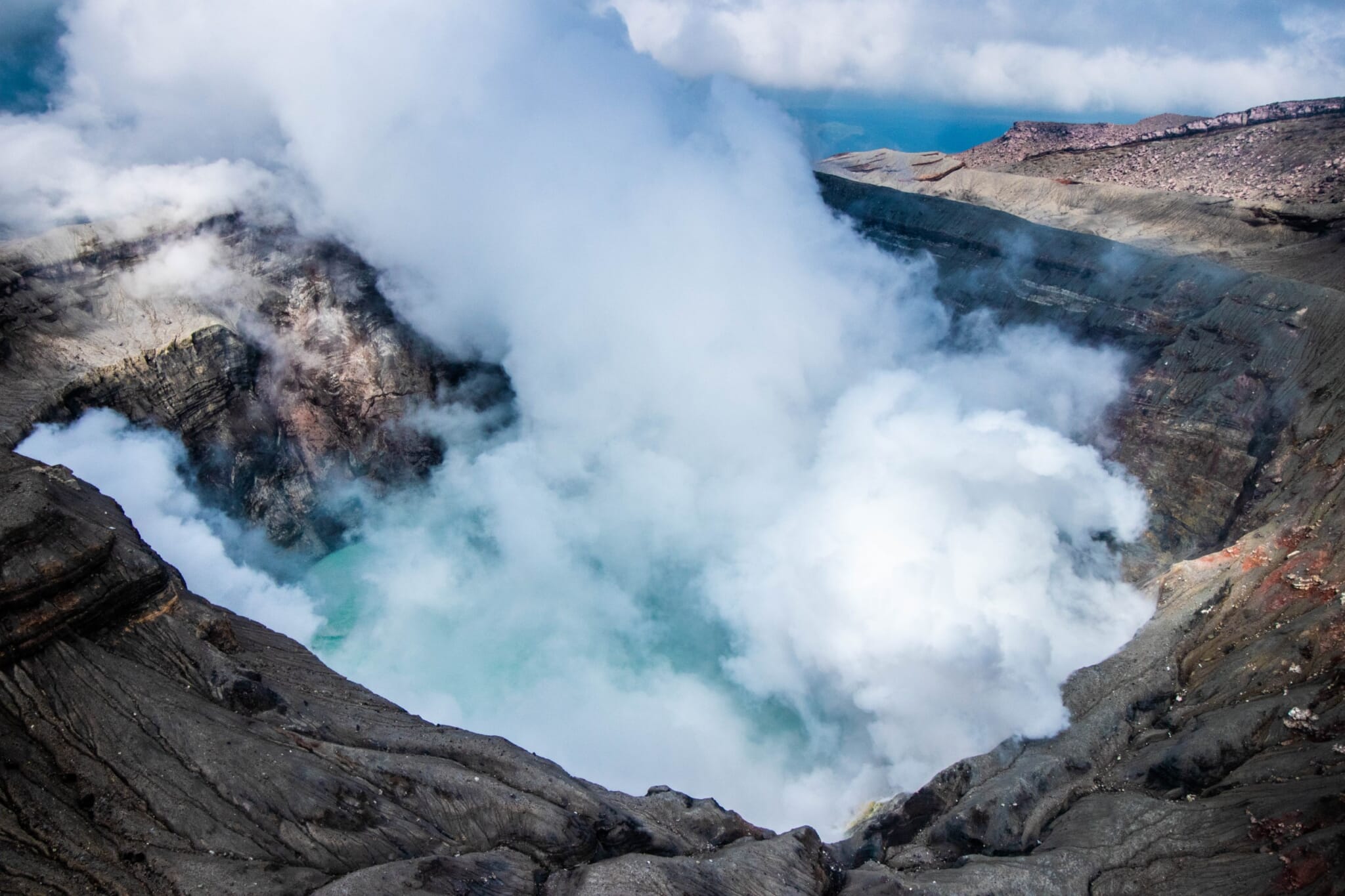
Mount Aso Overview
Located in the heart of Kyushu within Aso Kuju National Park, Mount Aso is Japan’s largest active volcano and one of the largest in the world. Its ancient caldera stretches approximately 25 kilometers from north to south and 18 kilometers from east to west, with a circumference of over 100 kilometers — large enough to contain several towns, villages, rice fields, and highland plains within its rim.
At the center of the caldera rise five peaks collectively known as Aso Gogaku: Nakadake, Takadake, Nekodake, Eboshidake and Kishimadake. Of these, Nakadake (1,506 meters) is the only currently active peak and the main draw for visitors. Its first crater — 600 meters in diameter, 130 meters deep and approximately 4 kilometers in circumference — offers an extraordinary close-up view of an actively venting volcano. When gas levels permit and conditions are clear, the crater’s emerald-green lake filled with superheated water at 50–60°C is visible from the rim. The sulfurous smell and billowing white smoke are constant reminders that the earth here is very much alive.
The volcano most recently erupted in 2021 and 2016. The 2016 eruption destroyed the ropeway that once ran to the crater; it has not been replaced. Access to the crater viewing area is now via a toll road by car or a shuttle bus from Aso Sanjo Terminal. Visitor zones around the crater are tiered — the closest and most dramatic viewpoints (Zones B-1 and B-2) are only accessible when the volcanic alert level is at Level 1 and gas concentrations are within safe limits. Red blinking lights at the site signal that the area is currently restricted.
Nearby, the Kusasenri grassland plain offers sweeping views of the smoking crater from a safer distance, along with grazing horses and walking trails. The Aso Volcano Museum at Kusasenri includes real-time footage from cameras inside the crater.
Best Times To Visit Mount Aso
The crater can be visited year-round when conditions allow, but access is frequently restricted without warning. Spring (April to May) offers mild temperatures and the spectacle of Kyushu azaleas blooming across the mountain slopes. Summer provides the longest daylight hours for hiking, though humidity can be high. Autumn (October to November) brings clear skies and vivid foliage in the caldera below. Winter visits are possible but require warm layers, and snow or ice may close trails. Always check the latest volcanic alert level and gas conditions at the Aso Volcano Disaster Prevention Council’s official website before visiting.