

Senkoji Temple Overview
Perched on the slopes of Mount Senkoji overlooking the port city of Onomichi in Hiroshima Prefecture, Senkoji Temple is one of western Japan’s most atmospheric hilltop sanctuaries. Founded in 806 and attributed to the Buddhist monk Kobo Daishi, the temple has anchored the spiritual life of Onomichi for over 1,200 years and remains the city’s most visited landmark.
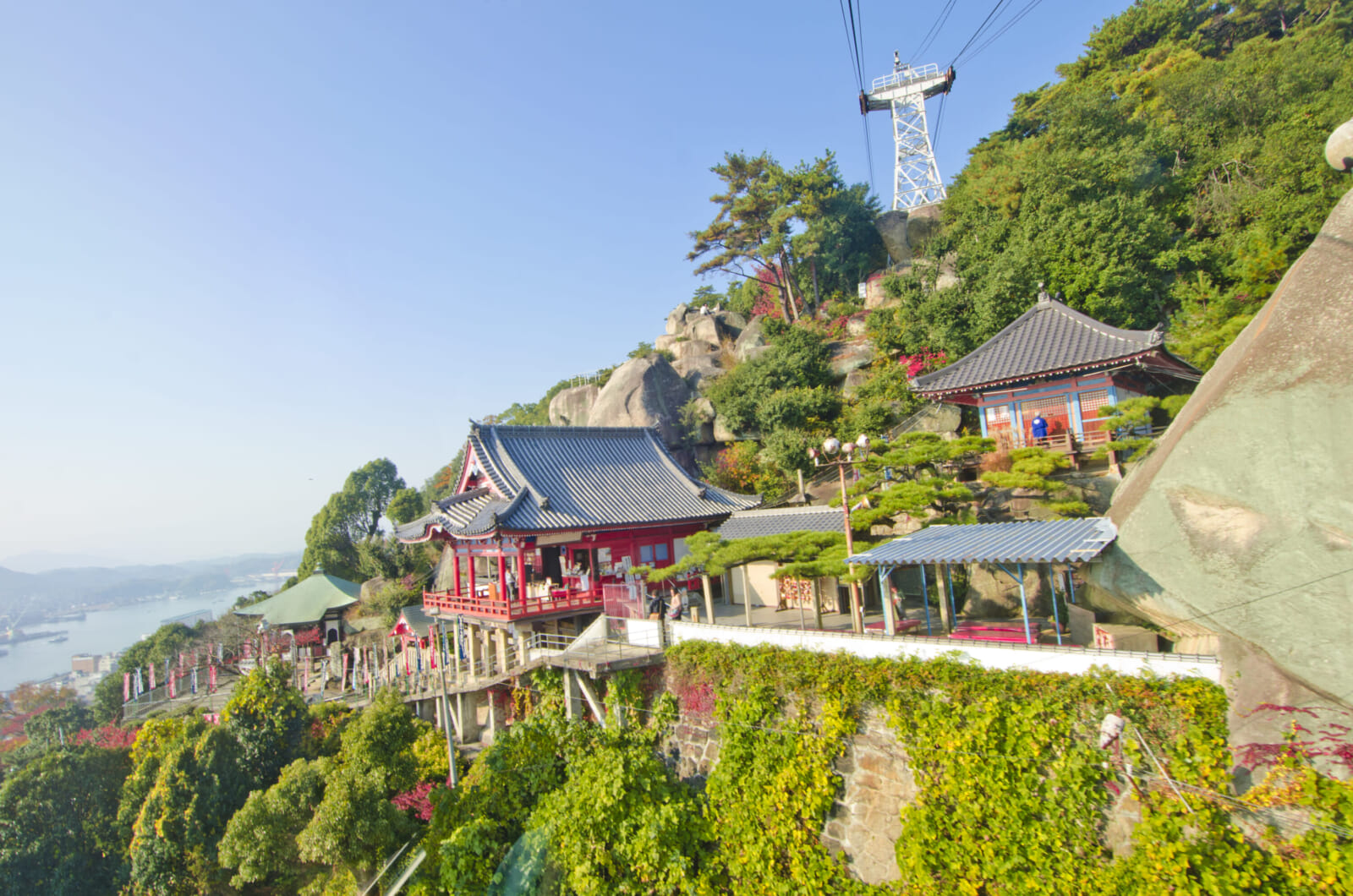
The temple’s most striking feature is its main hall, known as the Akado or “Red Hall” — a vermilion-lacquered structure built in 1686 that juts out over the cliff face on a raised stage. The bold color against the deep green of the hillside and the blue of the sea beyond has made it one of the most photographed views in the Chugoku region. Inside, the main hall enshrines a statue of Senju Kannon (Thousand-Armed Kannon), a “secret Buddha” believed to have been carved by Prince Shotoku that is revealed to the public only once every 33 years — the next unveiling is scheduled for 2045.
The temple grounds are dotted with unusual megaliths, the most famous being the Tama-no-iwa, or Jade Rock, around which a legend persists that a glowing jewel once illuminated the surrounding sea. The Bell Tower nearby has been designated one of the 100 Soundscapes of Japan, and visitors are welcome to ring the bell.
Senkoji is also the 10th site on the Chugoku 33 Kannon Pilgrimage, as well as a stop on Onomichi’s celebrated Temple Walk — a 2.5-kilometer route connecting 25 temples through the city’s hillside lanes. Adjacent to the temple, the Bungaku no Michi (Path of Literature) features 25 stone monuments inscribed with verse by authors connected to Onomichi, including Shiga Naoya and Fumiko Hayashi.
Best Times To Visit Senkoji Temple
Senkoji is worth visiting year-round, but spring is exceptional. Senkoji Park, which surrounds the temple, is ranked among Japan’s 100 best cherry blossom spots, and the trees typically peak in late March to early April, drawing large crowds to the hillside. Autumn brings vivid foliage that frames the Red Hall beautifully. Summer evenings offer panoramic views of Onomichi glowing at dusk, while winter visits tend to be quieter and more contemplative.
Weekday mornings are the best time to avoid crowds, and early arrivals can enjoy the temple at its most peaceful before the ropeway brings day-trippers up the hill.