

Musashi Ichinomiya Hikawa Shrine Overview
Musashi Ichinomiya Hikawa Shrine is located in Omiya, Saitama, about 30 minutes north of Tokyo by train. The city name “Omiya” is itself a tribute to the shrine — it literally translates to “great shrine” in Japanese, a reflection of the site’s outsized role in shaping the region’s identity.
With over 2,400 years of history, it is one of the oldest and most significant shrines in the Kanto region, holding the prestigious title of “Ichinomiya,” or “highest-ranking shrine.” It is the head of a network of approximately 280 Hikawa shrines mostly around the Kanto region.
The shrine enshrines Susanoo-no-Mikoto, brother of Amaterasu and god of sea, storms and love; Inada-hime no Mikoto, goddess of rice, agriculture, marriage and childbirth; and Onamuchi no Mikoto, god of nation-building, agriculture and medicine. As a result, the shrine is especially popular among those seeking blessings for love and relationships.
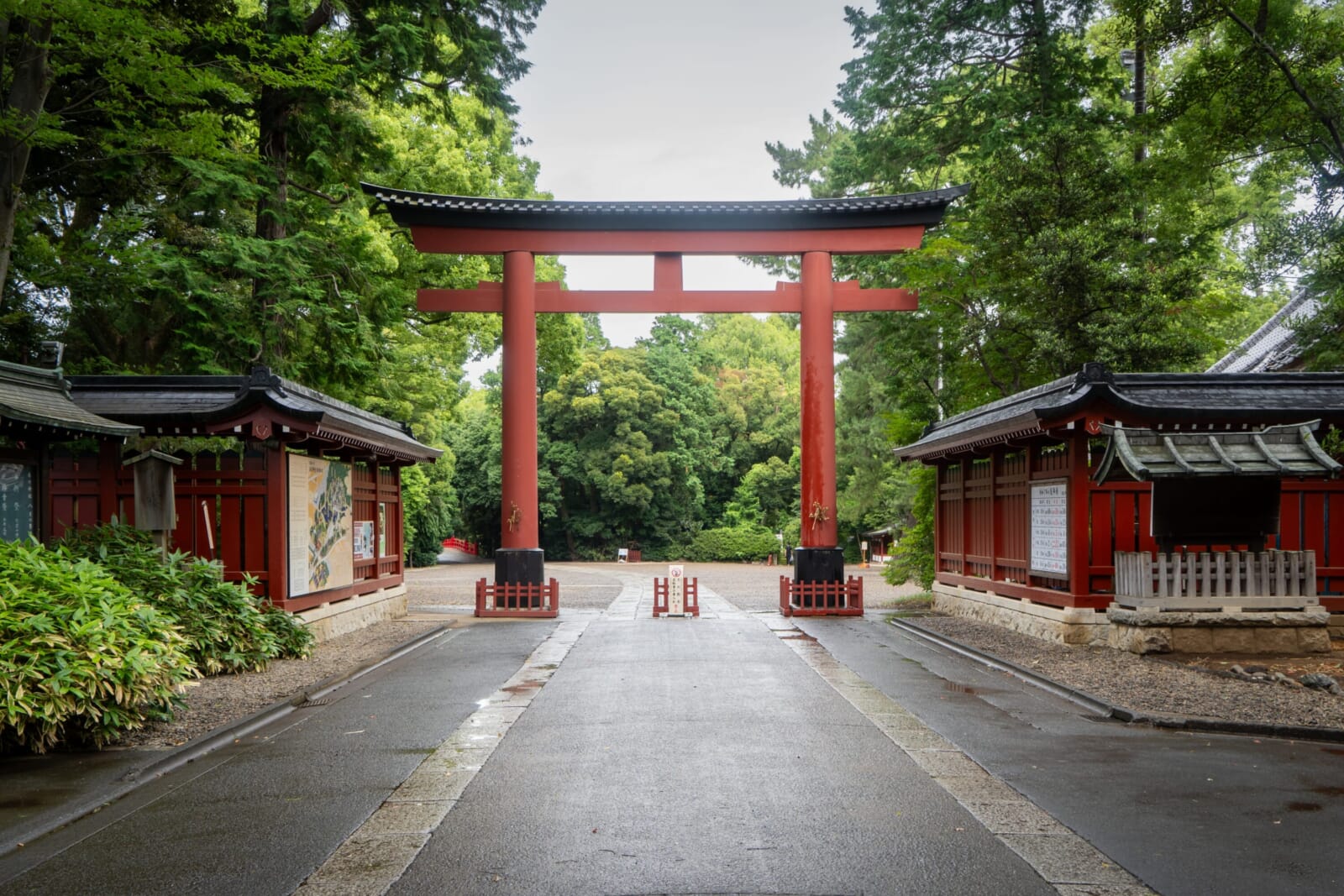
The vast shrine complex blends quaint wooden buildings with massive torii gates. Perhaps its most striking feature is the pathway leading to the shrine — the longest in Japan. Stretching 2 kilometers, it is lined with over 650 trees, creating a beautiful green canopy in the warmer months and a breathtaking display of autumn colors in fall.
The shrine flourished during the Edo period (1603–1868), especially due to its location in Omiya-juku, a post town on the Nakasendo, the key route connecting Edo (modern Tokyo) to Kyoto. During the Meiji era, Emperor Meiji designated the shrine an imperial shrine and the guardian of Musashi Province.
The shrine grounds are free to enter, and amulets (omamori) are available for purchase.
Best Times To Visit Musashi Ichinomiya Hikawa
The shrine is beautiful year-round, but certain seasons offer particularly memorable visits. Spring brings cherry blossoms to the adjacent Omiya Park, making the entire area a popular hanami destination. Summer is ideal for catching the shrine’s major annual festivals, including the Reitaisai Grand Festival held on August 1. The approach ends at a picturesque red bridge crossing over Kamiike Pond, where in early December you can also admire vibrant autumn hues reflected on the water’s surface — making autumn another excellent time to visit.
The new year is arguably the most atmospheric time, as the shrine attracts many people for hatsumode, the traditional first shrine visit of the year. Crowds are large but the energy is unmatched.