
Mount Nokogiri Overview
Nokogiriyama, or Mount Nokogiri, rises approximately 329 meters above the Boso Peninsula in Chiba Prefecture. Known since the Edo period as a source of high-quality Boso stone, the mountain’s extensive quarrying history left behind jagged cliff faces that resemble the teeth of a saw — hence the name Nokogiriyama, or “Saw Mountain.”
Spread across the southern slope of the mountain is Nihonji Temple, one of the oldest imperial temples in the Kanto region, founded approximately 1,300 years ago by the monk Gyoki. The temple grounds are vast, with stone paths winding through forested trails, carved cliffs and sacred statuary.
The centerpiece of any visit is the Nihonji Daibutsu, Japan’s largest stone-carved seated Buddha, standing at 31.05 meters tall. Carved into the mountainside between 1780 and 1783 by master artisan Ono Jingohei and his disciples, the statue dwarfs even the famous Great Buddha of Kamakura, which measures just 13.35 meters. Also within the temple grounds stands the 30-meter Hyaku-shaku Kannon, a figure of the Buddhist Goddess of Mercy carved directly into a quarry cliff face in 1966.
Scattered along the walking paths are 1,553 stone Arhat figures, depicting disciples of the Buddha, carved over 21 years during the late Edo period. Many were damaged during the anti-Buddhist movement of the Meiji Restoration, though restoration efforts continue today.
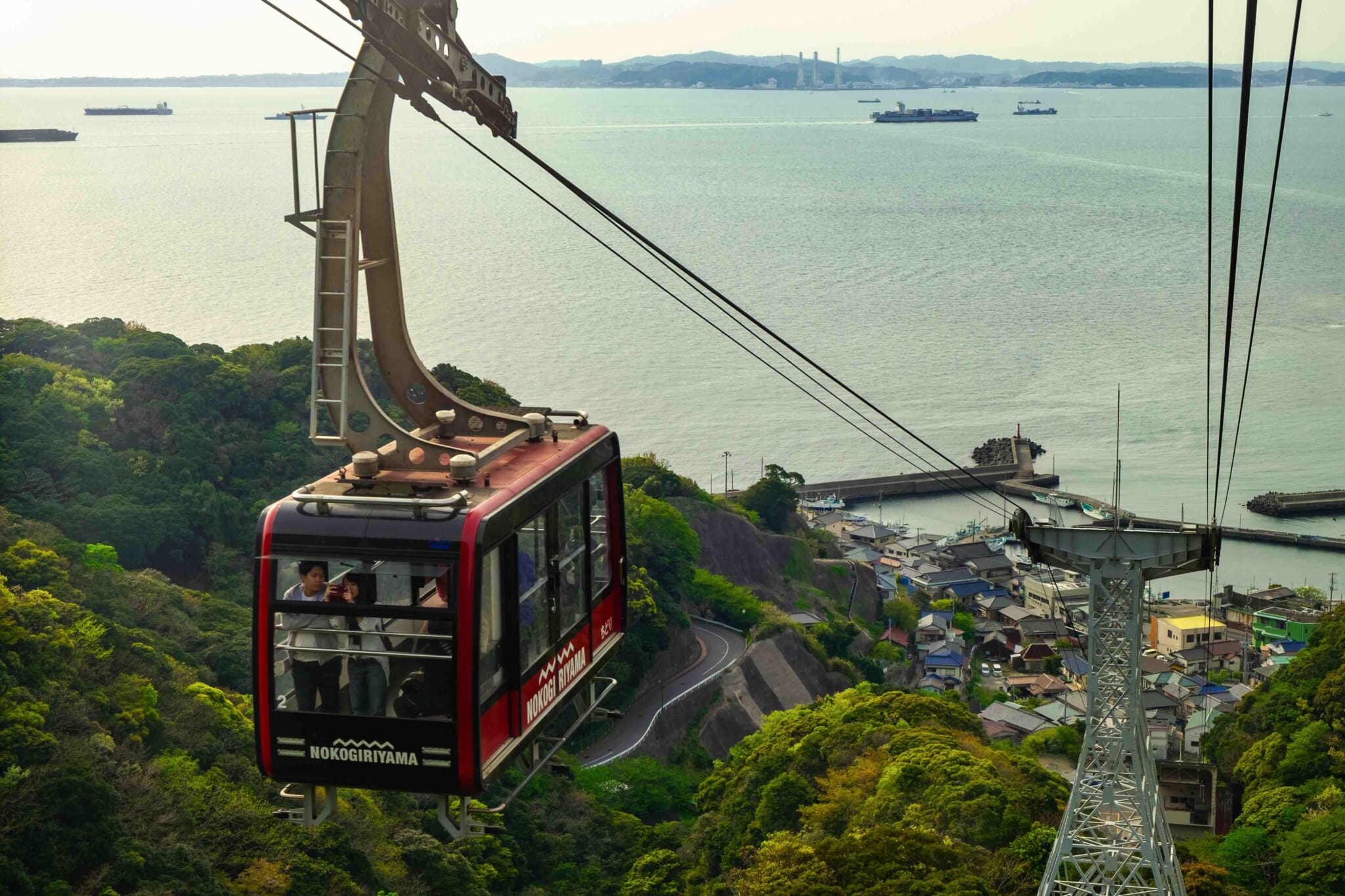
At the mountain’s peak, the Jigoku Nozoki — or “Hell Lookout” — offers one of the most dramatic viewpoints in the greater Tokyo area: a narrow rock ledge jutting from a sheer cliff, with panoramic views of Tokyo Bay and, on clear days, Mount Fuji.
Best Times To Visit Mount Nokogiri
Nokogiriyama is a rewarding destination year-round. Spring brings cherry blossoms to the mountain trails in late March and early April, while autumn foliage typically peaks in November, making both seasons especially scenic for hiking. Winter offers excellent visibility on clear days, with crisp views across Tokyo Bay toward Mount Fuji. Summer visitors should plan an early start to beat both the heat and the weekend crowds, particularly at the Jigoku Nozoki viewpoint.
Weekdays are recommended throughout the year, as the mountain can become congested on weekends and public holidays — especially at the cliff lookout and around the Daibutsu.