

Ibusuki’s Sand Baths Overview
Tucked at the southern tip of the Satsuma Peninsula in Kagoshima Prefecture, Ibusuki is a small coastal onsen town with a genuinely one-of-a-kind claim to fame: naturally heated sand baths, or sunamushi, that have drawn visitors for over 300 years.
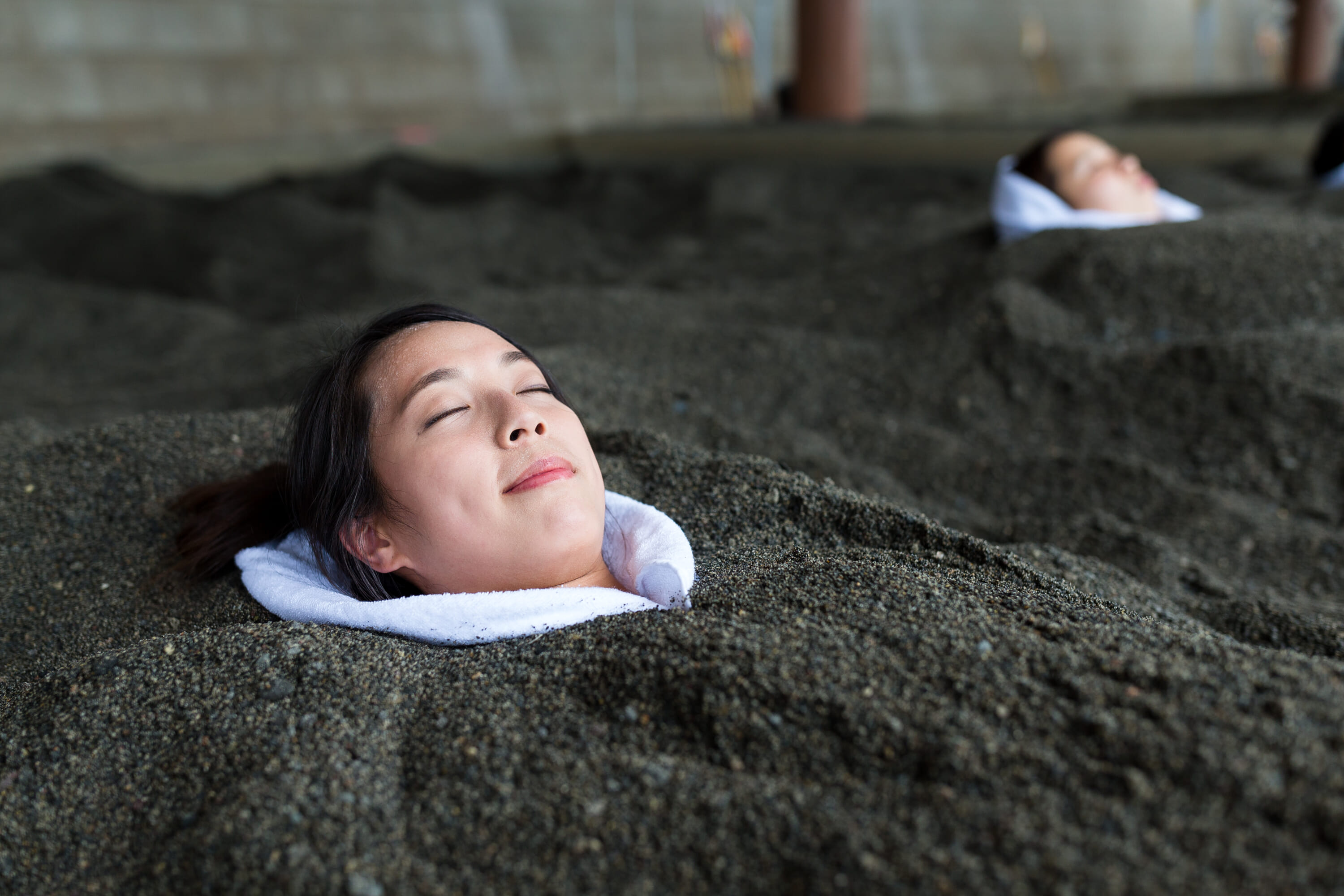
Unlike conventional hot springs, the sand here is warmed from below by geothermal volcanic activity, reaching temperatures of around 50–55°C. The experience itself is simple but unforgettable — guests change into a cotton yukata, lie down in a shallow depression on the beach and are buried up to the neck in the mineral-rich black sand by attending staff. After 10 to 15 minutes, the heat and the gentle weight of the sand work together to open pores, ease muscle tension and boost circulation. Studies from Kagoshima University have suggested the health benefits may be 3 to 4 times greater than those of a standard hot spring.
The most accessible facility is the Saraku Sand Bath Hall, located along the beachfront about a 15 to 20-minute walk from Ibusuki Station. It includes indoor onsen baths for rinsing off afterward, making for a complete wellness experience. Further along the coast, Healthy Land offers a more expansive complex with spectacular open-air baths overlooking Mount Kaimondake — often called the “Mount Fuji of Satsuma” for its near-perfect conical shape.
Beyond the sand baths, Ibusuki is home to Lake Ikeda, Kyushu’s largest caldera lake and habitat for giant eels, as well as the scenic Cape Nagasakibana at the peninsula’s southernmost tip.
Best Times To Visit Ibusuki
Ibusuki is a year-round destination, but winter — from December through February — is often considered the best time to visit. The contrast between the cool sea air and the warmth of the sand creates an especially therapeutic and memorable experience. Crowds are also thinner during this period compared to summer.
Spring brings rapeseed blossoms to the foot of Mount Kaimon from late December into January, painting the landscape yellow and making for scenic day trips around the area.
Summer can be hot and humid, and while the sand baths are still operating, the outdoor heat makes the experience less comfortable.
Note that Saraku Sand Bath Hall closes for maintenance during parts of July and December, so check the official schedule before visiting.