
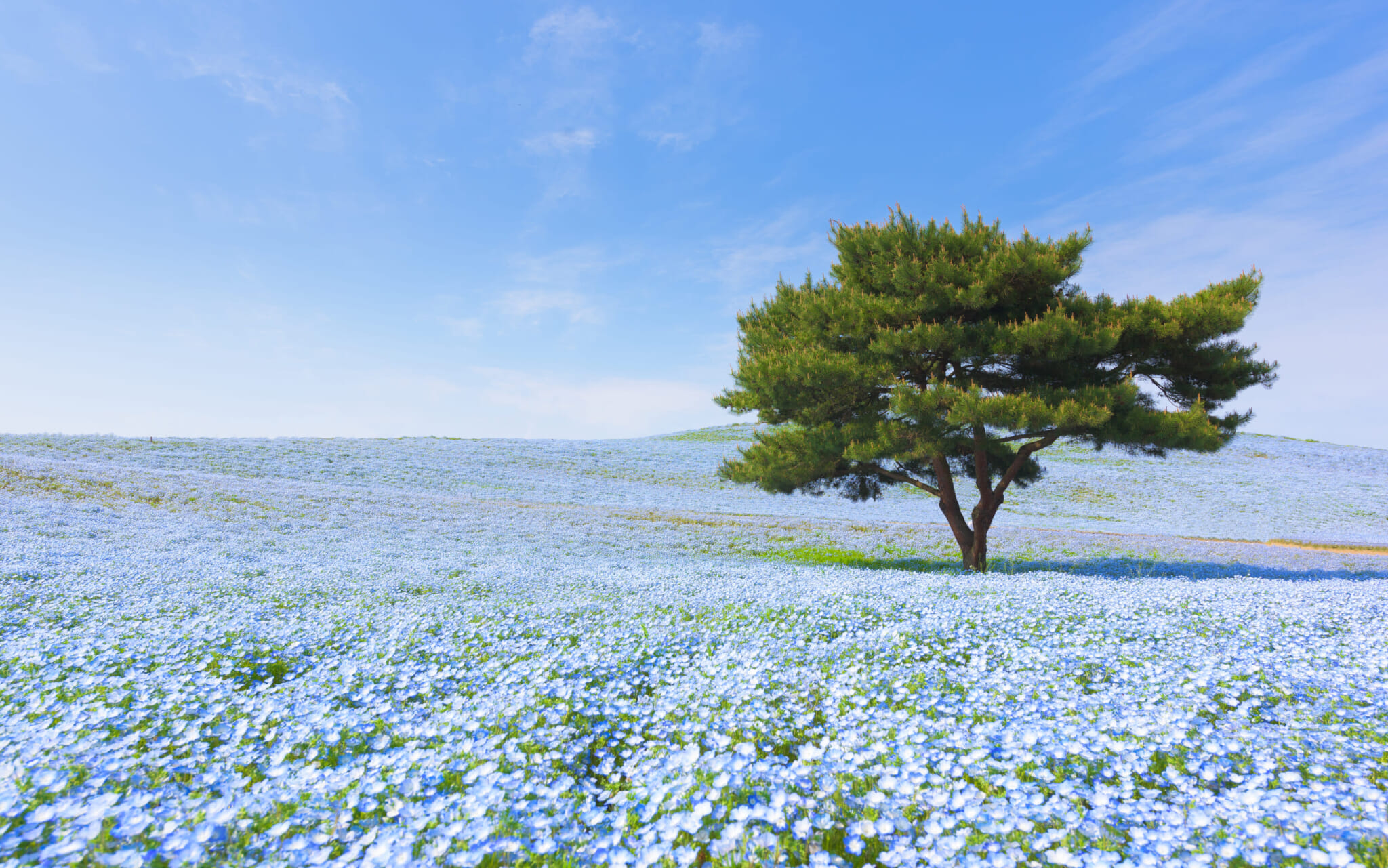
Overview of Hitachi Seaside Park
Spread across 350 hectares of rolling coastal land in Hitachinaka city, Hitachi Seaside Park is one of Ibaraki’s most celebrated attractions — and one of the most photographed natural landscapes in all of Japan. The park’s story begins with an unlikely past: the grounds were formerly a military airbase and US Air Force training area. In 1973 the land was returned to the Japanese government, and the park officially opened in 1991 as a public space designed to preserve the area’s natural environment and serve as a symbol of peace.
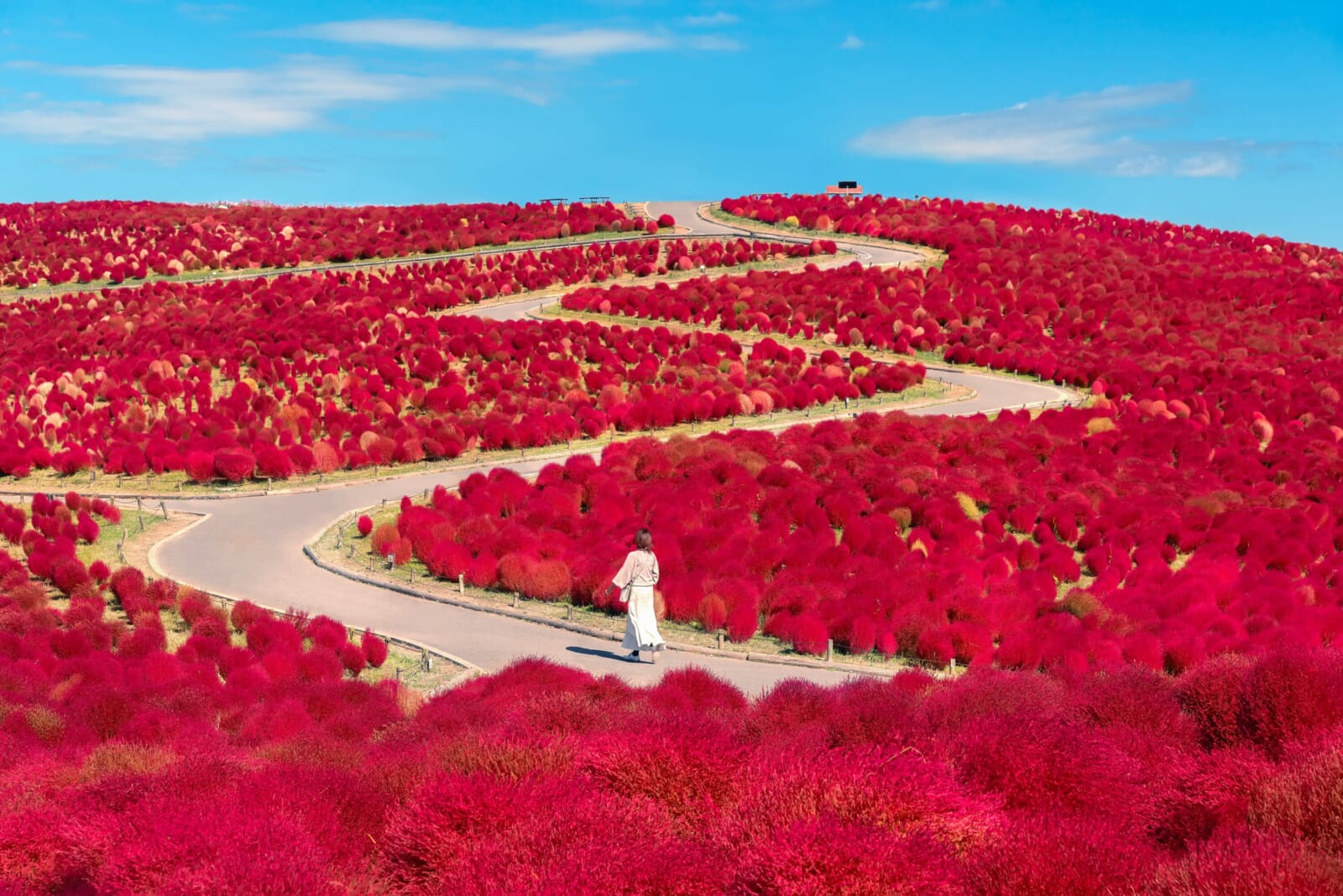
Today, the park is best known for its seasonal flower displays, which draw visitors from across the Kanto region and beyond throughout the year. Its most famous sight is Miharashi Hill in spring, when around 4.5 million nemophila — small, translucent blue flowers also known as “baby blue eyes” — blanket the hillside in a shade that mirrors the open sky above and the Pacific Ocean below. The spectacle gained international recognition when CNN named the nemophila fields one of Japan’s 36 most beautiful places. The hill transforms again each autumn, when 32,000 kochia bushes shift from lime green to brilliant crimson, drawing an equally enthusiastic crowd.
Beyond flowers, the park offers something for everyone. An amusement area called the Pleasure Garden features over 25 rides and attractions, including a Ferris wheel standing 100 meters above sea level. Around 11 kilometers of cycling paths wind through the park, with rental bicycles available from ¥600 for three hours. A seaside train also loops around the park for those who prefer a more leisurely way to take in the scenery.
Best Times To Visit Hitachi Seaside Park
Each season at Hitachi Seaside Park brings a different reason to visit. Late March sees daffodils in bloom, followed by tulips in April. The park’s signature nemophila season runs from late April to mid-May and is the most popular time to visit. Early summer brings poppies, roses and sunflowers, while autumn — particularly early to mid-October — is prime time for the red kochia. Even in winter, ice tulips and Japanese plum trees add color to the grounds. For the most comfortable visit, arriving early on a weekday is strongly recommended during peak flower seasons, as the park draws large crowds.