
Ushiku Daibutsu Overview
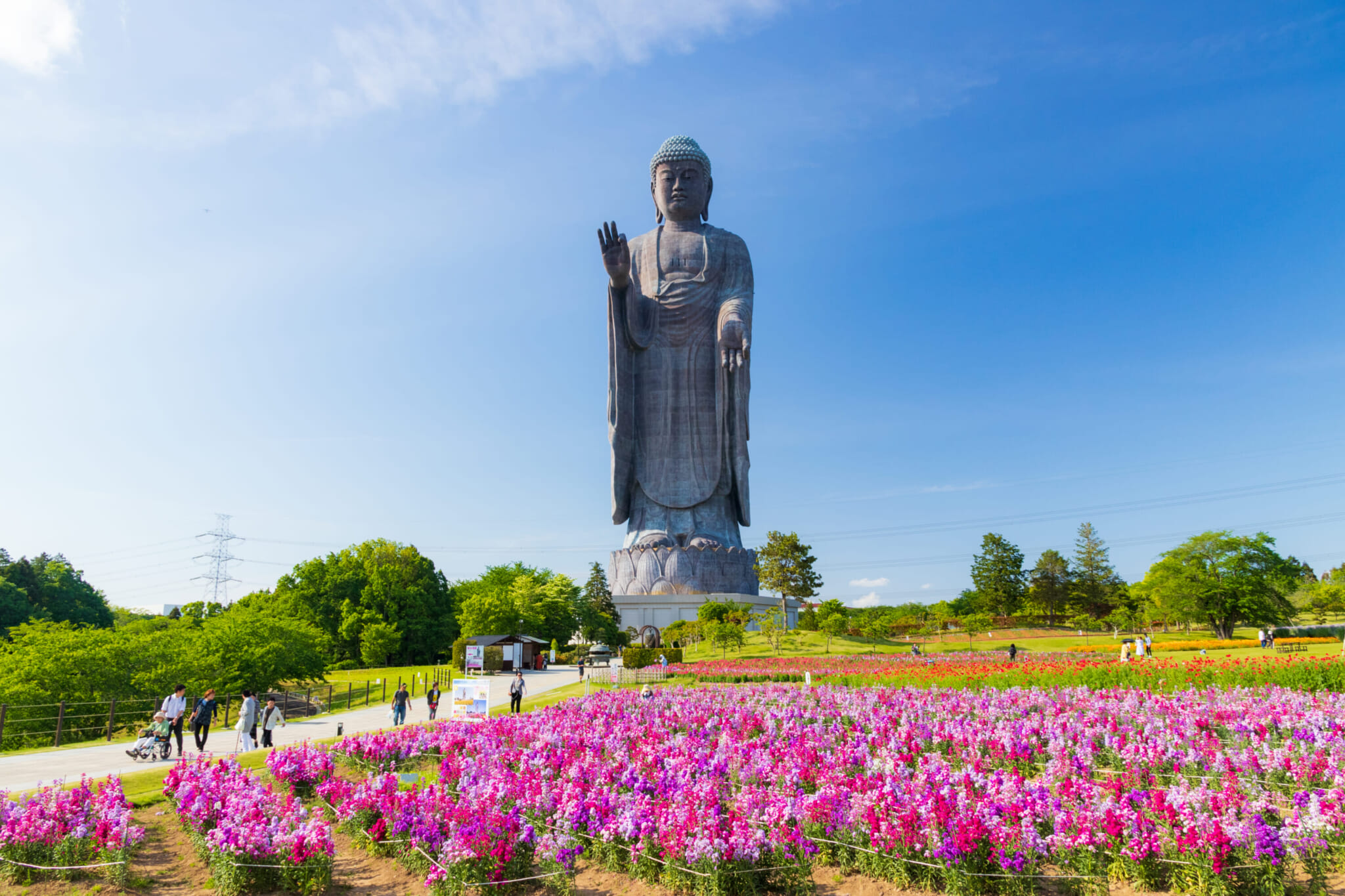
Standing 120 meters tall in the city of Ushiku, Ibaraki Prefecture, the Ushiku Daibutsu is one of the most awe-inspiring sights in all of Japan — and one of the least expected. A colossal bronze statue of Amitabha Buddha, it holds the Guinness World Record as the world’s tallest bronze statue and ranks among the tallest statues of any kind on earth. To put its scale in perspective: Nara’s celebrated Great Buddha stands just 15 meters tall and could rest comfortably in the palm of the Ushiku Daibutsu’s outstretched hand, which alone measures 18 meters.
Conceived in 1983 and completed in 1993, the statue was built to commemorate the birth of Shinran, the founder of the Jodo Shinshu (True Pure Land) sect of Buddhism. Ibaraki was chosen for its historical connection to Shinran, who established his base for spreading Pure Land teachings in the region. The project was financed by the Higashi Honganji temple, the sect’s headquarters in Kyoto. The statue’s total height of 120 meters is symbolic: it represents the twelve lights said to radiate from Amitabha Buddha outward to all beings in the world. The statue held the record for the world’s tallest statue from 1993 until 2008.
Visiting the Ushiku Daibutsu is more than just seeing an enormous structure from the outside. The interior houses five floors, accessed by elevator, with the highlight being an observation floor at 85 meters — on clear days, both Tokyo Skytree and Mount Fuji are visible from here. The lower floors contain a light installation depicting Amitabha’s radiance, a golden sanctuary holding around 3,400 small Buddha statues, and a space for sutra copying. The grounds surrounding the statue feature a tranquil Jodo Garden with seasonal flowers, a large koi pond, Japan’s largest bronze incense burner and a small animal area with monkey performances and a petting zoo.
Best Times To Visit Ushiku Daibutsu
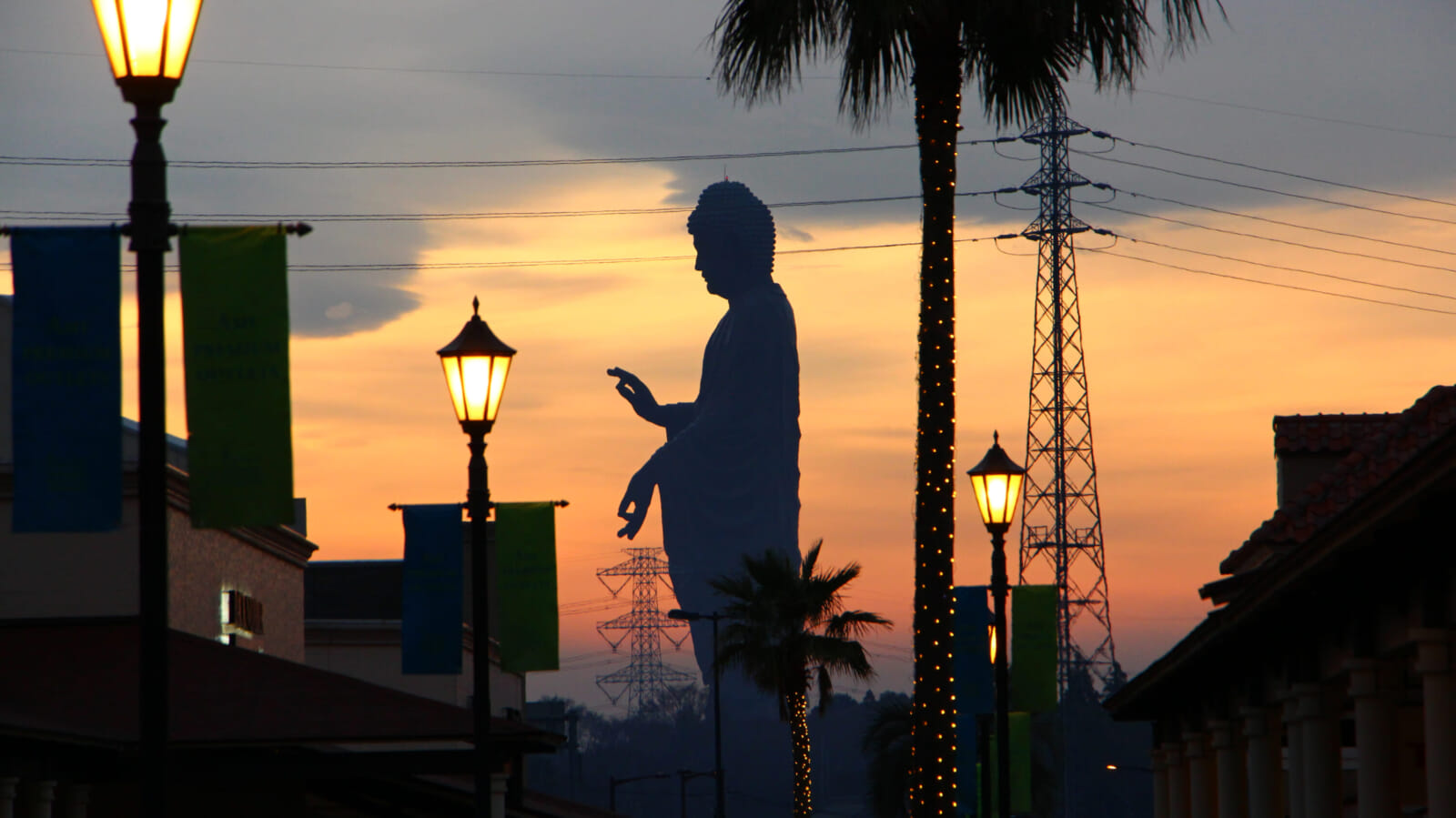
Spring is the most popular time to visit, when over 100 cherry trees on the grounds bloom in early to mid-April, followed by pink moss phlox covering the hillsides. Cosmos bloom in September and October, making autumn another appealing season. The biggest annual event is the Obon festival in mid-August, when a special light show and fireworks illuminate the statue after dark. New Year is also a significant period — entry is free from January 1–3, and the site hosts traditional hatsumode prayer ceremonies and a midnight countdown on New Year’s Eve. Visiting on a weekday is recommended to avoid long elevator queues inside the statue.