A new exhibition at the British Museum is inviting visitors to reconsider what they think they know about Japan’s samurai. Simply titled “Samurai,” the exhibition runs from February 3 to May 4, 2026, and explores more than a thousand years of history tied to the country’s elite warrior class.
At the heart of the exhibition is a bold, headline-grabbing claim: that after 1615, women made up half of all samurai.
According to the museum’s curators, this reflects the historical meaning of “samurai” as a social class rather than a synonym for battlefield fighter. They argue that samurai first emerged as professional fighters in the 12th century, but over time their role shifted dramatically. By 1615, after the start of the long and relatively peaceful Edo period, they were no longer regularly fighting wars. Instead, they became administrators, scholars and officials — a hereditary social class rather than an active army.
Rosina Buckland, the museum’s lead curator, has noted that samurai were “not warriors in practice” during the Edo period, but a standing elite who rarely fought.
“What I want to address in the exhibition is the way that perception of samurai has become narrowed down to just this male warrior in armor wielding a sword,” Buckland told The Guardian. “This rediscovery of female samurai history reframes centuries of gendered myth and challenges the hyper-masculine image of the samurai that still dominates film, anime and gaming.”
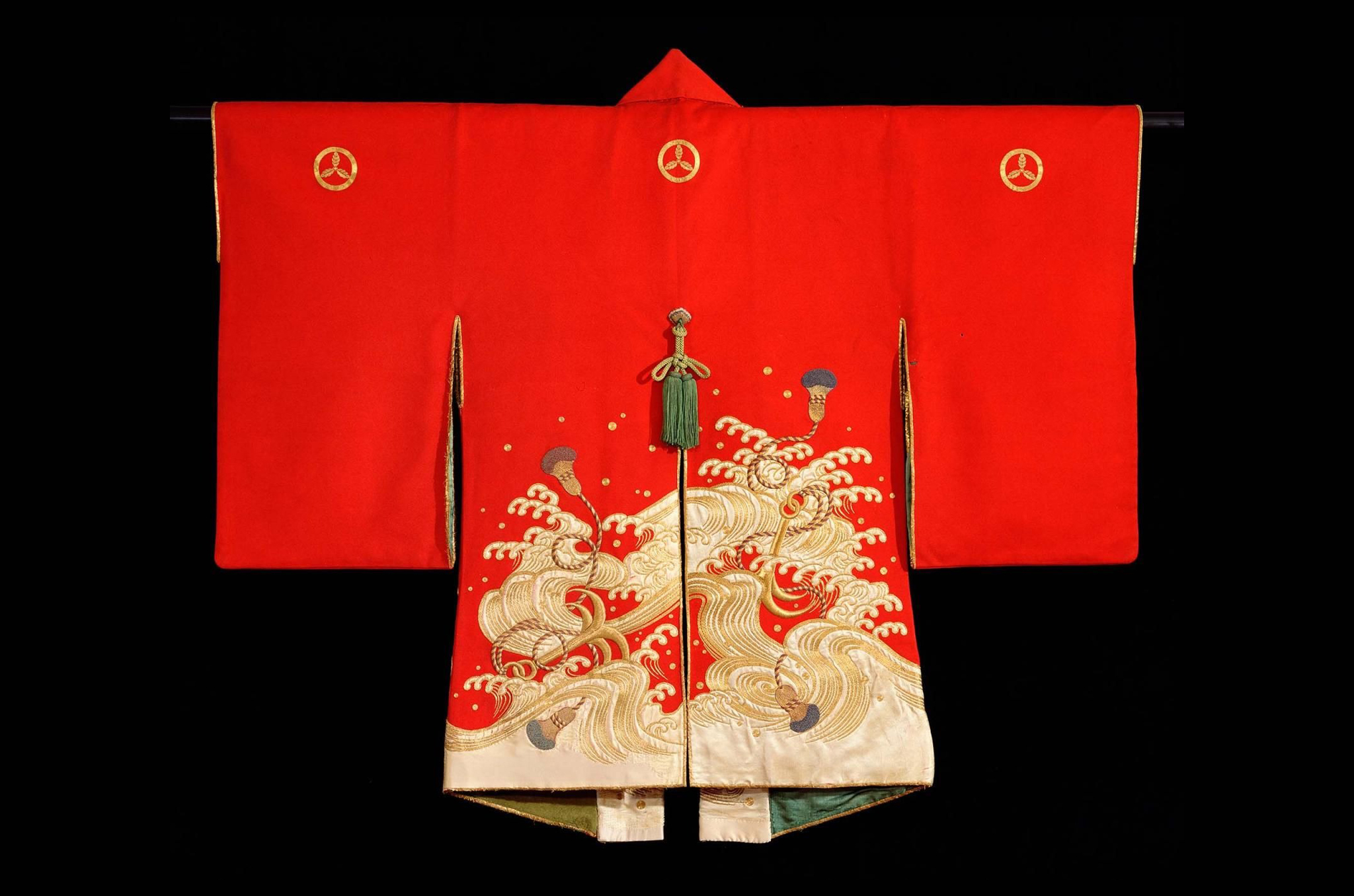
Objects on display include a women’s firefighting jacket (c. 1800-50) | John C. Weber Collections / image © John Bigelow Taylor
Armor, Art and Everyday Life
Bringing together more than 280 objects from the museum’s collection and international lenders, “Samurai” is organized into three sections: the rise of the samurai as honor-bound warriors; their transformation into a governing and cultural class; and their enduring influence on modern popular culture.
Displays include armor, helmets and weapons alongside paintings, woodblock prints, books, ceramics, clothing and photographs. A newly acquired suit of armor is a highlight of the exhibition, as is a rare 1585 portrait by Domenico Tintoretto of Ito Mancio, who had traveled to Europe in his teens as part of Japan’s first diplomatic mission to the Vatican.
The exhibition also includes unexpected objects that illuminate daily life during peacetime. A 19th-century card game dating from around 1828 to 1833 — once used by samurai guards to pass the time — sits alongside women’s robes, dressing sets, mirrors and etiquette manuals. These artifacts underscore the curators’ argument that samurai identity extended beyond the battlefield.
The final section turns to modern representations, drawing on film, television, manga and video games. It features contemporary works including newly commissioned pieces by Japanese artist Tetsuya Noguchi.
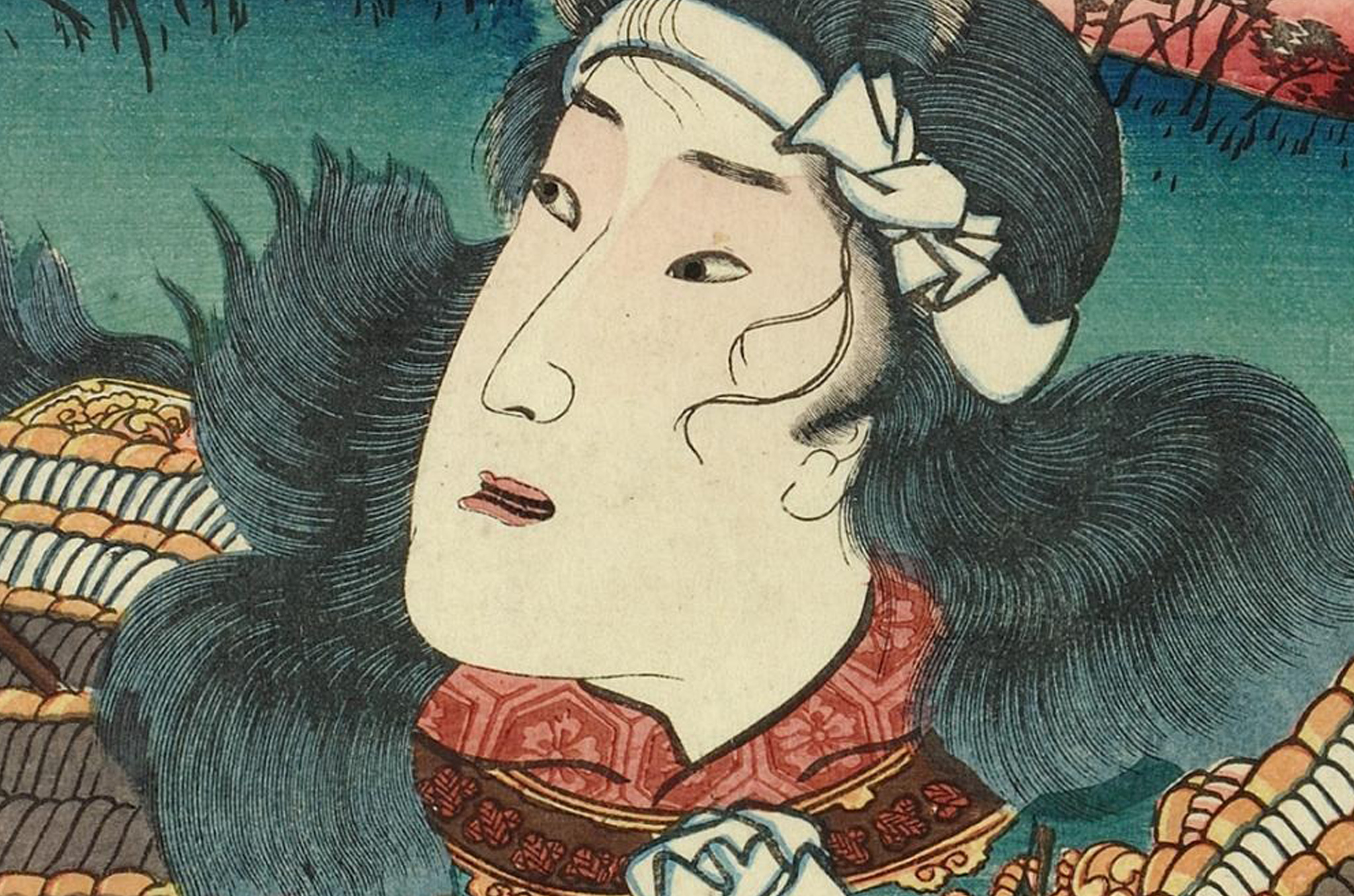
Depiction of legendary female warrior Tomoe Gozen by Utagawa Kuniyoshi (c.1852)
A Debate Over Definitions and Women Warriors
The statement that “half of the samurai were women” has generated debate online, particularly among those who interpret the term as referring to combat soldiers rather than members of a hereditary social class. Writing in Japan Forward, Jeff Broderick, a lecturer and prize-winning maker of traditional Japanese sword fittings, argues that the tension lies in definition. If “samurai” is understood strictly as an elite warrior, he suggests, then counting women within samurai households risks diluting the word’s commonly accepted meaning.
“It’s fantastic to spotlight women’s stories that were traditionally overlooked,” Broderick notes, “but not to the extent of implying female warriors were commonplace.” He also cautions that “this exhibition might be going too far to promote a diversity agenda if it posits female samurai as the [general] rule.”
In the same article, Luc Taelman, head of the European branch of the Japanese Armor Society, describes female fighters as marginal to samurai military history. “I think it’s just a footnote in the history of the samurai,” he says. “I don’t recall any name of an important female samurai.”
However, historical records do document women who took up arms. Among the best known is Tomoe Gozen, the 12th-century fighter immortalized in The Tale of the Heike for her prowess in battle, though her historical existence is uncertain. Other examples include Sasaki Rui, who led an armed group in the early Edo period, and Niijima Yae, who fought in the Boshin War in the 19th century before later becoming an educator.
Reporting in the Financial Times, David Pilling also notes artwork and scrolls depicting women aiding their male counterparts on the battlefield in the form of record-takers, performing the grim but vital task of washing, logging and labeling the severed heads of slain enemies to account for military victories.
Away from the battlefield, the 280 objects presented in “Samurai” reframe any attempt to confine the narrative solely to warfare. Among them are embroidered kimono and cosmetic boxes belonging to women of the samurai class, who Pilling reports were often “educated ladies in waiting and accomplished artists.”
Particularly striking is a vermilion-red firefighting jacket worn by women serving in Edo Castle — a reminder that in a city once plagued by fires, women were trained to protect the castle’s inner quarters.
Ultimately, the exhibition grounds its argument not in rhetoric but in artifacts — objects that reveal a more layered and expansive picture of samurai life, as well as the different roles that women played in it.
Related Posts
Legendary Japanese Onna-Musha (Female Warriors) | List of 7
Sasaki Rui: The Cross-Dressing Female Swordmaster of Feudal Japan
A Guide to Being Cool During the Time of the Samurai