This article appeared in Tokyo Weekender Vol. 1, 2025. To read the entire issue, click here.
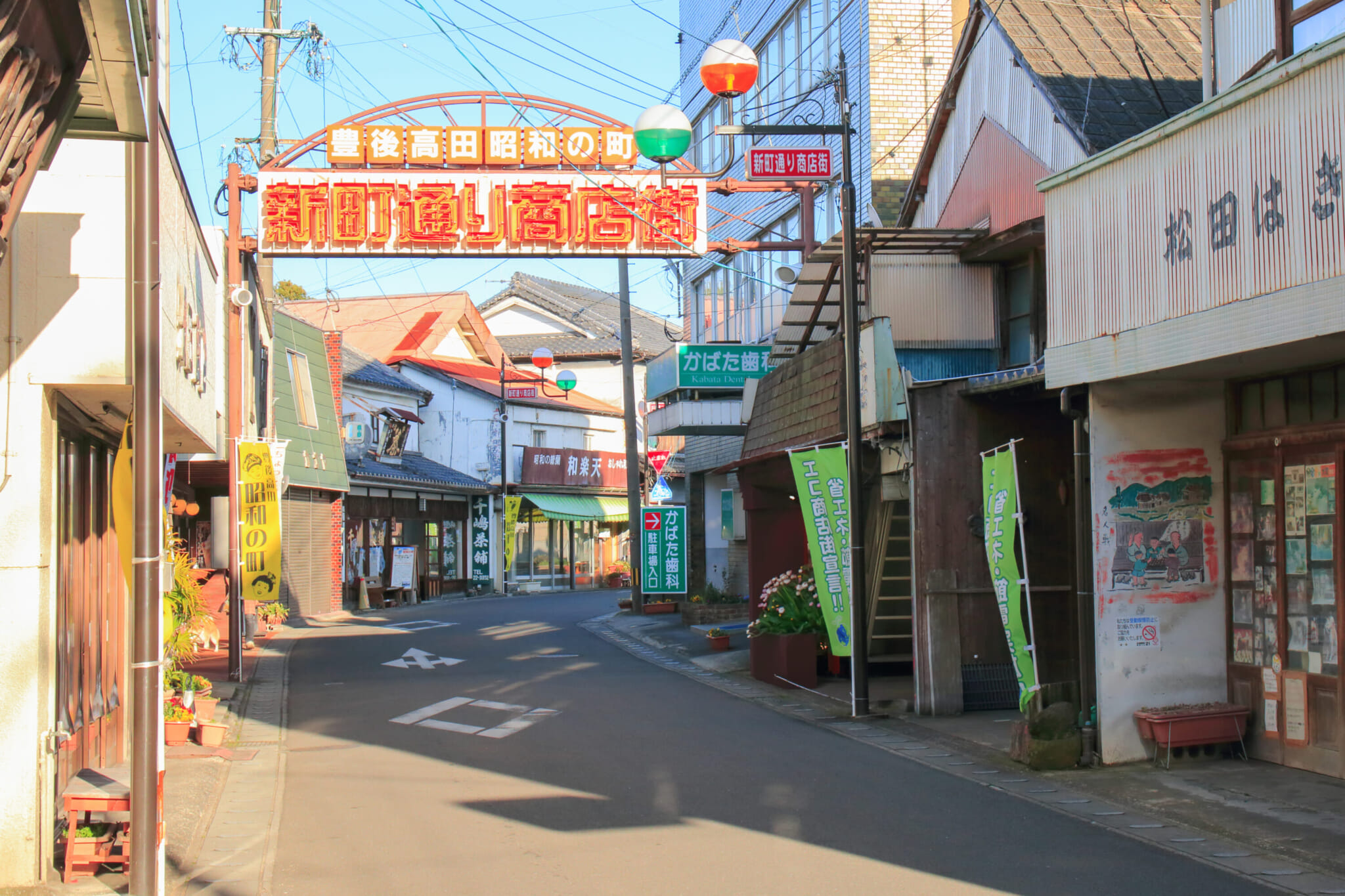
After landing at Oita Airport and driving for one hour, passing rice paddies and tiny hamlets until the landscape turned urban — green swathes replaced with gray buildings and rows of trees — I was greeted with an unexpected sight. “Bungotakada Showa no Machi,” the sign spoke softly, faded into hues of dirty white and orange — an unassuming entrance into what would become one of my favorite spots I’d visited that year.
I was in Bungotakada city in Oita Prefecture for unrelated work reasons, staying in a business hotel nearby. As dusk fell, I headed out in search of something to eat, accompanied by the faint sounds of karaoke that wafted through the streets. It was like stepping into a parallel universe. I passed numerous fellow night strollers as I wandered the town, lit with bulbous Showa-style street lamps. Had I traveled back in time?
The Origins of Showa Town
“Showa no Machi” translates to “Showa Town,” a reference to the Showa era: one of the most recognizable periods of Japanese history, covering as it does the 63 years from 1926 to 1989 — a huge period of upheaval in the country.
The start of Showa, nearly a century ago, was marked by the rise of militarism. Mid-Showa, the country had just lost World War II, and American influence was muscling its way in. Rock ’n’ roll took off, Western-style clothing was all the rage and yoshoku (Western-style food) boomed in popularity. Toward the end of Showa, Japan had once again changed: It had globalized and experienced a time of exponential economic growth. The conclusion of the Showa era overlaps with what’s known as the bubble economy, which ran from 1986 to 1991. Informally known as the bubble era, this period saw a large, albeit unsustainable, surge in wealth, and it exemplifies a particular aesthetic: opulence and glam, made possible by all the extra money floating around Japan at that time.
The Showa era encompasses a wide range of looks and tastes, from the retro-futuristic charm of the 1950s and 60s to the wild maximalism of the 80s; today, when people reference Showa aesthetics, they’re trying to conjure up a sense of nostalgia, usually one associated with the era’s middle years, from the 50s to the 70s.
Bungotakada Showa no Machi is 500 meters long, with three main streets, each lined with storefronts that burst with the spirit of the 50s and 60s — a time when Bungotakada was still a bustling maritime hub and the shopping street was at its peak. In subsequent years, as people moved to the suburbs and large retail stores followed them, the city gradually fell prey to the effects of depopulation. By the 1990s, the once-busy area lay quiet and forgotten.
Restored With the Spirit of Showa
But the city of Bungotakada was not going down that easily. In 2001, it unveiled an unusual revitalization project, designed to breathe life back into its streets. While many of the revitalization efforts in Oita emphasize the region’s fascinating Edo-era history — castle towns, samurai relics, beautifully preserved ruins — Showa no Machi took a different approach. It designated seven stores built in the Showa period as “certified Showa no Machi shops,” recognizing them, too, as important cultural sites.
Fast forward to 2025, and the original seven shops have been joined by 51 more, selling items ranging from food to toys to lifestyle goods. Showa no Machi boasts two museums showcasing various Showa-related paraphernalia, one of which contains a full replica of a Showa-era classroom. Elsewhere, there’s an electronics shop where old and new gadgets share shelf space. You’ll find retro record players, boom boxes and the like alongside
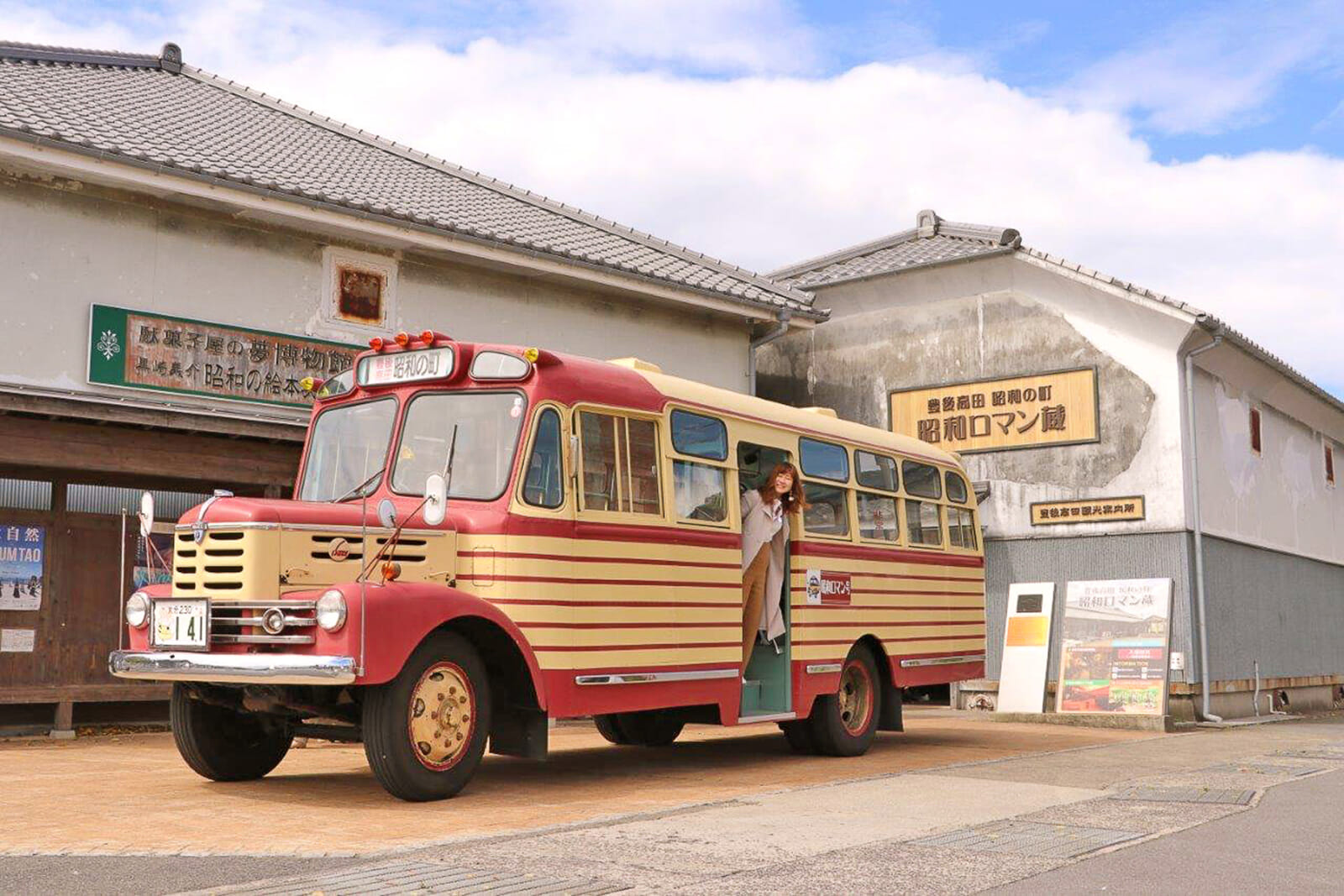
modern-day electronics like flatscreen TVs. On Sundays and national holidays, visitors can even ride in a real, refurbished bus from the 1950s.
Foodwise, the essence of Showa is on display in every establishment, whether souvenir shop or restaurant, permeating everything from sample packaging to the replica menu items featured in shop windows and entranceways. Of course, there’s a dagashiya: a vintage penny-candy shop filled to bursting with a cacophony of old-time sweets you’d be hard-pressed to find anywhere else.
Ambling around, you’ll be treated to classic vending machines, globe-shaped Showa-era streetlamps and even a Showa-style portable gas pump accompanied by a sign advertising gasoline, kerosene and diesel at their 1962 prices. Such is Showa no Machi’s authenticity that the area is a popular location
for filming period movies and TV dramas, with some crews even taking advantage of the vintage bus.
Across the bridge, you’ll find Tamatsu Platinum Street, which continues with the retro theme. Kitschy paintings and trick art decorate the ground: Make your way through a diminutive maze and walk among hyper-realistic chess pieces adorning a checkered path. Other spots to enjoy include a nostalgia-evoking Showa-era hairdresser’s window, a cozy working movie theater housed in a 70-year-old former bakery and a shop serving hand-rolled Bungotakada soba, a regional specialty.
-67-1600x1067.jpg)