This article appeared in Tokyo Weekender Vol. 1, 2025. To read the entire issue, click here.
Surrounded by the ocean and characterized by its spectacular mountain ranges, Kyushu is a land of natural abundance. Its fertile soil and subtropical climate make it rich in nature’s gifts while its volcanoes fuel an abundance of onsen. In Japan, hot springs have long been revered for their healing properties, and Kyushu — believed to be the land where the gods first descended to earth — is home to many with mystical origin stories.
Journey through Kyushu’s legendary hot springs and immerse yourself in tales of miraculous healing and divine encounters.
Unzen Onsen: Blessed by a Four-Faced Goddess (Nagasaki Prefecture)
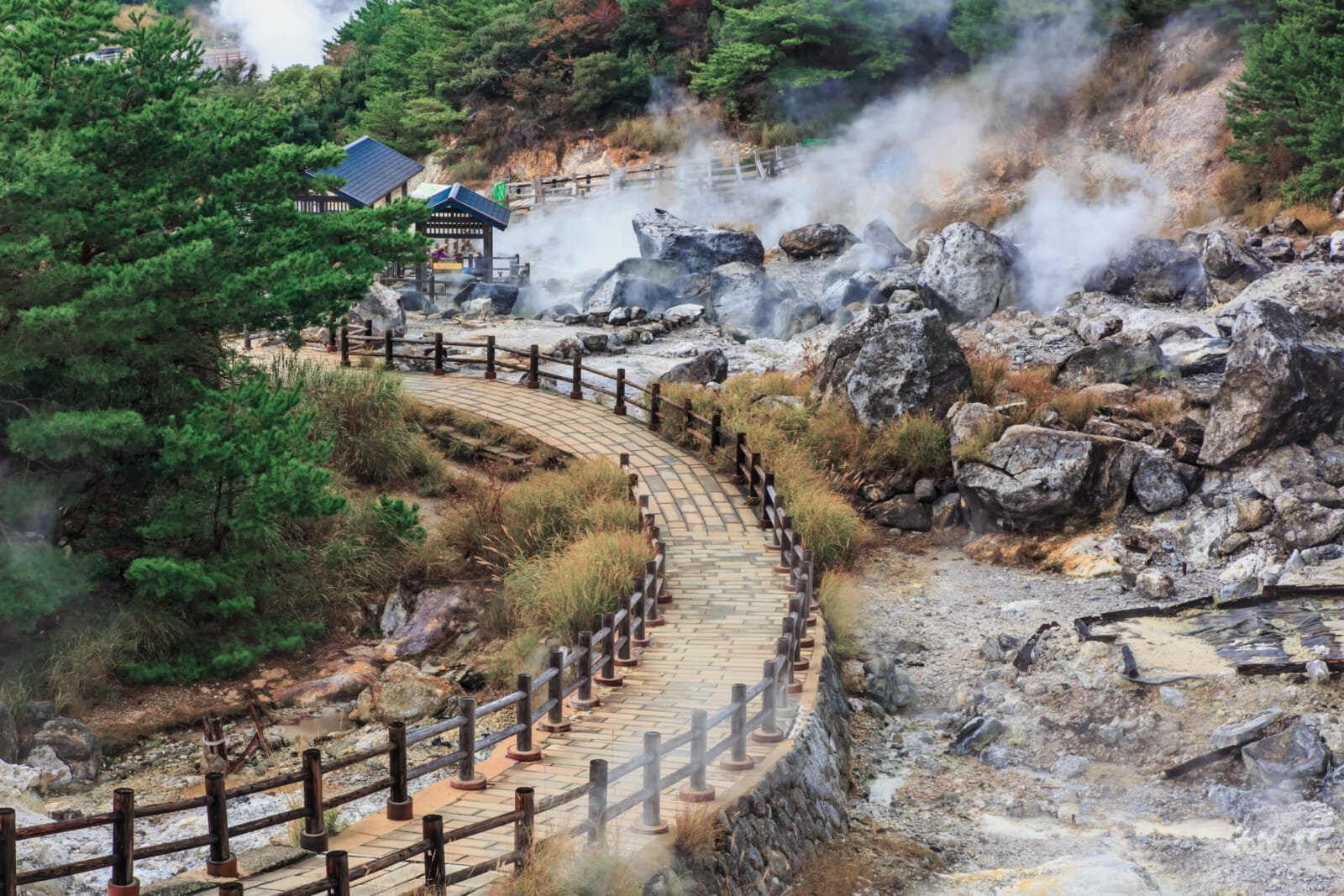
Unzen Onsen, a historic hot spring town nestled in Unzen-Amakusa National Park, boasts mineral-rich, highly acidic waters believed to have antibacterial and beautifying effects. In this quaint area, you can also find Unzen Jigoku, or Unzen Hell — a geothermal area filled with steaming vents and boiling springs. The gushing water, billowing steam and faint yet distinct scent of sulfur in the air combine to create an eerie and otherworldly landscape.
Situated within Unzen Jigoku is Onsen Shrine, also known as Shimengu. The shrine has a long and deeply mystical history. According to legend, over 1,000 years ago, the monk Gyoki followed Unzen’s towering plumes of volcanic smoke to their source. There, he encountered a luminous serpent, which transformed into a four-faced goddess and proclaimed herself to be the guardian deity of Kyushu. This divine being, called Oshimen — which translates to “four-faced” — has been venerated ever since.
Reference to a four-faced deity even appears in the Kojiki, the oldest existing record of Japanese history, and several smaller shrines honoring this divine protector are scattered throughout Nagasaki’s Shimabara Peninsula to this day. While steeping in Unzen’s sulfuric springs, perhaps you’ll feel a celestial presence.
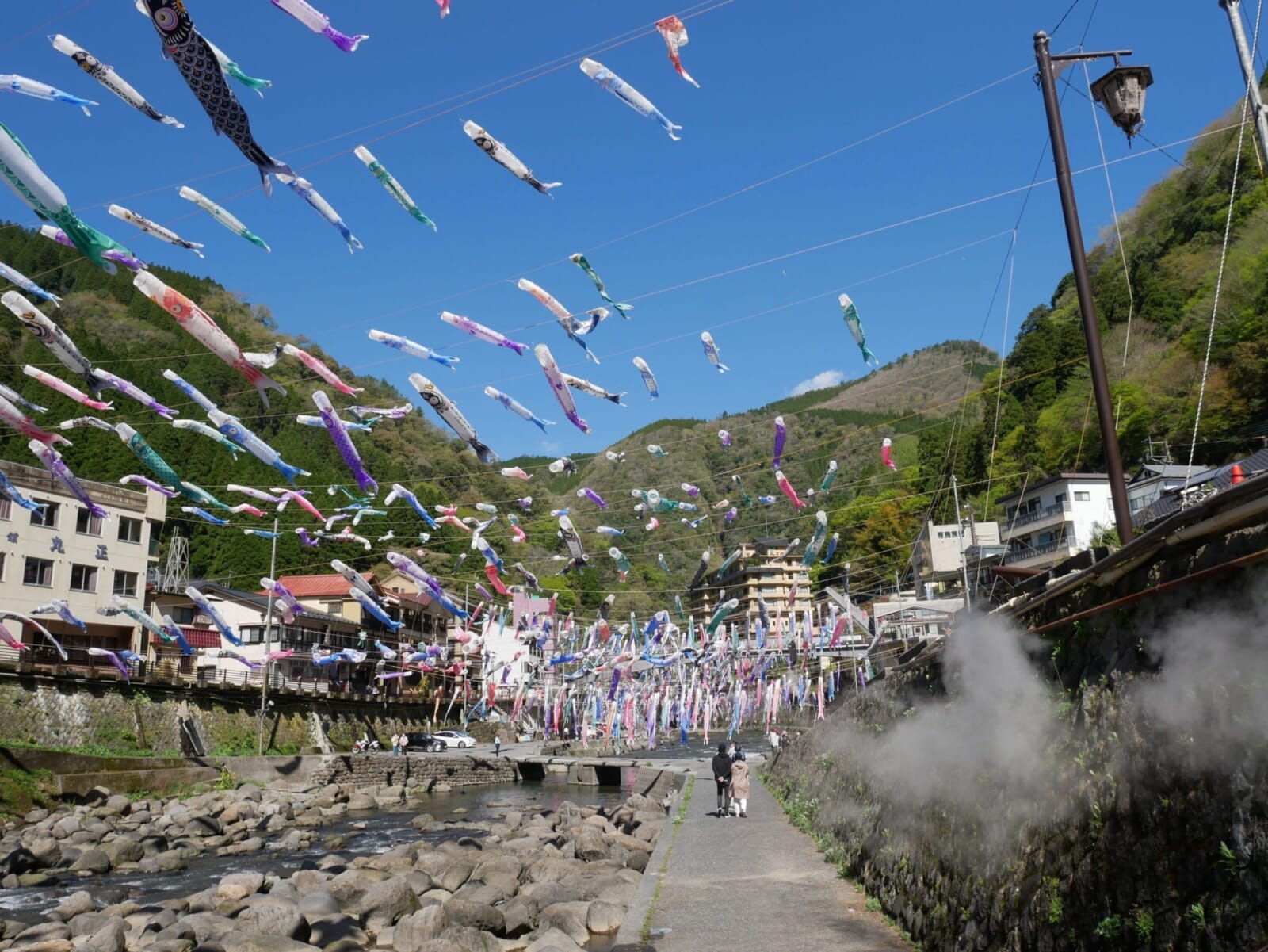
In the valley of Oguni town, you’ll find Tsuetate Onsen, a hot spring town bisected by a river, where plumes of steam rise from the earth. A bustling entertainment district and luxury travel destination during the Showa period, it almost feels frozen in time — a pocket of history, impeccably preserved.
The waters of Tsuetate Onsen are incredibly hot, bubbling to the surface at 100 degrees Celsius before being cooled to a comfortable temperature at the many spas in the area. As they’re high in metasilicic acid, they’re thought to leave bathers feeling supple and energized.
The name “Tsuetate” is derived from two kanji characters meaning “staff” and “stand.” The name is believed to have been bestowed by the legendary monk Kobo Daishi, who visited the onsen town during the Heian period. As one legend has it, the waters of Tsuetate Onsen were so revitalizing that, after the monk dipped his wooden staff in the spring, branches and leaves sprung from it. Kobo Daishi was so impressed by the waters that he wrote a poem declaring that those who visit Tsuetate Onsen would leave town no longer in need of any sort of walking assistance.
Beppu Onsen: Springs That Cured the God of Healing (Oita Prefecture)
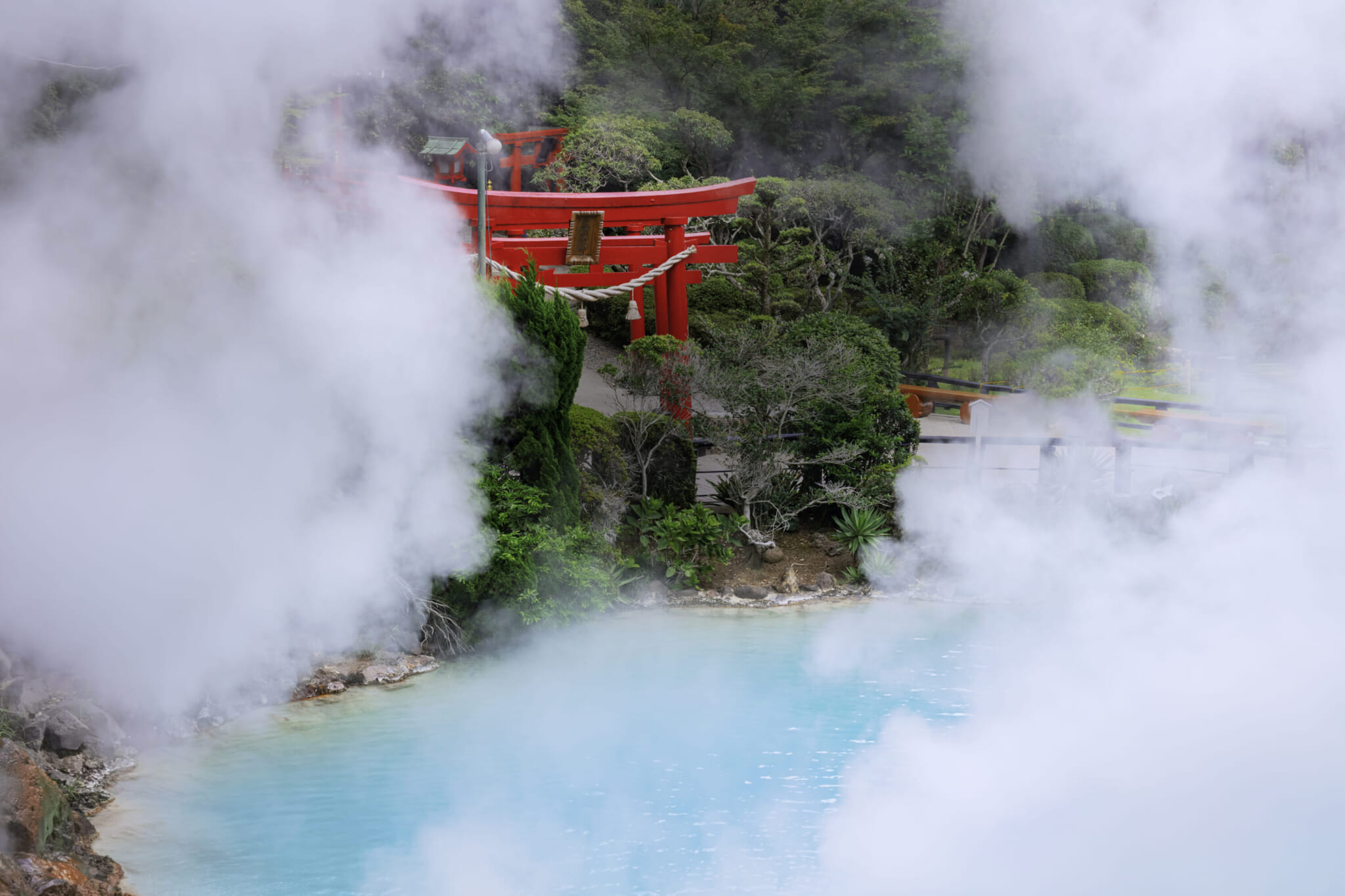
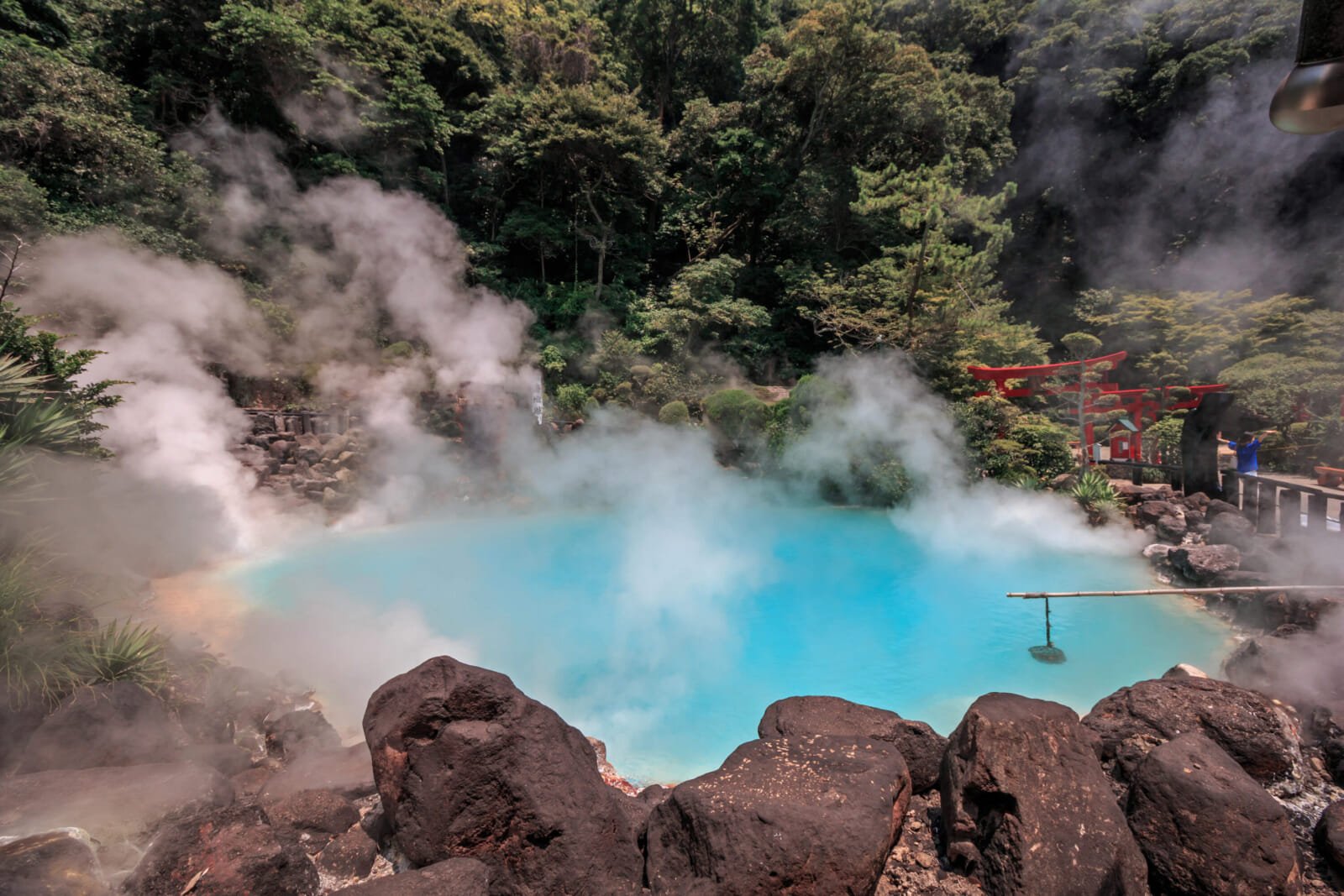
With around 3,000 hot spring sources, representing one-tenth of all onsen vents in the country, Beppu in Oita has the largest volume of hot spring water in all of Japan. It’s composed of eight onsen districts — Beppu Onsen, Kannawa Onsen, Myoban Onsen, Kankaiji Onsen, Hamawaki Onsen, Kamegawa Onsen, Horita Onsen and Shibaseki Onsen — each with its own unique culture. Kamegawa, for instance, is known for its warm sand baths, while Kannawa stands out for its use of herbal steams.
Beyond its renowned waters, Beppu is also teeming with legends. Its hot springs, of course, play a notable role. It is said that the waters of Beppu Onsen were used by the healing god Sukunahikona and Okuninushi, one of Shinto’s central deities and the original ruler of the earthly world. The two gods were visiting Iyo-no-Kuni (modern-day Ehime Prefecture, Shikoku), when Sukunahikona fainted from illness. Okuninushi piped in water from across the sea, reaching all the way to Beppu Onsen to draw its therapeutic waters. Doused in these healing springs, Sukunahikona made a miraculous recovery.
Beppu’s illustrious reputation as a healing center has continued throughout the ages. It’s thought to have been responsible for healing samurai of the Otomo clan during the Kamakura period, and it was written about by the neo-Confucian scholar and botanist Kaibara Ekken in the Edo period. Paying a visit to Beppu, visitors can find themselves in the same silky smooth springs that rejuvenated gods and warriors.