sabor

さぼうる:神保町にある喫茶店の過去、現在、そして未来

平日の朝、さぼうるのドアを押し開けると、神保町はまだあくびの途中にいるようだった。早朝の空気の中に雨がしとしとと漂い、古書店街の街並みをグレーと落ち着いた茶色が混ざり合う、水彩画のような淡い景色に変えている。そんな日は、本能的にどこかへ逃げ込みたくなる。暖かな光が灯り、手に温かい飲み物を約束してくれる場所。さぼうるは、その本能に即座に応えてくれる。

1955年の創業から約70年。さぼうるは伝説的な地元の定番として、山小屋のような温もりのある内装と、鮮やかなクリームソーダ、ボリュームたっぷりのナポリタンやピザトーストといった安心感のあるメニューで愛され続けてきた。しかし、何よりもこの店を形作っているのは「人」に他ならない。3代目マスターの鈴木文夫氏は、開店当初から長きにわたってカウンターを守り続けてきた。2021年に彼が惜しまれつつこの世を去った際、その志を継いだのが、かつて従業員としてこの店で出会い、恋に落ちて夫婦となった伊藤雅史さんと智恵さんだ。

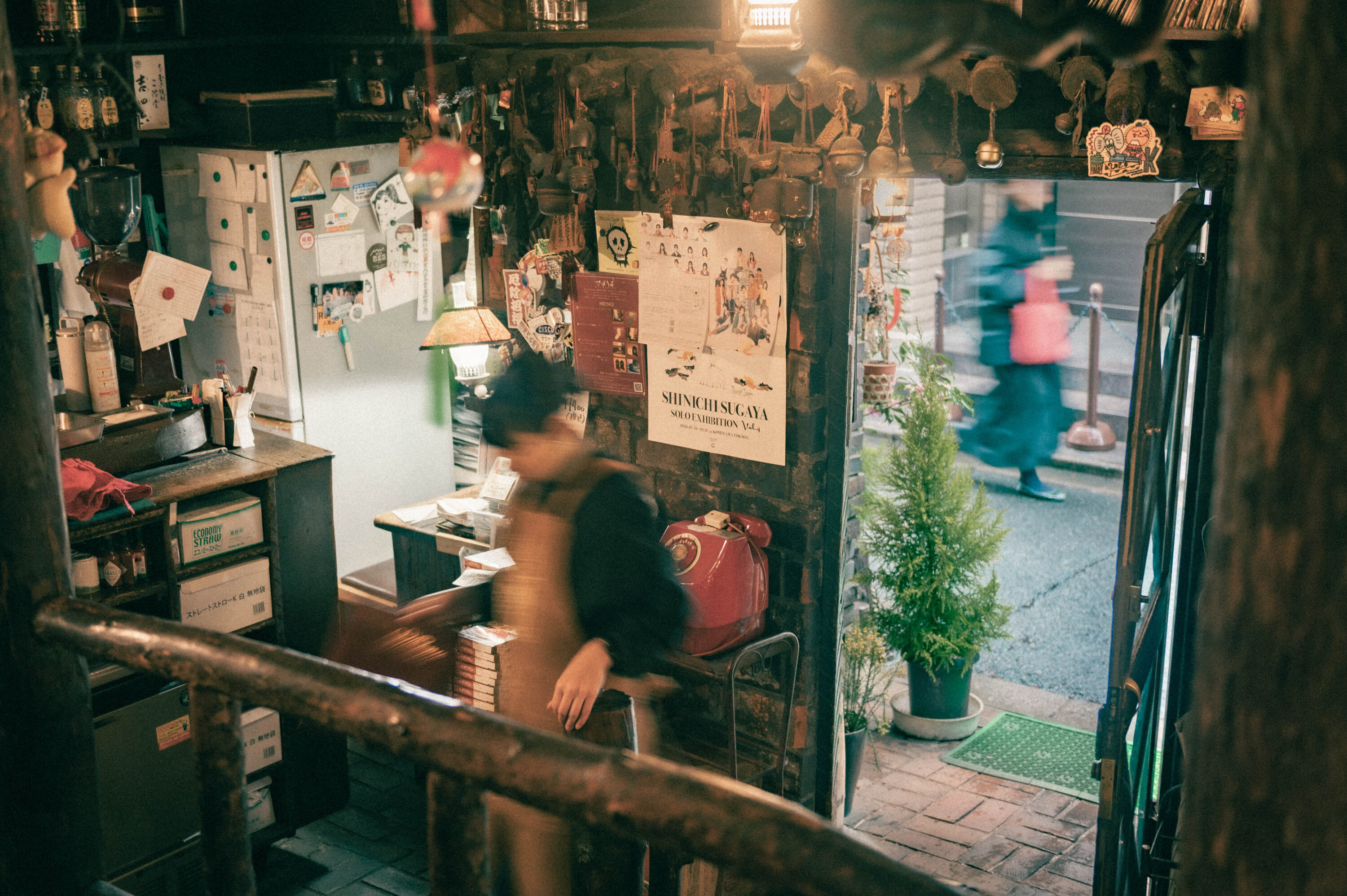
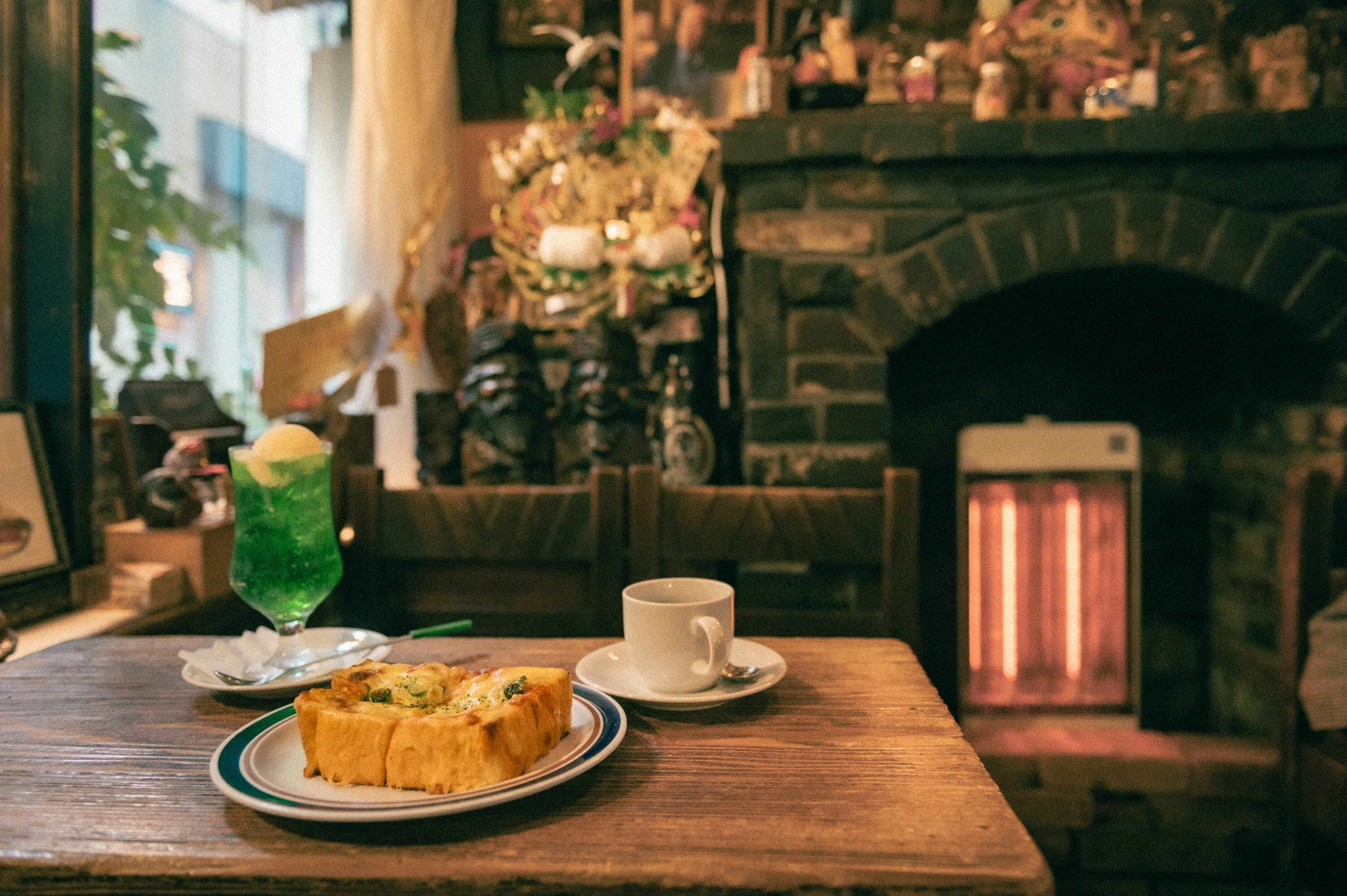
午前11時の開店30分前には、すでに3人の客が外に並び、曇ったガラス越しに中を覗き込んでいる。正午を待たずして店内は満席になり、外では雨粒がゆっくりと窓を伝い落ちていく。店内では暖炉の中に置かれたヒーターが窓際の席を優しく温めていた。伊藤さんは、その特等席に私の視線を向けた。「窓際側には」と彼は語る。「今でも常連客が語り合っていた賑やかな雰囲気や、先代マスターがその輪の中にいたような感覚が、色濃く残っているんです」

何十年もの間、鈴木氏は窓際の定位置に座り、通りがかる人々へ温かな挨拶を交わしてきた。今、その場所には彼の遺影が置かれ、静かに遠くを見つめている。見る角度によっては、彼が今もこの空間を優しく見守っているかのようにさえ感じられる。

地元のアイコンを引き継ぐことにプレッシャーはないのか。そう尋ねると、伊藤さんは静かに肩をすくめた。プレッシャーはそれほど感じていない、と彼は言う。周囲から責任の重さを指摘されるたび、もっと感じるべきなのかと自問することもあるが、根底にあるのは「自分自身が楽しんでいる」という感覚だ。彼が向き合っているのは、外からの期待というよりも、時代の「移行」そのものだった。「私たちは変化の時代に生きています」と彼は説明する。「先代の時代に正解だった方法が、今も通用するとは限りません。以前と全く同じことだけを続けていれば、いつかは取り残されてしまう。それでも、絶対に守り続けなければならないものがあります。何を守り、何をアップデートするのか。その繊細なバランスこそが、私たちの真の挑戦なんです」
「世界で最もクールな街」で喫茶店を継ぐということ

さぼうるが佇むこの界隈は、近年、一躍世界の表舞台へと躍り出ました。昨年、神保町が『Time Out』誌によって「世界で最もクールな街」の一つに選出されたのです。世界が注目するエリアの象徴ともいえる歴史的喫茶店を運営することについて、伊藤さんにその心境を尋ねてみました。

すると、彼の口から返ってきたのは驚くほど率直でシンプルな言葉でした。
「今さら?」

彼はそう言って悪戯っぽく笑いました。「もちろん、街の誰もが喜んでいましたよ」と彼は続けます。「このエリアのユニークさ、良い意味で少し『奇妙』な独特の雰囲気が認められたのは嬉しいことです。確かにクールだと思いますね。ここには本当に面白い人たちがたくさん集まっていますから」

しかし、華やかな見出しの裏側で、日々の運営という現実は決して平坦ではありません。伊藤さんは、近所に自分と同世代のカフェオーナーが少ないことを実感しています。それでも、カフェ・トロワバグ、ラドリオ、ミロンガ・ヌオーバといった名店のオーナーたちとは連絡を取り合い、神保町以外でも上野や大阪、京都などの店主たちとイベントで顔を合わせることもあるそうです。

彼らの多くは親から店を継いでおり、従業員から跡を継いだ伊藤さんとは歩んできた道のりは異なります。ですが、抱えている悩みは共通していました。言葉を交わすたび、現代において「古い空間」を維持し続けることへの静かな不安を共有していることに気づかされるといいます。「それでも、本当に優しいコミュニティなんです。皆、驚くほど親切に接してくれますから」と彼は付け加えます。

観光客や学生、そしてレンズを向ける写真家たちを惹きつけながら、神保町は刻々と進化を続けています。その奔流の中で、さぼうるがしなやかに適応し続けていけるのは、受け継いだ「哲学」があるからだと伊藤さんは信じています。

先代の鈴木氏は、決して人を拒みませんでした。好奇心旺盛な若者、何十年も通う高齢の常連客、そして海を越えてやってくる訪問者。この空間を尊重する気持ちさえあれば、誰であっても温かく迎え入れられました。

「さぼうるが、誰でもふらりと入ってこられる場所であり続けてほしい。良い意味で『敷居の低い』場所でありたいんです」

伊藤さんのその言葉には、変わりゆく街の中で変わらぬ安らぎを守り抜く、新しいマスターとしての静かな覚悟が宿っていました。
あらゆる人のための場所

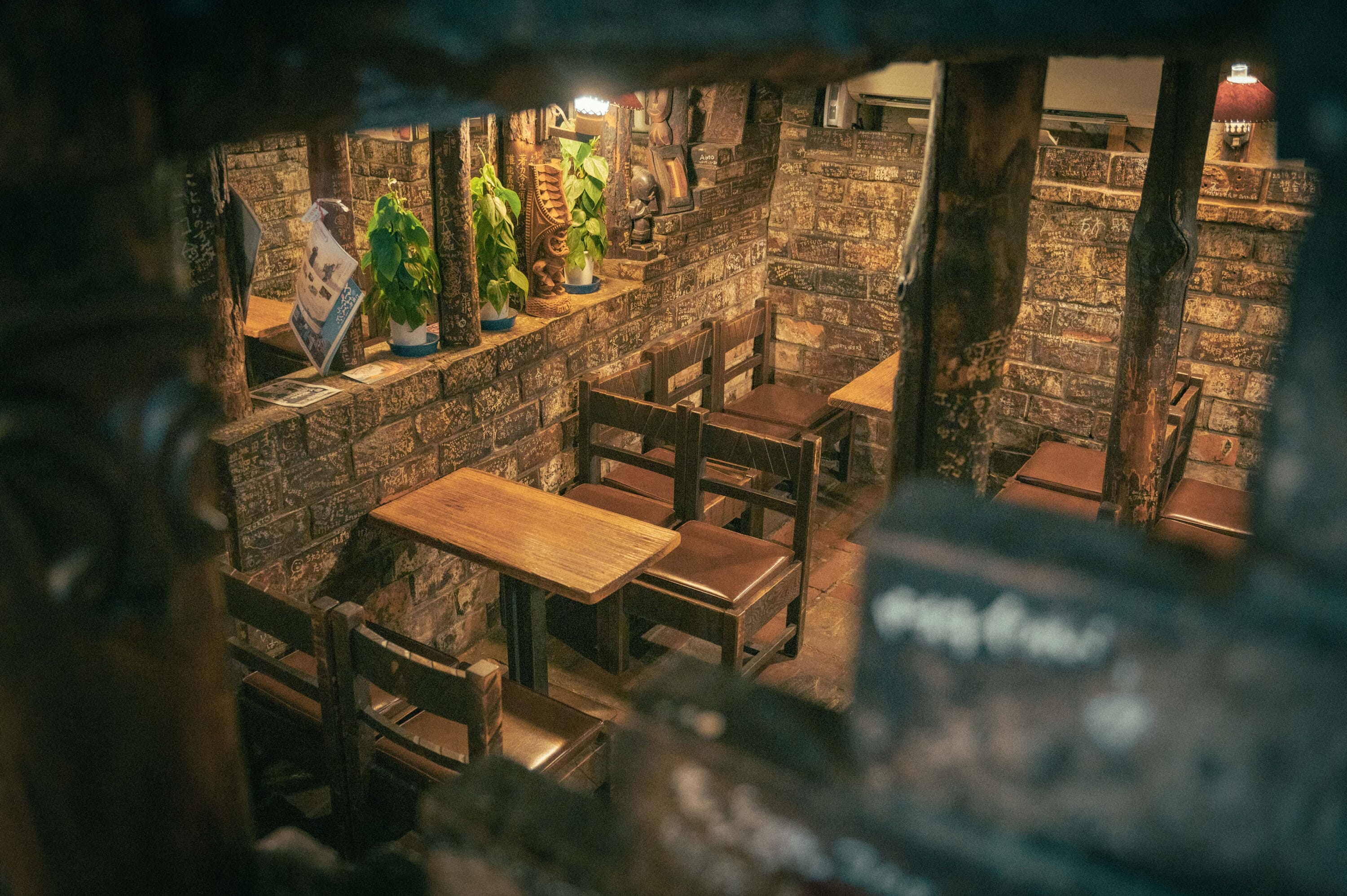
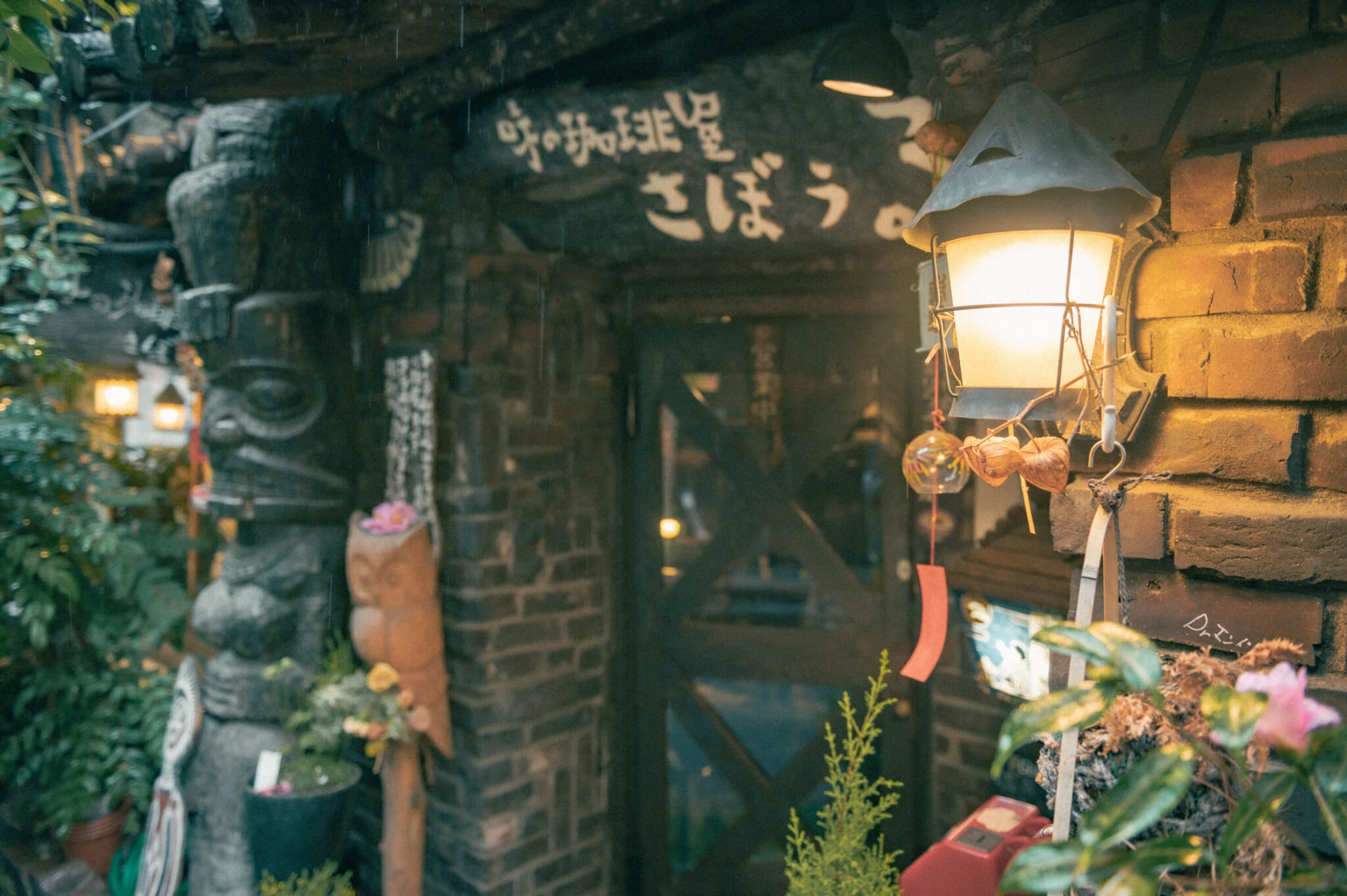
さぼうるは、これまでに見たことのないような独特な空気を纏った喫茶店です。その内装は、まるでダークウッドで組み上げられたジャングルのツリーハウスのよう。壁にはティキマスクやトーテムのモチーフが飾られ、地下へと続く階段をウッドビーズのカーテンが揺らしながら仕切っています。

すべてのテーブルには、数十年の月日が刻んだ穏やかな摩耗の跡が見て取れます。漆に走る小さなひび割れ、丸みを帯びた角、そして何千、何万杯ものカップを支え続けてきた滑らかな表面。階下へ降りれば、連なるペンダントランプがレンガの壁に琥珀色の柔らかな光を投げかけ、訪れる人を包み込みます。

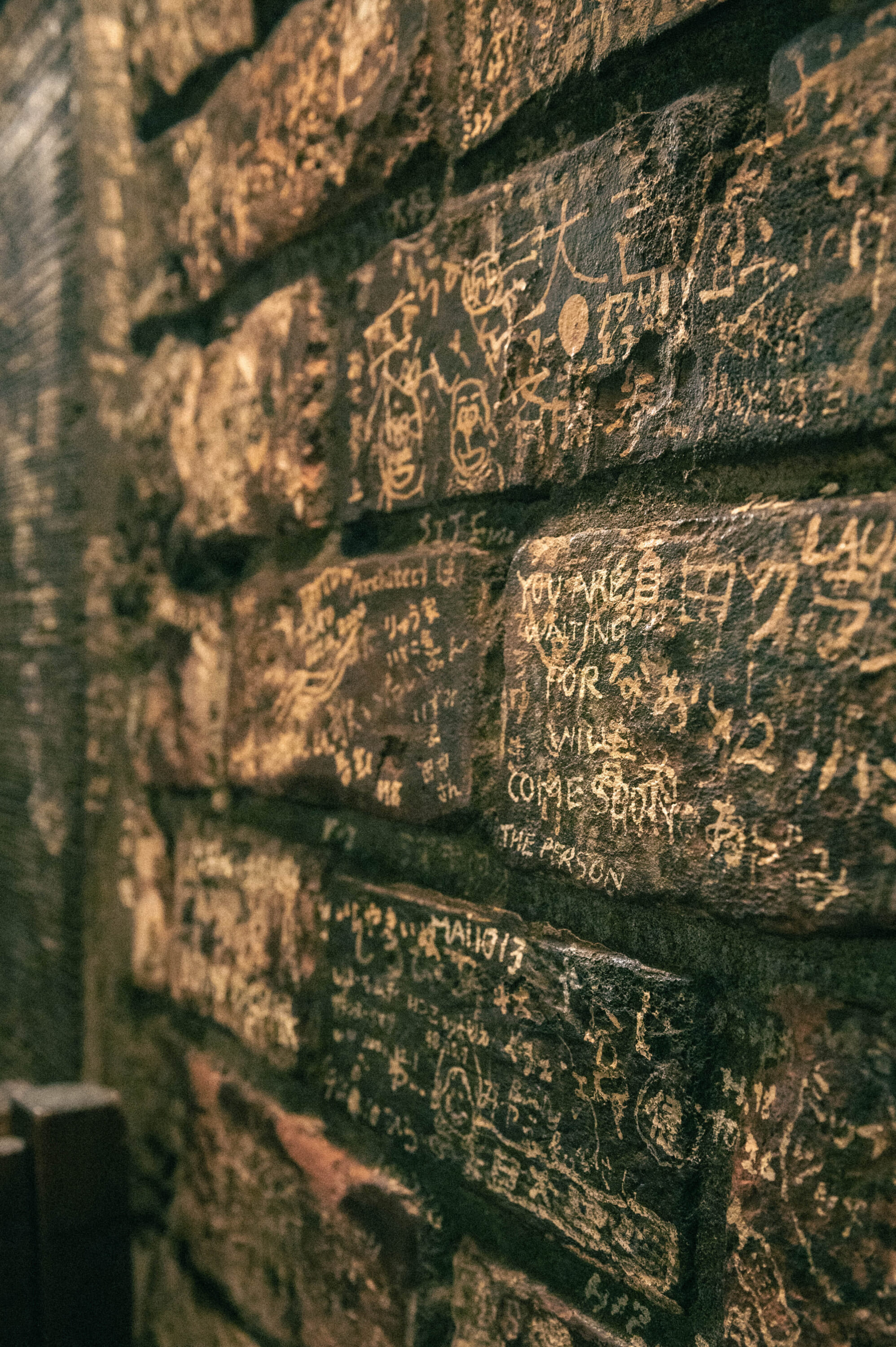
目を引くのは、壁のあちこちに刻まれた無数の落書きです。この店を第二の家のように慕う常連たちの名前、寄り添う二人の名前を記した「相合傘」、誰かへの励ましの言葉、率直な愛の告白や合格祈願、あるいは教科書の余白にあるような風変わりな悪戯書き……。

木の梁の片隅には、シンプルに「ピザトースト」とだけ記されていました。さらに別の柱には、少し色あせた白いインクで「30年あっという間」という一筆も。これを書いたのは、かつての学生でしょうか。それとも、大切な瞬間を刻んだカップルでしょうか。あるいは、数十年の月日が静かに積み重なるのをここで見守ってきた常連客かもしれません。

さぼうるの中では、時間は独自の奇妙なリズムで動いています。並んで掛けられた3つの壁時計のうち、確かな足取りで時を刻み続けているのは、たった一つだけ。鳩時計は小さな扉を閉ざして静かに眠り、もう一つの時計は、傷つき曇った文字盤のなかで、ずっと前に降参したかのようにその針を止めています。
物でいっぱいの部屋、人でいっぱいの部屋

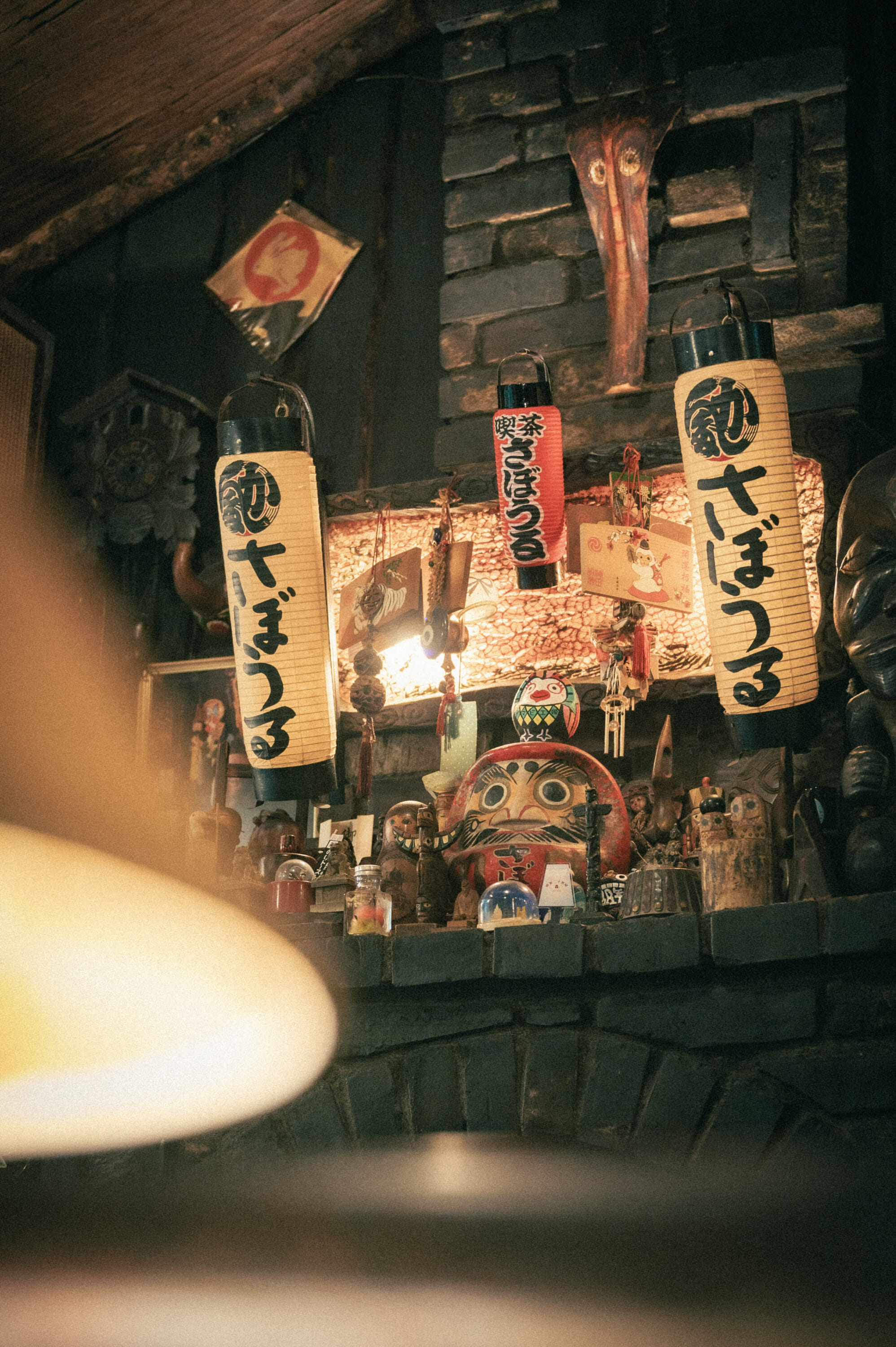
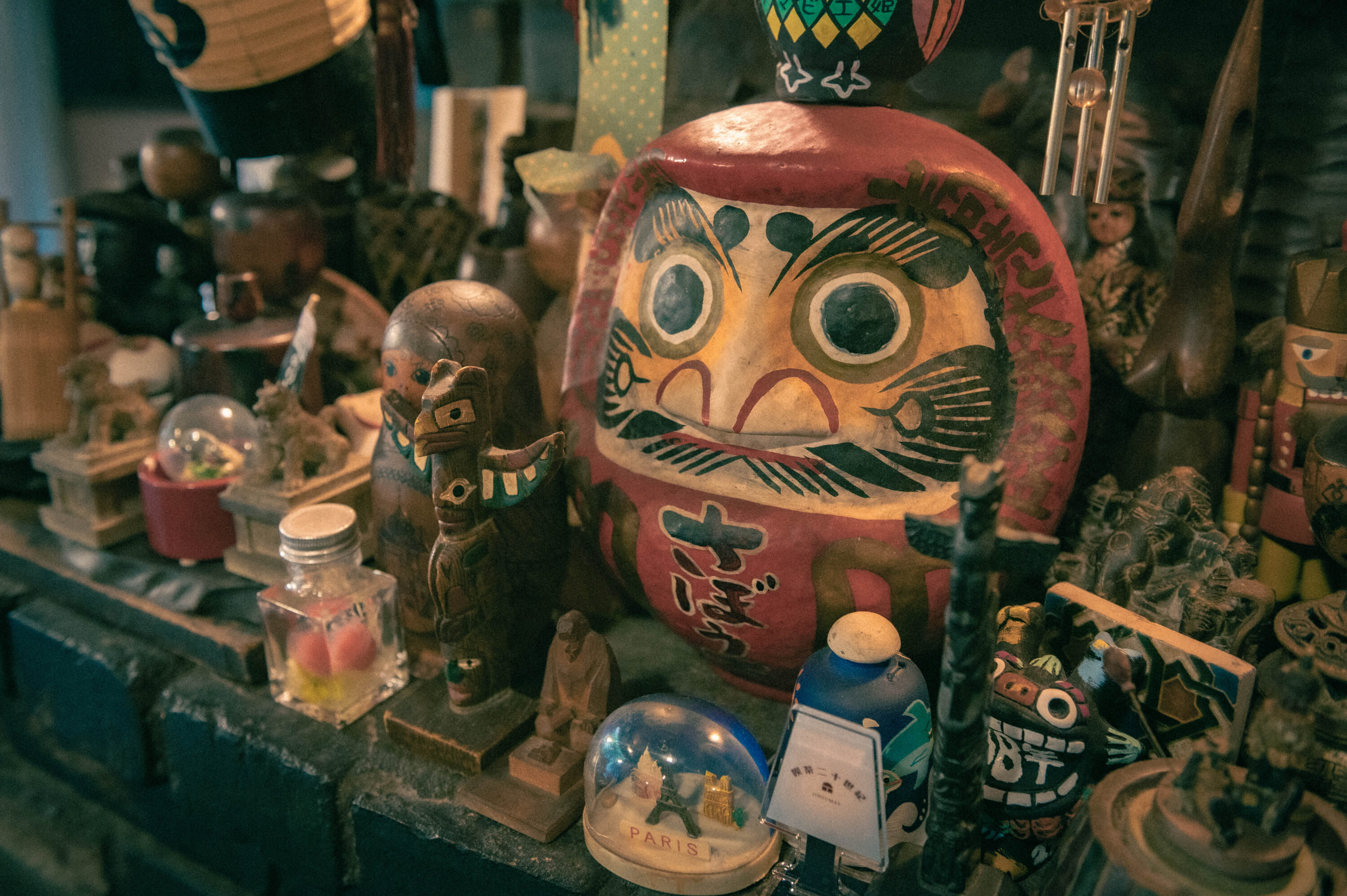
「物」という観点から言えば、さぼうるは決してミニマリズムとは無縁の場所です。窓際のボックス席に腰を下ろすと、私はこの店の「永住者」たちに囲まれていることに気づきます。レンガ壁の棚には、店名の入った伝統的な提灯とともに、ティキ像の一団が守護兵のようにぎっしりと並んでいます。窓際のベンチでは、埃をかぶった雑誌の山の上で、ダルマが不透明なスノードームや縁起物の守護札と席を共にし、天井からは風鈴やドリームキャッチャー、モビールが賑やかに吊り下げられています。

しかし、何よりも心に響くのは、額の中で温かく微笑む鈴木氏の肖像画です。その後ろには、髪を真ん中で分けた若かりし日の男性——おそらく伊藤さんでしょう——が、バーテンダー姿で真っ直ぐに立っています。

鈴木氏の直感は、常に「人々を驚かせること」に向いていたと伊藤さんは語ります。彼は、客が小さくも喜びに満ちた驚きを見せる瞬間を、何よりも愛していました。今やさぼうるの代名詞となった鮮やかな「レインボーカラーのクリームソーダ」も、そんな彼の遊び心から生まれたものです。

ほとんどの喫茶店が定番の緑色しか提供していなかった時代、鈴木氏は多色展開という新しい試みを導入しました。当時はまだ7色ではなく4色だったと伊藤さんは回想しますが、別の選択肢があることを知った客たちの反応は、目を見張るほど驚きに満ちたものだったといいます。結局のところ、多くの客は慣れ親しんだ緑を選びましたが、鈴木氏が最も楽しんでいたのは、選ぶ際の一瞬の迷いや、わずかに見開かれた客の瞳でした。

さぼうるに滞在している間、客足が途切れることはありませんでした。まず入ってきたのは、まるで自分のリビングに戻るような親密な足取りの年配女性のグループ。その一人が鈴木氏の遺影の前でふと立ち止まり、少し身を寄せて微笑みかけました。それは旧友に挨拶を交わすような、あまりに個人的で優しい光景でした。

続いてやってきた家族連れでは、幼い息子が赤いクリームソーダを選び、こぼさないよう両手で大切そうに抱えています。さらに2人の女子高校生がボックス席に滑り込み、ダークウッドの地下室に楽しげな笑い声を響かせながら、さぼうる名物のいちごジュースを注文しました。

何十年もの間、この場所がそうであったように。今日もさぼうるの部屋は、学生、常連、観光客、そして家族連れという、多様な「人」のぬくもりで満たされていました。
「若いお客さまにとって、さぼうるがどのような場所であってほしいですか?」そう尋ねると、伊藤さんは少し考え、「思い出に残る場所」と答えてくれました。

「この内装は視覚的にもすごく特徴的ですよね。だから、20年、30年経ったあとにふと振り返って、『ああ、あのお店を覚えているな』と思ってもらえたら嬉しいんです。最近は似たような雰囲気のカフェも多いですから、どこへ行ったか忘れてしまうこともあるかもしれません。でも、これだけ目立つ場所なら、きっと記憶に焼き付くはずです。社会に出て働いたあとや、人生の後半になってから、ふとした瞬間にさぼうるを訪れた日のことを思い出してくれたなら、私にとってはそれで十分なんです」

もちろん、と彼は少し悪戯っぽく微笑んで付け加えました。「そのためには、お店をずっと長く続けていかなければならないんですけどね」

しかし、「ここは唯一無二の場所ですから」と言い切る彼の柔らかな声には、一筋の迷いも、疑いの余地もありませんでした。

More Info

さぼうる:東京都千代田区神田神保町1-11

※さぼうるは現金のみの取り扱いですのでご注意ください。

さぼうるの最新情報は Instagram でチェック。

sabor

Sabor: A Kissaten’s Past, Present and Future in Jimbocho

When I push open the door to Sabor on a weekday morning, Jimbocho is still mid-yawn. Rain drifts through the early air, softening the neighborhood’s rows of secondhand bookshops into a watercolor blur of gray and muted browns. It’s the kind of weather that makes you instinctively seek refuge: somewhere warm, somewhere softly lit, somewhere that promises a hot drink in your hands. Sabor answers that instinct immediately.

For 71 years, Sabor has been a legendary local fixture, beloved for its cozy, cabin-like interior and comforting kissaten staples — fizzy cream sodas, hefty plates of Napolitan pasta and pizza toast. But more than anything, it’s the people who define Sabor; its third-generation master, Fumio Suzuki, had manned the counter since the cafe opened in 1955. When he passed away in 2021, a pair of young employees took over the reins: Masafumi and Chie Ito, a husband-and-wife team who first met and fell in love while working in the cafe.

Half an hour before its opening at 11 a.m., three people are already lined up and waiting outside, peering through the fogged-up glass. By noon, the place is full. Outside, the rain slides down the glass in slow lines. Inside, the window seats are warmed by a floor heater nestled in the fireplace. Ito draws my attention to this area. “The window side,” he says, “still holds the feeling of the regulars chatting there. And of the previous master being part of those conversations.”

For decades, Suzuki took up a regular post by the window, warmly greeting people as they passed by. Now, a framed photograph of him sits there, gazing off into the distance. From certain angles, it feels as if he is still quietly overseeing the space.

When asked if he feels the pressure after taking over a local icon, Ito shrugs gently. He doesn’t really feel it, he says. People around him talk about responsibility, so sometimes he wonders if he should feel more — but mostly, he’s enjoying himself. What weighs on him is not expectation so much as transition. “We’re living in changing times,” he explains. “Some of the methods that worked for the previous generation simply don’t work anymore. If they continue exactly as before, they’ll be left behind. And yet, some things must absolutely remain. Balancing what to preserve and what to update — that is the real challenge.”

Inheriting a Cafe in the World’s Coolest Neighborhood

Sabor exists in a neighborhood that, in recent years, has found itself thrust onto the global stage; last year, Jimbocho was named the coolest neighborhood in the world by Time Out magazine. I ask Ito how he feels about running a historic kissaten at the center of it all.

His first reaction, he admits, was simple: Only now?

He laughs lightly when he says it. “Everyone in the neighborhood was happy,” he continues. “I’m glad people recognize the uniqueness of this area — its slightly strange atmosphere, in a good way. I do think it’s cool. There are so many interesting people here.”

Yet beneath the headlines, daily reality remains a challenge. Ito doesn’t see many cafe owners his own age nearby. He keeps in touch with a few, including the owners of Cafe Trois Bagues, Ladrio and Milonga Nueva. Beyond Jimbocho, he meets cafe owners from Ueno, Osaka, Kyoto and other cities at events. Many of them inherited their shops from their parents, a path different from his own, yet their concerns overlap. When they talk, he says, they often realize they share the same quiet anxieties about sustaining old spaces in modern times. “It’s a kind community,” he adds. “Everyone is genuinely kind.”

As Jimbocho continues to evolve — drawing tourists, students, photographers — Sabor’s adaptability, Ito believes, comes from the philosophy he inherited. Suzuki never rejected people. Young customers, elderly regulars, overseas visitors — all were welcome, so long as they respected the space. “I want Sabor to remain a place anyone can walk into easily. A low barrier, in a good sense,” says Ito.

Space for Everyone

Sabor is unlike any cafe you’ve ever seen. The interior rises like a jungle tree house built from dark wood: Tiki masks and totem motifs cover the walls, and a wooden bead partition frames the staircase leading to the basement. Every table bears the gentle wear of decades — tiny cracks in lacquer, softened edges, surfaces that have held thousands of cups. Downstairs, a row of pendant lamps casts a low amber glow over the brick walls.

Lightly etched graffiti covers the walls — names of regulars who treat the cafe as a second home; sketches of umbrellas with a name beneath on each side, a symbol of romance not unlike the padlocks couples fasten to railings at certain scenic spots; messages of encouragement and even stray declarations of love or hopes of passing a certain exam; whimsical doodles you would find in the margins of a textbook … One scribble, written across the flat end of a wooden beam, simply reads: “pizza toast.” Another also catches my eye. On a pillar, in slightly faded white ink: “Thirty years in a flash.” Who wrote it? A student passing through? A couple marking a moment? A regular who had watched the decades quietly add up?

At Sabor, time moves in its own peculiar rhythm. Of the three wall clocks hanging side by side, only one continues to tick with any conviction. A cuckoo clock sleeps in silence, its little door closed. Another, its face scratched and clouded with age, has long since surrendered, its hands fixed in place.

A Room Full of Objects, A Room Full of People

Speaking of objects, Sabor is anything but minimalist. Sitting in a window booth, I find myself surrounded by some of its permanent tenants: a squad of tiki statues standing guard on a shelf against the brick wall, packed together with traditional lanterns bearing the cafe’s name. On the window bench, daruma dolls share a seat with an opaque snow globe and some lucky animal talismans on a stack of dusty magazines. Wind chimes, dreamcatchers and mobiles hang from the ceiling. But I’m most struck by a framed drawing of Suzuki smiling warmly, a younger man with hair parted in the middle — presumably Ito — standing behind him in bartender’s attire.

Suzuki’s instinct, Ito tells me, was always to surprise people. He liked seeing customers startled in small, joyful ways. Sabor’s famous rainbow of cream sodas grew from that impulse. When most cafes offered only the classic green hue, Suzuki introduced multiple colors. Back then, it wasn’t even seven, Ito recalls — just four — but customers would react with genuine surprise when they heard there were other options. In the end, many still chose green. But it was the moment of hesitation, the small widening of the eyes, that he enjoyed most.

Throughout the course of my visit to Sabor, I watch a nonstop stream of customers coming in. A flock of old ladies enters first, moving with the familiarity of people returning to a living room. One of them pauses at Suzuki’s framed photograph, leans slightly closer and smiles — a private, tender expression, as if greeting an old friend. Then comes a family; their young son chooses the red cream soda and holds it carefully with both hands. Two high school girls slide into a booth, their laughter ringing loudly from the dark wood basement, and immediately order Sabor’s famed strawberry juice. The room fills as it has for decades: with students, regulars, tourists, families.

When I ask what kind of place he hopes Sabor will be, especially for younger customers, Ito says that he hopes it becomes memorable. “The interior is visually distinctive, so I’d like people to be able to look back 20 or 30 years from now and think, ‘Oh, I remember that place.’ So many cafes look similar these days, you might forget where you went. But if a place stands out, it stays in your memory. If someone remembers visiting Sabor after they start working or later in life, that’s enough for me.”

Of course, he adds with a small smile, they’ll have to keep the cafe running that long. But there is no doubt in his voice when he says it: It’s a one-of-a-kind place.

More Info

Sabor, 1-11 Kanda Jimbocho, Chiyoda-ku, Tokyo

Please note that Sabor is a cash-only establishment.

Keep up with Sabor on Instagram.

Related Posts